

NASA's 'Once-in-a-Century' Moon Crater Find: What It Reveals
A rare lunar impact structure could reshape exploration priorities, from landing-site selection to resource extraction for future missions.
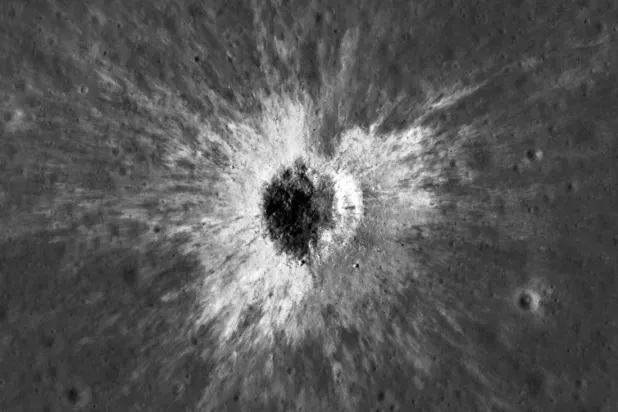
NASA's latest orbital scan has uncovered a new Moon crater that agency officials call a 'once-in-a-century' discovery. The find could steer mission planning and commercial lunar strategies toward a unique scientific target.
NASA's latest scan of the lunar surface has turned up a crater that agency scientists are describing as a 'once-in-a-century' find. The discovery, made during a routine orbital survey, stands out not just for its size or age, but for what it could unlock about the Moon's violent history and the early solar system. While NASA has cataloged thousands of craters, this one appears to be exceptional, likely preserving layers of regolith and rock that have remained undisturbed for eons. That pristine record offers a rare window into cosmic events that shaped our celestial neighbor.
The label 'once in a century' signals a rarity that goes beyond a typical impact feature. Such craters are usually formed by a singular, high-energy event that exposes material from deep beneath the surface, material that has not been altered by subsequent impacts or space weathering. For scientists, this is like finding a fossilized time capsule. It can reveal the composition of the Moon's interior, the frequency of asteroid impacts, and even clues about the conditions on Earth during the solar system's formative period. The fact that it was discovered through a scan, rather than a targeted search, underscores how much of the Moon remains unmapped in detail.
The discovery reinforces the ongoing value of robotic reconnaissance. NASA has long used orbiters equipped with radar, thermal imaging, and high-resolution cameras to map the Moon's surface. These scans have identified potential landing sites, water ice deposits, and geological anomalies. This new crater adds another high-priority target for scientists and, eventually, for commercial and human missions. For decision-makers in aerospace, defense, and related industries, the find signals that the Moon still holds surprises that can alter the calculus of mission planning.
For those overseeing the Artemis program and its commercial partners, the crater's significance cannot be overstated. Understanding impact history is critical for selecting safe landing zones, avoiding hazards, and accessing resources like water ice that could be converted to fuel. A crater of this magnitude could become a natural laboratory for testing drilling technologies, life-support systems, and in-situ resource utilization. Private space companies are already eyeing the Moon for logistics and mining; a well-preserved crater could serve as an anchor point for such ventures, offering both scientific value and potential resource access.
However, the discovery also brings challenges. Scientists will need to deploy additional instruments, or even landers, to gather detailed samples. That requires funding, international cooperation, and careful prioritization. NASA's budget is finite, and every new target competes with existing commitments, from the James Webb Space Telescope to Mars sample return. Regulatory bodies and government agencies will need to balance scientific exploration with commercial interests, ensuring that the crater remains accessible for research while not impeding private development. This tension will likely play out in the coming months as mission planners propose follow-up studies.
For boards and executives watching the space sector, this is a reminder that the Moon remains an unpredictable frontier. Every new discovery can shift priorities, create new commercial opportunities, and alter the competitive landscape. Staying informed on such findings is not just about science; it is about anticipating where the next wave of investment and innovation will land. Companies that can adapt quickly to new lunar science will be better positioned to secure contracts, partnerships, and first-mover advantages in the emerging space economy.
As NASA continues to scan and study, this crater stands as a symbol of how much we still have to learn about our nearest celestial neighbor. For those who make decisions about research funding, mission design, or commercial partnerships, the message is clear: the Moon still holds secrets that can redefine the roadmap for exploration. The 'once-in-a-century' label is not hyperbole; it is a call to action for the next generation of lunar science, one that will require both patience and bold investment.
This story's Key Insights and Take-aways are locked.
Create a free account to unlock Executive Actions for one credit.
Register to UnlockAlways free for Executives Club members. Join the Club
More in Business

Paramount's Ellison: Merger Clearance Done, WBD Deal by Oct 1
David Ellison says the Paramount-WBD merger has full clearance after settling with state AGs, clearing the path for an October 1 close.

Paramount settles with 12 states, $110B Warner merger clears final hurdle
David Ellison's studio avoids a March trial and a $7M-a-day ticking fee by settling with state AGs over local job losses.

Apple unveils first foldable iPhone Duo with 7.6-inch display under new CEO Ternus
Apple's first foldable, the iPhone Duo, marks a major product bet for new CEO John Ternus, with a 7.6-inch unfolded screen.