
NASA tells Northrop Grumman to stop HALO lunar module work
A $1.1B habitation contract gets redirected, reshaping schedules and staffing across NASA's Moon-Gateway plans.
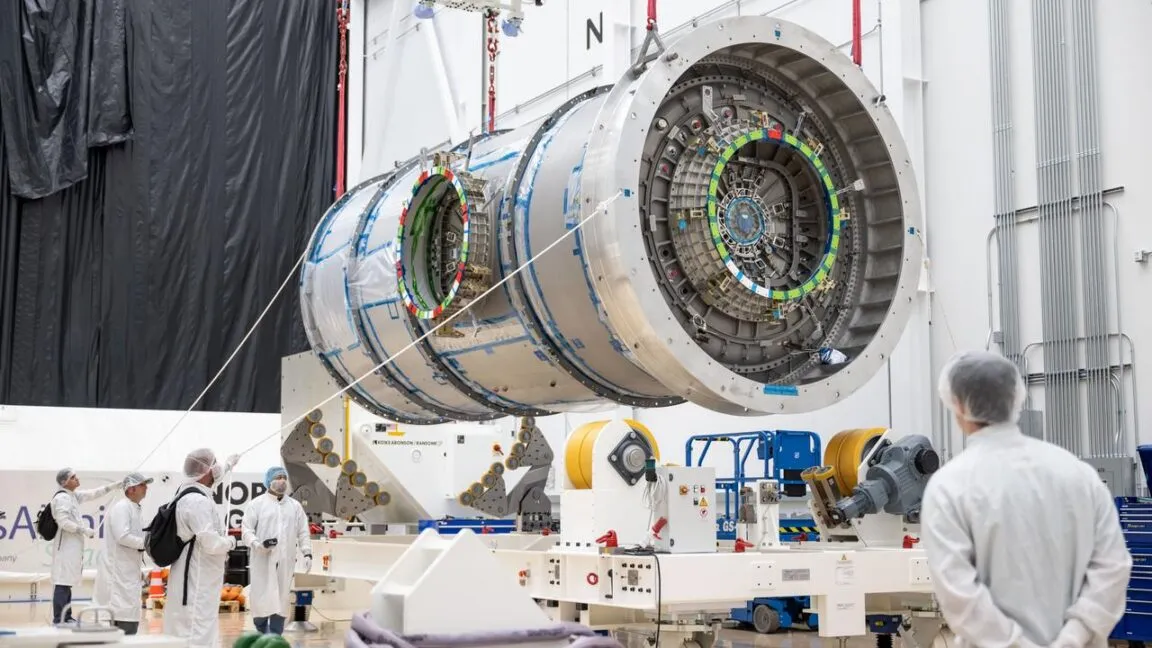
NASA asked Northrop Grumman to stop working on the Habitation and Logistics Outpost (HALO) lunar Gateway module. The change affects a $1.1 billion contract to design, build, and integrate HALO with the Power and Propulsion Element.
NASA has asked Northrop Grumman to stop working on the Habitation and Logistics Outpost (HALO), a major pressurized module meant for astronauts visiting the Lunar Gateway in orbit around the Moon. The request comes as NASA’s lunar strategy is shifting, with a broader pivot away from the Gateway as an orbital space station toward a Moon base on the surface.
This is not a small adjustment hidden in the footnotes. HALO is the large, pressurized habitation module, 6.1 meters long, where visiting astronauts would spend most of their time while using the Gateway. NASA previously awarded Northrop Grumman contracts worth $1.1 billion to design, build, and integrate the habitation module with the Power and Propulsion Element, the Gateway’s power and propulsion hardware. Now NASA is effectively yanking the operational thread for HALO, which forces Northrop Grumman to replan a program built around that interface and timeline.
To understand why this matters beyond one module, you have to zoom out to NASA’s own messaging from about three months ago. At a flashy event at its Washington, DC headquarters, NASA announced it was shifting the focus of its lunar plans from an orbital space station concept to a Moon base on the surface. As part of that shift, NASA said work would be paused on the Lunar Gateway planned to orbit the Moon. In other words, NASA is not just changing engineering priorities, it is changing what “success” means for a set of contractors and schedules.
Within that same pivot, NASA clarified what happens to the two Gateway components that were furthest along. One of them, the Power and Propulsion Element, was not canceled but repurposed. It is being reworked as a core module for a nuclear-electric propulsion demonstration in deep space. That matters because contractors can often salvage partial value when something is repurposed. You still get systems engineering work, integration, and supply chain activity, even if the end customer or mission profile changes.
HALO does not get that same explicit repurpose path in the information provided. Instead, NASA’s stated approach is administrative and immediate: “We are reassigning most affected employees across existing opportunities and programs.” That line signals how NASA is handling the human and labor side of a sudden program shift. For boards, program leadership, and executives, the second-order implication is that the most expensive assets in these efforts are not just hardware but the trained teams that know the requirements, tooling, and integration logic. When NASA pauses Gateway work and now stops HALO, Northrop Grumman will need to absorb uncertainty and redirect people, while maintaining momentum on other programs.
Regulatory and contracting reality also enters the picture here, even if the source is focused on the decision itself. Space hardware programs run under tight procurement expectations, with contracts structured around deliverables like design, build, and integration steps. When a customer like NASA pauses or stops work, it can trigger renegotiations, schedule slips, and financial adjustments. The source notes the $1.1 billion in contract awards tied to HALO. That is the kind of dollar amount that tends to show up in planning assumptions, risk registers, and guidance. Even if employees are reassigned, the programmatic pivot can still change revenue timing and the shape of near-term execution.
For decision-makers at other aerospace and defense contractors, this is a warning label disguised as a news item. NASA’s move underscores that leadership changes in national mission focus can ripple into prime contract scope quickly. And because HALO is the part of the system that houses astronauts, its removal changes how engineers think about logistics, life support integration, and the overall mission architecture. If the Gateway’s role shrinks or shifts, habitation becomes a different problem, not just a slightly different module.
In short: NASA’s request to stop HALO work is the visible edge of a strategic pivot. Northrop Grumman is sitting on a $1.1 billion habitation module effort tied to a Gateway architecture that NASA is pausing, while one Gateway component is being redirected to a deep-space nuclear-electric propulsion demonstration. Executives should treat this as a real-time stress test of how quickly even mature, heavily contracted programs can be re-scoped, and how fast organizations must redeploy talent and commitments when the customer redraws the mission map.
This story's Key Insights and Take-aways are locked.
Create a free account to unlock Executive Actions for one credit.
Register to UnlockAlways free for Executives Club members. Join the Club
More in Business

A flaw in PHP just forced governments to pull their own sites offline
European agencies from Belgium to Germany took websites dark to patch a critical weakness in the language behind almost 70% of the web, and the blast radius extends far beyond government portals.

BioWare shuts down, Mass Effect 5 dead after $55B EA buyout
The legendary RPG studio's closure lands months after a $55 billion investment group buyout of EA, raising tough questions for gaming's biggest acquirers.

Musk weighs Tesla-SpaceX mega-merger as boards form review panels
Special committees at both companies will examine a tie-up that could fuse electric vehicles and space launch, forcing a fresh look at governance and valuation.