
NASA unveils its first new wind tunnel in 40+ years in Virginia on July 31
A ribbon-cutting at Langley brings Flight Dynamics Research Facility capacity back to aeronautics testing, with new policy and RSVP rules.
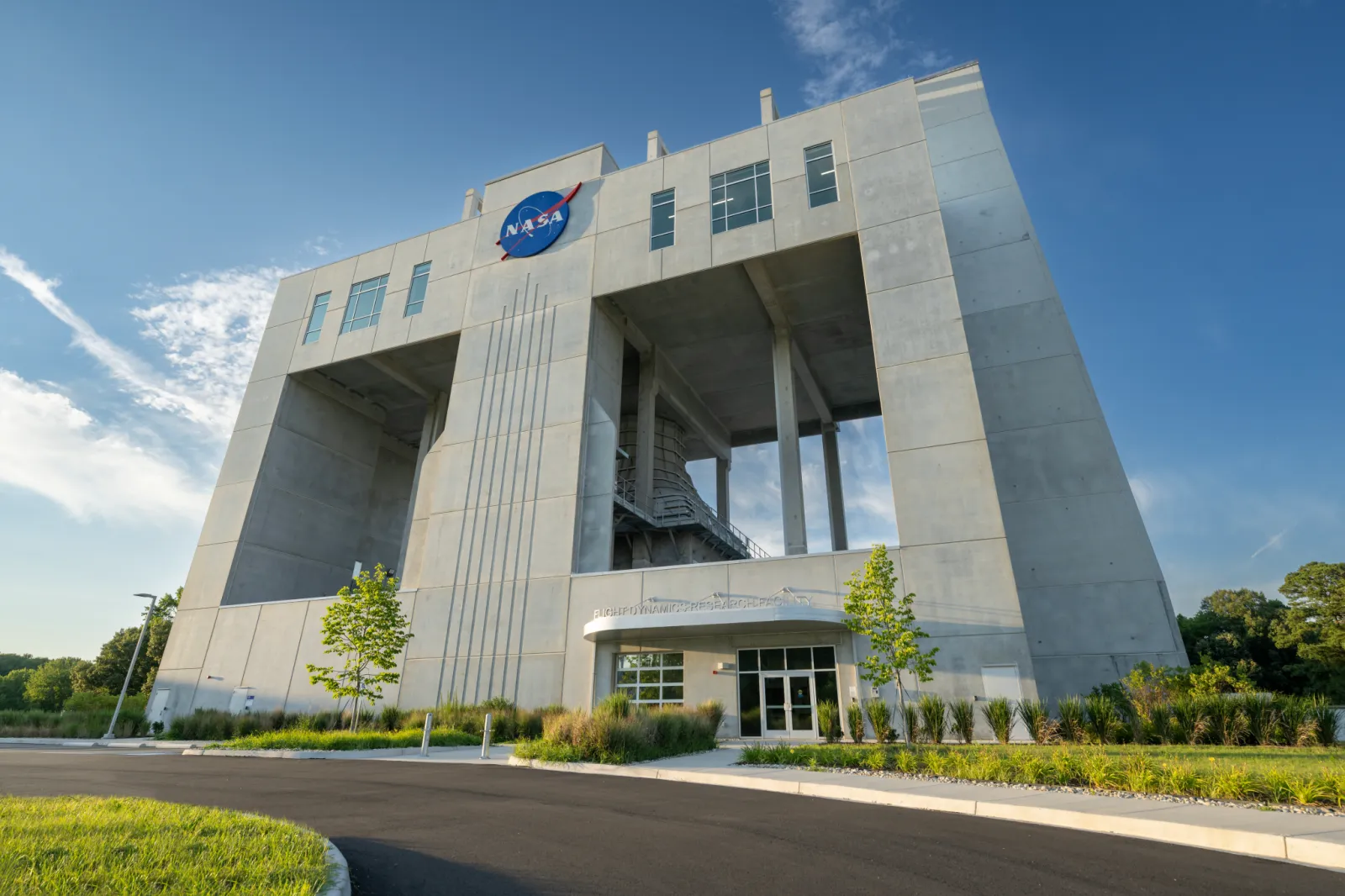
NASA will host a media tour and ribbon-cutting for the Flight Dynamics Research Facility at the agency’s Langley Research Center in Hampton, Virginia, on Friday, July 31. The first new wind tunnel in more than 40 years is positioned to expand NASA aeronautics and exploration research, including Artemis-related goals.
NASA is bringing back something aeronautics researchers have waited a long time for: its first new wind tunnel in more than 40 years. The Flight Dynamics Research Facility sits at NASA’s Langley Research Center in Hampton, Virginia, and NASA is inviting media to a media tour and ribbon-cutting ceremony there on Friday, July 31.
The event includes a brief media availability with NASA Administrator Jared Isaacman and Dr. Trina Dyal, center director at NASA Langley, along with NASA Langley Administrator Edward C. Forst and U.S. General Services Administration officials. NASA is clear that the session is in-person only, and it lays out who can attend, how to RSVP, and the deadline for getting in front of the cameras before the ribbon gets cut.
This is not just a ceremony. A wind tunnel is the kind of infrastructure that quietly determines whether research turns into reliable engineering. NASA describes the Flight Dynamics Research Facility as state-of-the-art and says it will support research and technology development that advances NASA’s aeronautics, exploration, and science goals. In NASA’s framing, that includes establishing a sustained human presence on the lunar surface through the Artemis program and the development of a Moon Base. Whether you are in government procurement, aerospace engineering, or tech-enabled manufacturing, the underlying message is the same: new testing capacity can change how quickly teams validate concepts and de-risk designs.
There is a practical incentive angle here for decision-makers. NASA’s aeronautics and exploration agenda depends on repeatable evaluation test capabilities. When NASA builds a first-of-its-kind facility after a gap of 40+ years, it is effectively resetting part of the pipeline that turns hypotheses into validated performance. That matters to contractors and partners because test schedules, facility availability, and measurement quality are often gating items for programs. Even the “evolution” language NASA uses in its description points to capacity building, not just a replacement project.
For media and, by extension, the broader aerospace ecosystem, NASA is also making the event process explicit. Media are invited to the Langley Research Center in Hampton, Virginia. RSVP is required for anyone requesting to participate in person, and it must be submitted no later than 5 p.m. EDT on Wednesday, July 29. NASA specifies that only members of the media who are United States citizens or lawful permanent residents can attend, and it notes that timing details will be shared closer to the event.
If you are tracking how government agencies run high-visibility technical milestones, the accreditation details are the tell. NASA says its media accreditation policy is available online, and it provides the RSVP recipients and the exact information required. Media RSVPs must be sent to Kimiko Booker at kimiko.s.booker@nasa.gov and Brittny McGraw at brittny.v.mcgraw@nasa.gov. The required fields are legal first and last names that must match government identification, an email address, a phone number, plus job title and organization. That kind of specificity signals internal operational readiness. It also reduces friction for legitimate participants, which is especially important for events that blend technical subject matter with public visibility.
There is also a compliance and governance angle. The presence of the U.S. General Services Administration in the media availability lineup is a reminder that large technical facilities do not exist in a vacuum. They involve procurement, property, and operational frameworks that often require coordination across agencies. While NASA does not detail the administrative mechanics in this notice, the inclusion of GSA officials in the event signals that oversight and enabling processes are part of the story.
The second-order implication for executives and boards in adjacent industries is simple: infrastructure is strategy. When NASA opens a new facility designed to improve aeronautics and exploration testing, it can influence timelines, partnerships, and where attention and funding flow. For organizations that support the aerospace supply chain, or that build measurement and simulation tools intended to complement test environments, this kind of move is a signal that program validation workflows may shift. In plain terms, a new wind tunnel can widen the runway for what gets tested, what gets approved, and what gets funded next.
If you want the official resource, NASA points readers to more information about the Flight Dynamics Research Facility at https://go.nasa.gov/4yzKEGQ.
This story's Key Insights and Take-aways are locked.
Create a free account to unlock Executive Actions for one credit.
Register to UnlockAlways free for Executives Club members. Join the Club
More in Science

Alaska's 1,580-foot tsunami had warning signs. Scientists just found them.
Rapid glacier retreat, heavy rainfall, and thousands of tiny tremors preceded Alaska's 1,580-foot tsunami, a warning for every coastal community in a warming world.

The rare mutation that lets high-risk brains dodge Alzheimer's
Scientists found a natural defense against protein buildup, opening a new path to preventive treatments.

3,000 steps a day may halve Alzheimer's decline, study finds
New research links a modest daily walk to less tau buildup and nearly half the cognitive and functional decline, even for those with early signs.