

Nasdaq dives as Nvidia falls 16% in broad AI selloff sparked by DeepSeek
AI-infrastructure stocks got hit hardest, forcing executives to reprice risk around China-linked model competition fast.

U.S. stocks finished mostly lower, with the Nasdaq leading declines as makers of AI infrastructure, including Nvidia, sold off sharply after China-linked DeepSeek news. For decision-makers, the move signals investors are adjusting near-term expectations for AI spending and winners.
U.S. markets ended mostly lower, and the Nasdaq led the way as a broad AI rout took hold. Nvidia was down 16%, dragging much of the AI-infrastructure complex with it, much of the decline landing in the double digits.
The trigger, according to the WSJ Markets report, was a wave of selloff pressure sparked by China's DeepSeek. That matters because Nvidia is not just another chip name in the index. It sits at the center of the AI compute ecosystem, where investor expectations about demand, deployment timelines, and competitive positioning can move fast. When Nvidia drops 16% in a single session, it effectively tells the market to stop assuming the current AI infrastructure trajectory will play out as smoothly as it had been pricing.
Zoom out for a second on what these days look like in AI markets. “AI infrastructure” is the category investors trade when they bet on compute capacity and the supply chain for machine learning systems: chips, systems, and related building blocks that enable training and inference at scale. In that setup, stock moves often reflect not just current revenue, but the market's view of how quickly customers will scale up spending and how durable the competitive moat is for the platforms and suppliers that power the workload.
So what does a DeepSeek-sparked selloff do to the narrative? Even without getting into the fine details, the implication is straightforward. When a China-linked AI development catches attention, global investors tend to revisit the question of whether capabilities, cost curves, and adoption rates will shift sooner than expected. The result is a repricing of “who benefits” from incremental model progress, and that can hit infrastructure names immediately, even if their longer-term position has not fundamentally changed overnight.
This is where executives need to keep their heads, because stock volatility is rarely just about arithmetic. It is about attention and uncertainty. Markets can treat a headline like DeepSeek as a proxy for competitive intensity across borders, which can lead to fears of demand timing shifts. If investors think models could become “good enough” at lower costs or with different compute profiles, they may infer near-term pressure on how much expensive infrastructure is needed per unit of output. That is not the same thing as saying AI budgets collapse, but it can still drive double-digit declines for infrastructure suppliers in the short run.
Regulatory context also hangs over the conversation, even when it is not the main headline. The U.S.-China tech environment has made cross-border competition and tech diffusion harder to separate from policy risk. Boards and risk committees know that export controls, trade restrictions, and enforcement patterns can influence supply and demand. When a China-linked AI development becomes a catalyst for U.S. market turbulence, it nudges executives to consider how policy uncertainty may affect customer behavior, procurement timelines, and the market’s willingness to underwrite future growth rates.
For decision-makers at AI-heavy companies, there is also a capital markets angle. When infrastructure names sell off sharply, it can tighten financial conditions across the sector. Higher implied risk can raise discount rates for future cash flows, affecting everything from fundraising pricing to the cost of equity for companies that need capital to scale. Even for firms with strong fundamentals, volatility can create distraction, forcing leadership teams to spend time on investor messaging, scenario planning, and communications discipline.
And the second-order effect is psychological too. A broad AI rout, with many names in double digits and Nvidia down 16%, can change how boards judge “execution versus expectation.” Executives who are in the middle of scaling compute capacity or negotiating enterprise deployments may find that customer conversations become more timing-sensitive, because buyers know markets are moving. They may push for clearer proof points, faster ROI, or different implementation plans, especially if they sense that model progress could reduce the needed compute intensity.
The strategic stake is simple: if investors are repricing the near-term AI spending outlook based on a China-sparked competitive signal, peers across AI infrastructure, platforms, and enterprise deployment will feel it, whether their product is directly comparable or not. This is the moment when leadership teams should tighten their narrative around demand drivers, cost structure, and defensible differentiation, because the market has just reminded everyone that AI leadership is contested in real time, not on a quarterly schedule.
This story's Key Insights and Take-aways are locked.
Create a free account to unlock Executive Actions for one credit.
Register to UnlockAlways free for Executives Club members. Join the Club
More in Technology
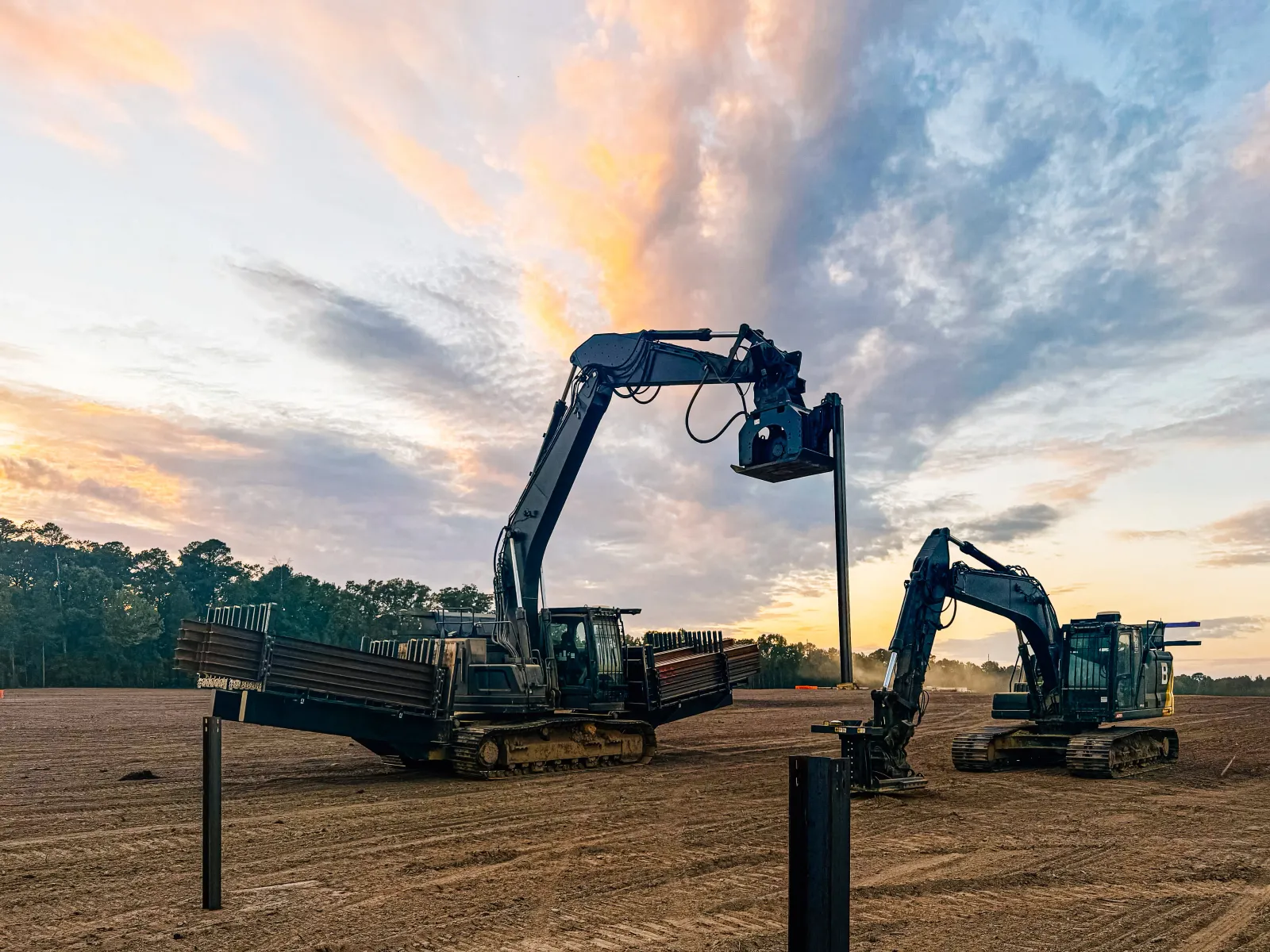
Built Robotics piles 1,000 steel beams daily for Meta’s Hyperion, CEO says
Autonomous retrofits are taking over the mud, the monotony, and part of the power buildout behind an AI data center.

Sony stops making PS5 discs in January 2028, leaving PS games digital only
It also starts winding down PS3 and PS Vita digital stores, tightening the squeeze on game preservation.

Anthropic gets Fable 5 access back after export controls pause cyber risk talks
After the US lifted export controls, Anthropic restored Fable 5 and Mythos 5 access, reshaping the frontier AI review playbook.