
Natalya Saprunova’s Arctic erosion and thaw photos win New Scientist Editors Award
The Earth Photo 2026 win spotlights coastal erosion and permafrost thaw across Inuvialuit territories, with bigger implications for climate risk.

Natalya Saprunova’s photo series exploring coastal erosion and permafrost thaw across Inuvialuit territories in Canada won the New Scientist Editors Award at the Earth Photo 2026 competition. The recognition turns a visual evidence problem into an attention and accountability problem for decision-makers.
Natalya Saprunova's photo series on coastal erosion and permafrost thaw across Inuvialuit territories in Canada just won the New Scientist Editors Award at the Earth Photo 2026 competition. That headline matters because it is not a general “climate imagery” win. It is specifically about two accelerating processes that reshape coastlines and ground stability in polar regions, and it did so through a storytelling format that reaches beyond scientific papers.
In other words, the award is less about aesthetic success and more about what the photos make legible: how quickly environmental conditions can change in lived, place-based ways. Coastal erosion threatens shorelines and infrastructure, while permafrost thaw can destabilize land, alter ecosystems, and complicate planning. When a major science publication recognizes a series like this, it amplifies the signal that these are not distant abstractions. They are on the ground, and the ground can move.
For executives, this is where the story quietly shifts from “art and awards” to “risk communication and governance.” Climate and environmental risk has spent years getting debated in frameworks, spreadsheets, and board decks. But the harder problem has always been moving from model outputs to actionable understanding. Visual documentation can bridge that gap by making physical mechanisms concrete for non-experts. Even if a board does not set policy based on photography alone, it can use it to pressure-test whether strategy is grounded in reality, not just projections.
There is also a regulatory and policy context underneath this kind of spotlight. Governments in many jurisdictions increasingly treat climate risk as a disclosure and resilience issue, not only a scientific one. While the source here does not spell out particular regulations, the general direction of travel matters: organizations face growing expectations to explain how they understand, measure, and prepare for climate impacts. Coastal erosion and permafrost thaw are classic “transition to adaptation” topics, meaning they connect to both physical disruption and the operational choices firms and governments must make afterward. If you run facilities, insure assets, manage supply chains, or finance infrastructure, the questions quickly become: Where are the exposures? What assumptions are baked into timelines? And how confident are we that our mitigation plans match the pace of change?
Then there is the human layer, anchored in the fact that the photos explore Inuvialuit territories. Inuvialuit is not a background detail. It signals that communities who experience these changes directly are part of the story, and the story is not only happening “somewhere else.” For boards, that is second-order governance fuel. When physical impacts are tied to specific territories and communities, stakeholders tend to demand clearer accountability, stronger engagement, and better risk communication. That can translate into reputational consequences, changes in how partnerships are structured, and more scrutiny around whether projects respect local knowledge and priorities.
Second-order, the Earth Photo 2026 award also reinforces how scientific institutions and media outlets curate attention during climate uncertainty. In a crowded information ecosystem, awards can function like filters. They help decision-makers decide what deserves time, discussion, and escalation. That matters because climate risk management is often an internal competition for agenda space: sustainability leads want action, finance teams want rigor, and operations teams want certainty. A prominent Editors Award can reset that internal conversation by making the underlying phenomena harder to dismiss as “too abstract to plan for.”
So what is the strategic stake for peers in similar roles? If your organization is anywhere near climate-sensitive assets, project finance, insurance, or public-facing infrastructure, this win is a reminder that evidence comes in more than one form. Models matter. Monitoring matters. But communication that shows what erosion and thaw look like in context can change how fast an organization moves from awareness to preparedness. The New Scientist Editors Award does not replace measurement or policy. It accelerates the moment when measurement becomes unavoidable.
And in climate governance, speed matters. Erosion and permafrost thaw do not wait for perfect data or unanimous internal consensus. They reshape coastlines and land stability on their own schedule. Awards like this, by turning scientific themes into legible, shareable proof, can help leadership teams close the gap between what they know and what they do.
This story's Key Insights and Take-aways are locked.
Create a free account to unlock Executive Actions for one credit.
Register to UnlockAlways free for Executives Club members. Join the Club
More in Science
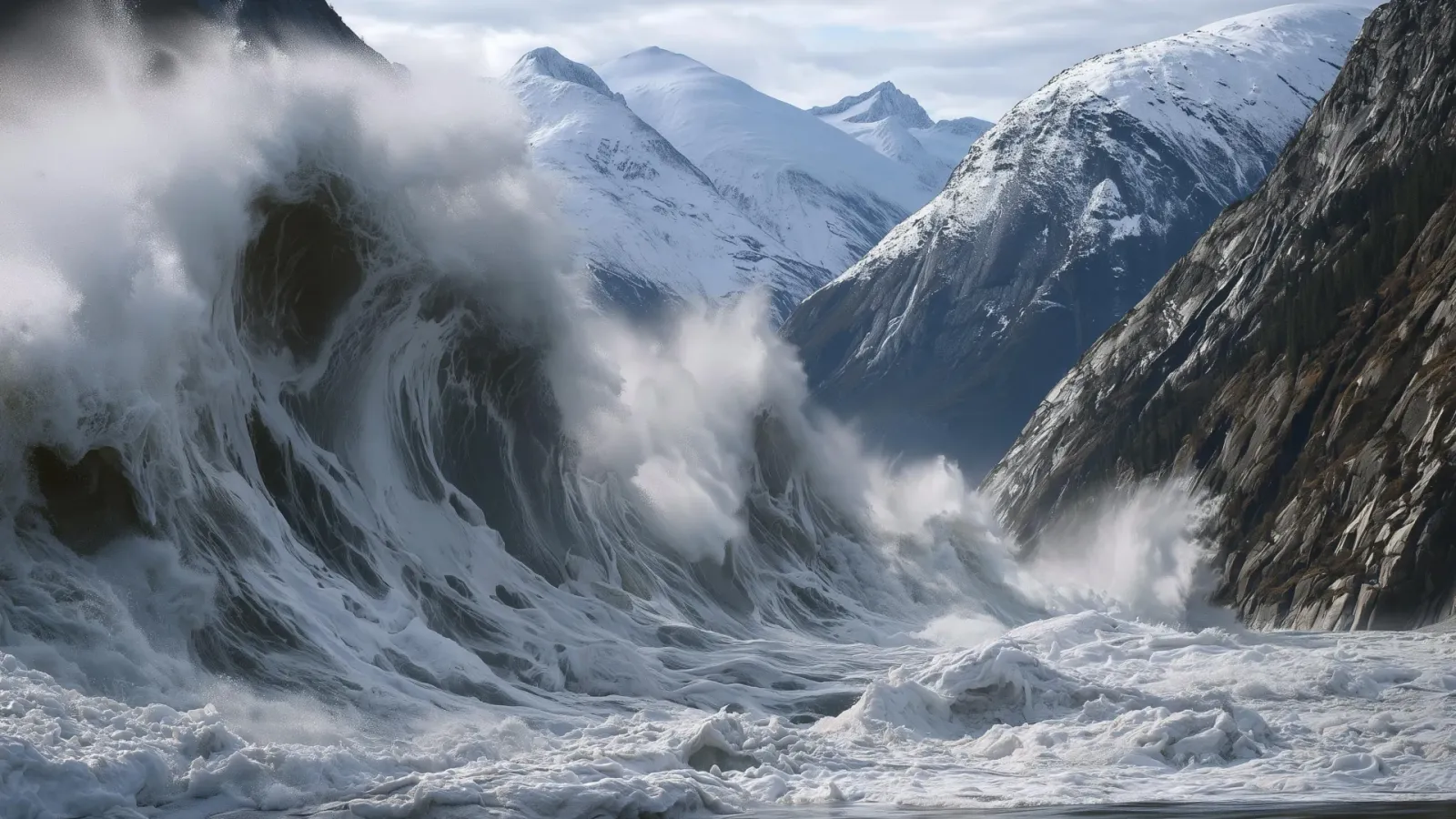
Alaska's 1,580-foot tsunami had warning signs. Scientists just found them.
Rapid glacier retreat, heavy rainfall, and thousands of tiny tremors preceded Alaska's 1,580-foot tsunami, a warning for every coastal community in a warming world.
The rare mutation that lets high-risk brains dodge Alzheimer's
Scientists found a natural defense against protein buildup, opening a new path to preventive treatments.
3,000 steps a day may halve Alzheimer's decline, study finds
New research links a modest daily walk to less tau buildup and nearly half the cognitive and functional decline, even for those with early signs.