

National Guard troops train drone-vs-bird recognition sensors for chemical and biological response
New sensor tech helps units spot unmanned aircraft systems fast, reducing the time between threat and action.
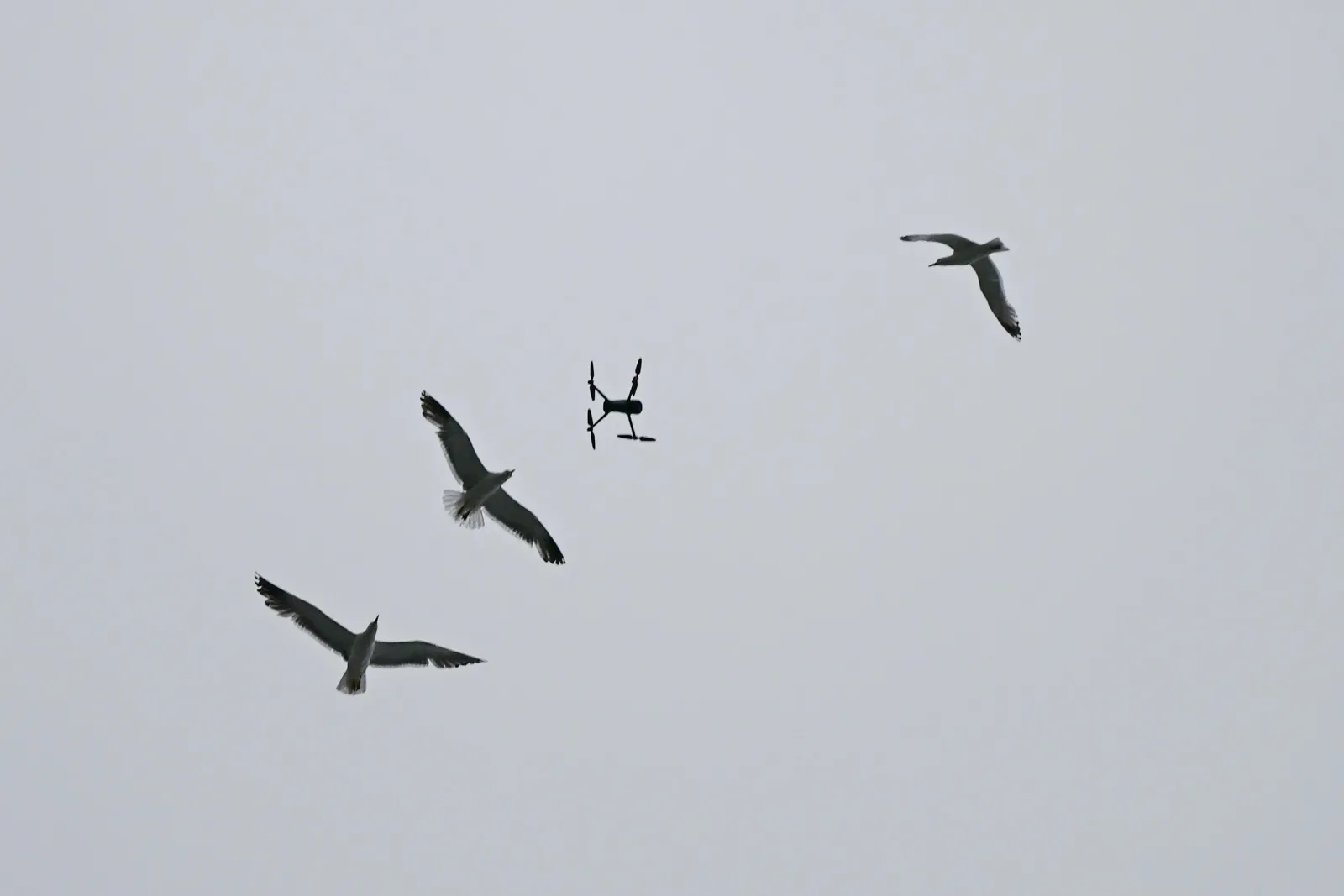
National Guard troops responding to biological and chemical attacks are training with sensors that use advanced recognition technology to distinguish drones from birds and identify unmanned aircraft systems. For decision-makers, this signals where homeland defense capability is heading: faster detection, clearer classification, and less uncertainty during high-stakes incidents.
National Guard troops who respond to biological and chemical attacks are training to use sensors equipped with advanced recognition technology to spot unmanned aircraft systems, including by distinguishing drones from birds. That detail matters more than it sounds. In the field, “it looks like a drone” is not the same as “it is a drone,” and misclassification wastes time when every minute counts.
The training focus is practical: units are building the ability to detect unmanned aircraft systems while they are already operating in complex, chaotic environments tied to biological and chemical threats. These missions are not routine patrols where you can casually confirm an object. The point is to get from detection to action quickly, using sensor-equipped recognition rather than relying solely on human observation.
To understand why this is a big deal, zoom out to how drone detection usually goes sideways. Drones share visual patterns with birds at a distance, and many airspace monitoring efforts have historically struggled with false positives. Birds move differently than propellers and rotors, but at night, in bad weather, or when units are dealing with other hazards, the human-in-the-loop problem grows. Recognition technology that can distinguish drones from birds is essentially trying to shrink that uncertainty. In other words, it is not only about spotting something in the sky. It is about making the information usable under stress.
For executives and boards, the strategic angle is that government training priorities often become procurement priorities. When a unit is taught a specific capability in the context of biological and chemical response, it tells you what kinds of tech are becoming mission-critical, not just “nice to have.” The category matters: sensors plus classification, not just sensors that capture raw data. That shift has downstream implications for developers and investors watching national security and homeland defense technology, because the bar tends to move from experimentation to operational deployment.
There is also a regulatory and interoperability subtext here, even though the source does not spell it out in detail. In the United States, drones create both public safety questions and airspace management challenges, and responses involve multiple layers of authority. During biological or chemical incidents, the command and control picture can get complicated quickly: who has the authority to act on an air threat, what systems can be integrated, and how information is relayed so that it leads to coordinated decisions. Sensor-based recognition that can classify unmanned aircraft systems in a way responders can trust is one of the ingredients that helps avoid “analysis paralysis.”
Second-order implications show up in budgets and product requirements. If the operational goal is to distinguish drones from birds and detect unmanned aircraft systems during high-risk response operations, then decision-makers will likely favor solutions that reduce false alarms, work in varied conditions, and can be taught to responders without turning every deployment into a bespoke engineering project. Training is evidence of that direction, because it suggests the technology is being packaged into an operational workflow rather than left as a science project.
For peers in similar roles, the signal is straightforward: airspace threats are no longer treated as a separate track from incident response. They are being folded into biological and chemical response readiness through sensors and recognition technology. If you are advising an organization that touches defense, public safety, critical infrastructure, or the broader security ecosystem, this is a reminder that the next competitive frontier may be classification accuracy and operational usability, not just detection range.
This story's Key Insights and Take-aways are locked.
Create a free account to unlock Executive Actions for one credit.
Register to UnlockAlways free for Executives Club members. Join the Club
More in Science

Alaska's 1,580-foot tsunami had warning signs. Scientists just found them.
Rapid glacier retreat, heavy rainfall, and thousands of tiny tremors preceded Alaska's 1,580-foot tsunami, a warning for every coastal community in a warming world.
The rare mutation that lets high-risk brains dodge Alzheimer's
Scientists found a natural defense against protein buildup, opening a new path to preventive treatments.

3,000 steps a day may halve Alzheimer's decline, study finds
New research links a modest daily walk to less tau buildup and nearly half the cognitive and functional decline, even for those with early signs.