

NATO debates protecting Eastern Europe as America pulls back, and Germany readies tanks
As US support shifts, NATO is stress-testing a new defense posture, with German armor back in focus.

NATO is pondering how to defend Eastern Europe as America pulls back. The change matters because it signals a broader, politically fraught pivot in who underwrites European security.
NATO is now pondering how to defend Eastern Europe as America pulls back, and the uncomfortable headline detail is this: German tanks are returning to a region they once razed.
That is the core of the story. It is not just about hardware or maneuvers. It is about political memory, alliance math, and what happens when the world’s biggest security backstop steps away from the exact level of involvement Europe has grown used to. NATO thinking here is essentially a risk-planning exercise in public, with history as part of the risk model.
For decision-makers, the reason this becomes urgent is simple: deterrence is not a “nice to have” for markets and institutions. It is the baseline condition that lets businesses invest, supply chains operate, and governments keep fiscal and regulatory programs on schedule. When US posture shifts, even if the shift is gradual or partial, European planners have to assume more responsibility for readiness and rapid response. That is where tank talk stops being a military detail and becomes an economic and governance one. If the alliance wants credible defense quickly, it needs procurement decisions, training cycles, stockpiles, and infrastructure upgrades to line up faster than usual.
And NATO is not starting from scratch. European defense planning has long wrestled with the same incentive mismatch: countries facing budget pressure still want to benefit from collective security without paying the full marginal cost of it. When the “America pulls back” premise enters, the incentive structure changes. Suddenly, contributions that used to feel optional become linked to alliance credibility. In plain English, if you are a member state trying to keep your seat at the table, you cannot treat readiness as a long-term aspiration. You need it as an immediate capability.
The specific return of German tanks to Eastern Europe also matters because Germany’s role carries uniquely heavy political weight. The source frames it bluntly: these are German tanks returning to a region they once razed. Even if every operational decision is driven by current strategic needs, the symbolism lands. That means policymakers and corporate leaders alike should read defense posture as a governance issue, not just a military one. Public consent, coalition management, and regional relationships become part of the operational environment. When the historical meaning of a force is front and center, communication strategy is not PR. It is operational readiness for diplomacy.
Second-order implications show up in procurement and industry dynamics. Defense supply chains have long lead times, and credibility depends on more than buying platforms. It depends on maintaining readiness through sustainment, parts availability, munitions, and training throughput. When planning accelerates because an ally is pulling back, boards and finance teams at defense-adjacent firms typically face questions like: Can production scale without new constraints? Do contracts cover ramp-up costs? Are there bottlenecks in components, logistics, or skilled labor? Even if the source does not enumerate timelines or procurement programs, the logic is built into how alliance posture changes usually work: when responsibilities shift, procurement decisions move from “budget year” to “capability now.”
There is also a regulatory angle, especially for cross-border operations. Defense production and deployment often intersect with export controls, sanctions regimes, and national security reviews. When alliance members coordinate more closely, companies can face tighter scrutiny, faster approvals in some lanes, or more compliance burden in others. Executives should assume that any new defense emphasis in Eastern Europe will ripple through compliance planning, contracting terms, and partner selection across jurisdictions. The risk is not theoretical. It is about whether companies can keep operating while aligning with shifting national priorities.
Finally, for peers in similar roles across Europe and beyond, NATO pondering this question is a signal to treat alliance readiness as a multi-domain strategy. It touches politics, industry capacity, and market confidence at the same time. If German tanks are returning to a region they once razed, that is a reminder that security decisions never arrive in a vacuum. They come with historical context, and they come with second-order consequences for how quickly institutions can adapt.
So the stake is bigger than who has the most armor. It is whether NATO can deter effectively while credibility and political buy-in are being renegotiated in real time. As America pulls back, Europe is forced to answer a hard question out loud: who will carry more of the weight, and how fast can they do it.
This story's Key Insights and Take-aways are locked.
Create a free account to unlock Executive Actions for one credit.
Register to UnlockAlways free for Executives Club members. Join the Club
More in Politics
DEA targets synthetic 7-OH kratom products with Schedule I filing, temporarily banning them
The DEA’s move to classify 7-hydroxymitragynine and related substances as Schedule I resets the legal risk for kratom suppliers.

Defra breached environmental law in 2023 and 2024 for emergency bee-killer pesticide
A UK watchdog says Defra’s emergency authorisations for a banned neonicotinoid on sugar beet failed legal requirements.
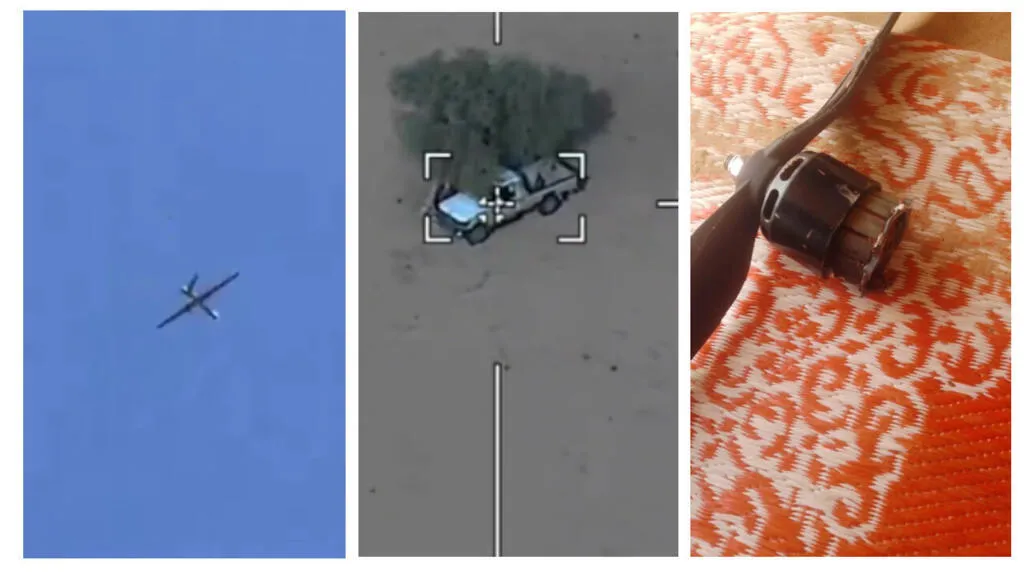
Russia’s Africa Corps deploys Ukraine-style drones in Mali, pushing into a Sahel they weren’t built for
For boards and risk teams: a new drone pipeline tied to Russian support for Mali is moving from Ukraine frontlines into the Sahel.