

Natura’s Doug Robison turned a $3.2M ACU gift into MSR-1 by 2028
The advanced nuclear bet at Abilene Christian University aims for first reactor power, plus a West Texas business case.
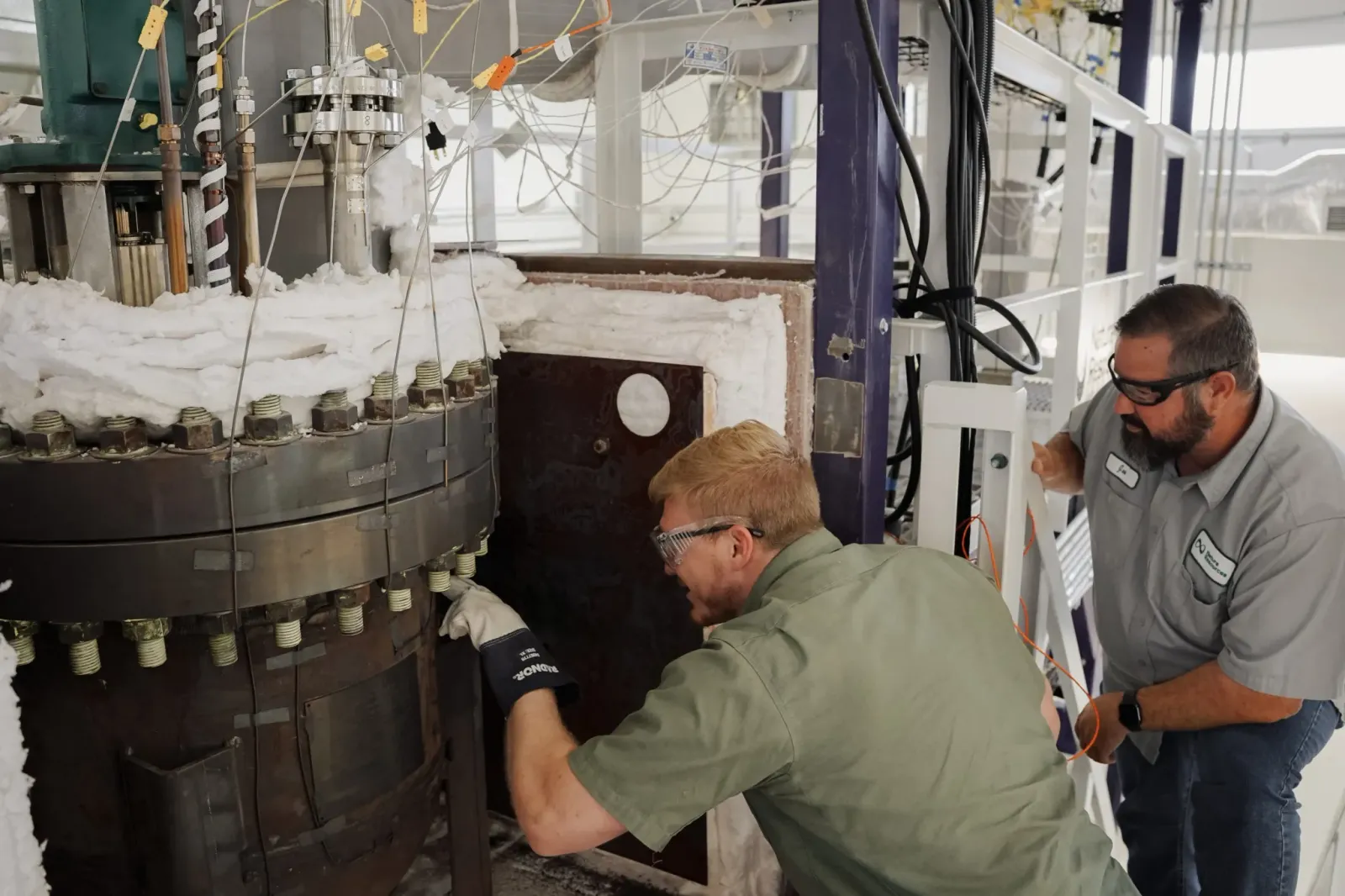
Doug Robison, a third-generation Texas oilman behind Natura, helped launch Abilene Christian University’s next-gen nuclear work with a $3.2 million research donation and a plan to host a test reactor. Natura now targets bringing MSR-1 online in 2028 after the Nuclear Regulatory Commission approved the construction permit in 2024, with a larger 100-megawatt unit planned for 2032.
Doug Robison did not start with nuclear. He started with retirement plans and a petroleum-company sale, until a brief talk at Abilene Christian University (ACU) changed his trajectory, atom-by-atom. The moment came when Rusty Towell, director of ACU’s Nuclear Energy Experimental Testing lab (NEXT), pitched next-generation molten-salt reactors as affordable power. Robison heard it, then did something that sounds simple until you picture the calendar it requires: he asked Towell what would happen “if you're fully funded,” repeated the question three times, and got a rough plan two weeks later.
That “fully funded” answer became a real number and a real commitment. Robison’s $3.2 million research donation kickstarted the effort, and the news spread fast enough to pull U.S. Energy Secretary Rick Perry, then a former Texas governor, into the story. A U.S. government team studied the research at Abilene. In 2019, the Department of Energy offered fuel and salt support only if they agreed to build a test reactor, and ACU volunteered to host it. Towell’s project moved because Robison decided it would. “I held my hand up in the room and said, ‘I'll fund it,’” he said, and when ACU President Phil Schubert asked how we were going to do this, Robison’s response was blunt: “Phil, I don't have a clue.”
Here’s why that early messiness matters for decision-makers now: Natura did not just “believe” in advanced nuclear. It converted an academic test ambition into an actual startup structure fast enough to keep momentum while the rest of the industry crowds around hype cycles. Robison took the defunct corporate shell of an organic farming company he’d started in the 1980s, Natura, and turned it into a next-generation nuclear startup focused on smaller reactors and new approaches to cooling and other functions. It is a literal repurpose, and the strategic bet is that the technical work and the credibility work can be done together.
Today, Natura says its first reactor, MSR-1, is planned to come online in 2028 in Abilene, with the Nuclear Regulatory Commission approving the construction permit in 2024. It also plans a 100-megawatt commercial reactor in West Texas’ Permian Basin or near Texas A&M in Bryan by 2032. Those dates are not just timeline trivia. They map to the race for power demand driven by AI data centers and the broader push for nuclear that can move faster than traditional deployment. The Trump administration’s Nuclear Reactor Pilot Program adds another accelerant: Natura joined an initial set of 10 companies tasked with achieving criticality on at least three test reactors by the Fourth of July, the same date the administration ends subsidies for wind and solar projects.
But the “race” is not as straightforward as the headline-friendly framing. Natura is not one of the three announcing criticality successes by July 4. And notably, none of the perceived leaders achieved criticality in the pilot program. The pilot emphasis is a key inflection point, but it is not the same as a full commercial reactor operating continuously and producing electricity. Criticality is the milestone when a reactor sustains its first chain reaction. An operating reactor runs safely over a long period.
That distinction is showing up across the competitive landscape. Natura, Google-partnered Kairos Power, Bill Gates-backed TerraPower, Sam Altman-backed Oklo, and Amazon-backed X-energy are all focused on building nuclear reactors for utility-scale grid power and hyperscalers. Meanwhile, the three groups that announced criticality successes are developing smaller microreactors for industry or military bases, including Antares Nuclear’s Mark-0 at Idaho National Laboratory, Valar Atomics’ Ward 250 at the Utah San Rafael Energy Lab, and Deployable Energy’s Unity reactor, also at Idaho National Lab.
Technically, Natura’s molten-salt direction is a big reason it thinks it can fit speed into safety. In these designs, the molten salt dissolves the nuclear fuel directly into a liquid salt mixture. The salt acts as both coolant and fuel carrier, which reduces the need for high pressures. The reactor, Doug Robison argues, can fail “without losing containment” because radioactive fuel is trapped in the salt. He also points to the unusual reality that “Our reactor is sitting in the middle of Abilene right across the street from a dormitory,” and attributes that possibility to not operating under pressure and never losing containment.
Strategy-wise, Natura is trying to solve the investor question that always shows up after the engineering work: derisking. Robison framed it as moving from belief to finance, “to the point when the financial industry says, ‘Now, we believe it.’” He compared it to oil and gas in the Permian. When money hit the table, suppliers and entire industries spun up, from steel mills to fracking mines producing sand. Natura’s version is tied to “proving” not only a reactor but a supply chain that can scale up commercially in the 2030s.
Capital and capability are part of that story. Late last year, Natura bought advanced nuclear development company Shepherd Power from NOV, partnering with NOV in the process. Natura chief operating officer Jordan Robison, Doug’s nephew, described the gap investors care about: proving “a reactor system.” He said there’s a “difference between a criticality test and building a full reactor system.”
Then comes the part that expands the addressable market beyond electricity. Natura is eyeing West Texas’ Permian Basin not only for rising electricity needs, but because the region has a growing problem with handling chemically polluted water extracted during oil and gas production. Robison’s argument is practical: reactor heat can be used to desalinate water. Natura is already working with NGL Energy Partners, which has a large water solutions business. Start with Texas, prove the dual-use case, then scale.
For executives, this is the second-order takeaway: advanced nuclear is not just competing with other nuclear designs. It is competing with time, capital scrutiny, and the burden of proof that “a prototype can become a product.” Natura’s foundation at ACU, the NRC construction permit in 2024, the MSR-1 2028 target, and the 2032 commercial plan all turn on whether it can turn pilot milestones into bankable operating systems. If it succeeds, it is not only a power story. It is a whole new deployment playbook for hyperscalers, utilities, and industrial operators that need power and cannot wait on the slow lane.
This story's Key Insights and Take-aways are locked.
Create a free account to unlock Executive Actions for one credit.
Register to UnlockAlways free for Executives Club members. Join the Club
More in Business

Comcast shares jump 25% as it plans to split NBCUniversal and Sky
The tax-free spin-off could reshape focus, funding, and competition across media and tech for years.

Bungie cuts most Destiny 2 staff as Sony says Marathon still matters
Herman Hulst confirms layoffs affecting most Destiny and some Marathon teams after Bungie admits Destiny fell short.

SK Hynix jumps 11% after seeking up to $29.4B in Nasdaq listing
The chip giant filed for a Nasdaq listing plan that could raise $29.4 billion, instantly reshaping investor expectations.