
Neon picked up Luca Guadagnino's Sam Altman film after Amazon MGM dropped it
Andrew Garfield's nearly finished "Artificial" found a new home after Amazon struck a $50 billion OpenAI deal.
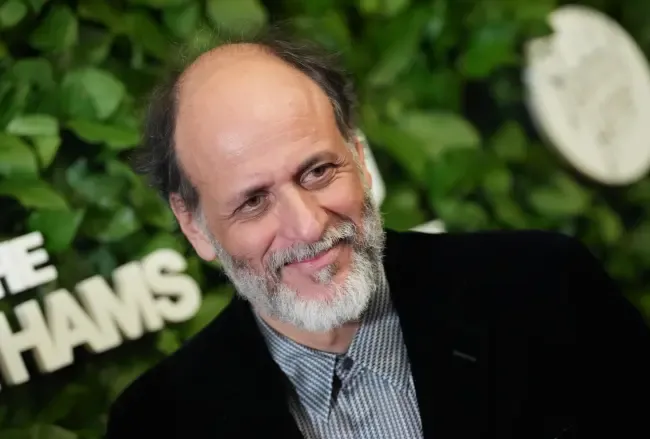
Neon picked up Luca Guadagnino's film "Artificial," starring Andrew Garfield, after Amazon MGM dropped it. The project was nearly complete and was targeting a next-year release, but Amazon's $50 billion deal with Sam Altman's OpenAI ended its run.
Luca Guadagnino’s nearly complete Sam Altman film “Artificial,” starring Andrew Garfield, landed with Neon after being dropped by Amazon MGM. The switch is more than a studio shuffle for a single title. It is a reminder that when a company signs a headline-grabbing artificial intelligence deal, entertainment slates can get reorganized fast, even for productions that are already far along.
Per IndieWire, the film was set to be released next year, but was nixed after Amazon struck a $50 billion deal with Altman’s OpenAI. That timing matters. A movie that is “nearly complete” usually sits on a runway where studios are thinking about finishing schedules, marketing windows, and release timing. When that changes, it typically signals that strategic priorities moved above project-specific logistics. In this case, the project did not survive the Amazon-AI moment.
To understand why this kind of trade-off happens, you have to look at how modern media companies budget risk. Even “nearly complete” films still carry real exposure: final spend, post-production decisions, distribution costs, and the opportunity cost of occupying a slot in a crowded calendar. Studios also track whether the release supports a broader narrative about the company’s brand and investment thesis. Amazon’s OpenAI partnership, described here as a $50 billion deal, is the kind of move that tends to absorb internal attention and capital at scale. The consequence for film development can be abrupt reallocations, especially when leadership wants to reduce distraction and align spend with the biggest strategic bets.
There is also the board-level dynamic. Big tech and media groups often operate with portfolio thinking. A board or executive team will ask not only “Will this film make money?” but also “Does it move our broader agenda?” When a company commits to an AI relationship this large, the incentive becomes clearer: avoid anything that creates internal friction, complicates messaging, or delays the ability to execute on the deal. The source does not give details on Amazon MGM’s internal rationale beyond the timing link to the OpenAI deal. Still, the sequence in IndieWire’s report is explicit: the film was dropped after the $50 billion arrangement.
Meanwhile, Neon’s involvement highlights a second order effect for decision-makers who think they are just buying movie rights. Independent distributors and specialty players often capitalize on precisely this kind of situation, where a major studio exits a project late. For Neon, picking up a “nearly complete” film can be attractive because it reduces the uncertainty of starting from scratch. But it also comes with constraints. If the movie was already moving toward a next-year release, timelines, deliverables, and promotional plans may need rapid recalibration. Specialty releases can succeed, but they still depend on finishing choices, legal clearances, and marketing bandwidth that must be realigned under a new owner.
Then there is the talent and audience side. “Artificial” has marquee draw for mainstream viewers and industry watchers because it stars Andrew Garfield and is associated with Luca Guadagnino. A film like that is often expected to travel beyond niche art-house circles. When a project changes hands, it can reshape how the market perceives it: will it be treated as a prestige event, a distributor-specific play, or a delayed release that has to prove itself without the original mega-platform backing? That question becomes a forecasting problem for marketers and analysts, not just a creative one.
For executives at other studios, streamers, and production groups, the strategic stake is straightforward: large corporate AI commitments can ripple into entertainment programming decisions, even late in the production cycle. In practical terms, boards and finance teams should treat partnerships like OpenAI as not only tech bets, but also portfolio drivers that can reorder film slates. The IndieWire report ties the “Artificial” reversal directly to Amazon’s $50 billion deal with Altman’s OpenAI. In a world where AI partnerships set the internal agenda, film projects may be collateral, and the ones that survive will be those that align cleanly with the new corporate center of gravity.
In other words: this is a story about a movie finding Neon, but it is also about how quickly capital, attention, and release strategy can be re-optimized when a $50 billion AI bet lands.
This story's Key Insights and Take-aways are locked.
Create a free account to unlock Executive Actions for one credit.
Register to UnlockAlways free for Executives Club members. Join the Club
More in Business
Comcast shares jump 25% as it plans to split NBCUniversal and Sky
The tax-free spin-off could reshape focus, funding, and competition across media and tech for years.

Bungie cuts most Destiny 2 staff as Sony says Marathon still matters
Herman Hulst confirms layoffs affecting most Destiny and some Marathon teams after Bungie admits Destiny fell short.

SK Hynix jumps 11% after seeking up to $29.4B in Nasdaq listing
The chip giant filed for a Nasdaq listing plan that could raise $29.4 billion, instantly reshaping investor expectations.