

Netflix hunts its next Stranger Things obsession after the 2026 finale closed
With Stranger Things ending, Netflix is doubling down on spin-offs like Tales From '85 and The First Shadow.
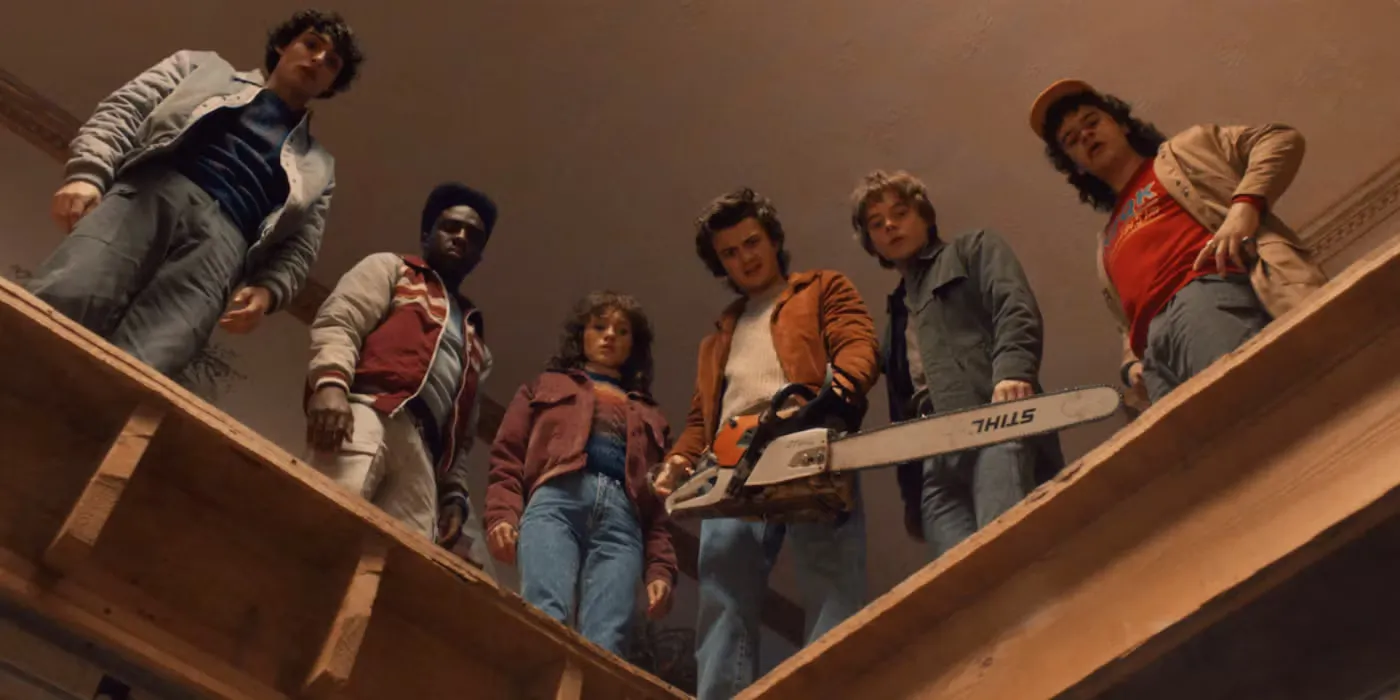
Netflix has moved quickly after Stranger Things wrapped with a super-sized finale at the beginning of 2026, planning new franchise vehicles including Tales From '85 and The First Shadow, centered on Vecna (Jamie Campbell Bower). For decision-makers, the consequence is clear: Netflix must replace a cornerstone with “adjacent” IP before momentum cools.
Stranger Things ended in a super-sized finale at the beginning of 2026. That sounds like the end of a chapter. In Netflix terms, it is more like the closing of a factory line, right before you have to prove you can keep producing hits at the same pace.
Netflix is already telling you what comes next: it is building the next wave of the Stranger Things franchise in different formats, not just “more seasons.” The animated series Tales From '85 takes place between Seasons 2 and 3. A stage play, The First Shadow, expands on the origins of the villainous Vecna, with Jamie Campbell Bower attached. And the streamer is also leaning on the Duffer brothers' broader sci-fi work, highlighting that Ross and Matt Duffer produced Netflix's latest sci-fi hit, The Boroughs.
Why this matters for operators and investors is the math of audience habit. Streaming is not only about building a show. It is about preventing subscription churn and keeping viewers in the Netflix ecosystem week after week. When a flagship ends, Netflix cannot just wait for “the next one.” It has to keep the brand’s gravity pulling, because fandom is a schedule as much as a genre. Stranger Things built multi-year routines for viewers. Ending the routine creates a gap, and gaps get filled by competitors, price-sensitive customers, and the blunt reality of algorithmic attention.
So Netflix is using a franchise strategy that is both creative and risk-managed. Instead of asking fans to relearn a new world from scratch, it keeps them in the same universe, but shifts the medium and timeline. Tales From '85 is positioned between established seasons, which is a clever way to give longtime viewers the reward of continuity without committing to the exact same narrative arc. The First Shadow does something similar with focus: it takes Vecna, a character anchor, and pushes the story toward origin territory. That is not just fan service. It is a structural bet that villain lore can carry audience interest even when the original ensemble timeline has closed.
For executives, the real question becomes: how do you size a replacement before the brand momentum actually fades? Netflix tends to run on scale and serialization, but the platform also has to navigate the economics of production pipelines. New seasons are expensive. Animation and live stage adaptations are still costly, but they can fit different production calendars and different audience discovery paths. A stage play also creates a kind of “eventness” that standard episodic releases do not. That matters when you are trying to preserve franchise mindshare in the time between major releases.
There is another layer here: how much control Netflix wants versus how much it wants to partner. The source notes that the Duffer brothers, creators Ross and Matt Duffer, are involved in producing Netflix's latest sci-fi hit, The Boroughs. That detail signals that Netflix does not just want IP assets. It wants the people who can repeatedly produce sci-fi worlds that feel coherent enough to be trusted. In boardrooms and strategy meetings, that becomes a question of survivability: is Netflix buying a brand, or is it building a repeatable creative engine?
At the same time, decision-makers should think about what format diversity does to risk. A single show can underperform, but an ecosystem of formats can smooth out misses. If one installment does not land as hard, other vehicles still keep the “Stranger Things” banner visible, discoverable, and culturally active. It is the difference between a single stock and a portfolio, except the portfolio is built out of story worlds. Tales From '85 and The First Shadow offer different entry points for different segments of the audience, including viewers who want backstory and viewers who prefer a more experimental medium.
Finally, there is the governance reality. Netflix operates in a world where regulators increasingly pay attention to media industry practices, including content classification, advertising boundaries, and consumer protection. Even when a story is purely entertainment, the business still lives in a compliance environment. For execs, that means franchise expansion has to be planned with operational readiness, not just creative excitement. It is easier to get approvals, schedule releases, and maintain safety and ratings expectations when you are building on known universe parameters rather than launching brand-new concepts from scratch.
The strategic stakes are simple, but they are unforgiving: when Stranger Things ends, Netflix has to prove it can protect subscriber momentum with franchise breadth, not just franchise depth. If it gets this right, it keeps fans engaged across formats while it prepares whatever comes next. If it gets it wrong, the gap opens fast, and attention is expensive enough that “we’ll find the next hit later” is not a plan. For peers, the lesson is that ending a flagship is never just an ending. It is the start of a replacement race.
This story's Key Insights and Take-aways are locked.
Create a free account to unlock Executive Actions for one credit.
Register to UnlockAlways free for Executives Club members. Join the Club
More in Entertainment

Russell Brand's accuser 'bewildered and confused' as he denies 7 sex charges
The criminal case against the comedian is a live test of how media companies manage talent risk when serious allegations go public.

'It's a Magic Trick': Ballet Experts Say Rosalía's SNL Pose Is Impossible
Three ballet experts tell Rolling Stone Rosalía's gravity-defying SNL stillness shouldn't be possible - and why the debate is now part of the show.

Activision CMO: GTA 6 Will Boost Call of Duty, Not Bury It
Activision's top marketer says Rockstar's blockbuster will drive players back to consoles and into Modern Warfare 4, even as the company admits its recent strategy failed.