
Netflix’s Stranger Things at 10 made science cool for teenagers, not just nerds
Educators, the Institute of Physics, and the U.S. Department of Energy all leaned on the Upside Down to spark STEM curiosity.
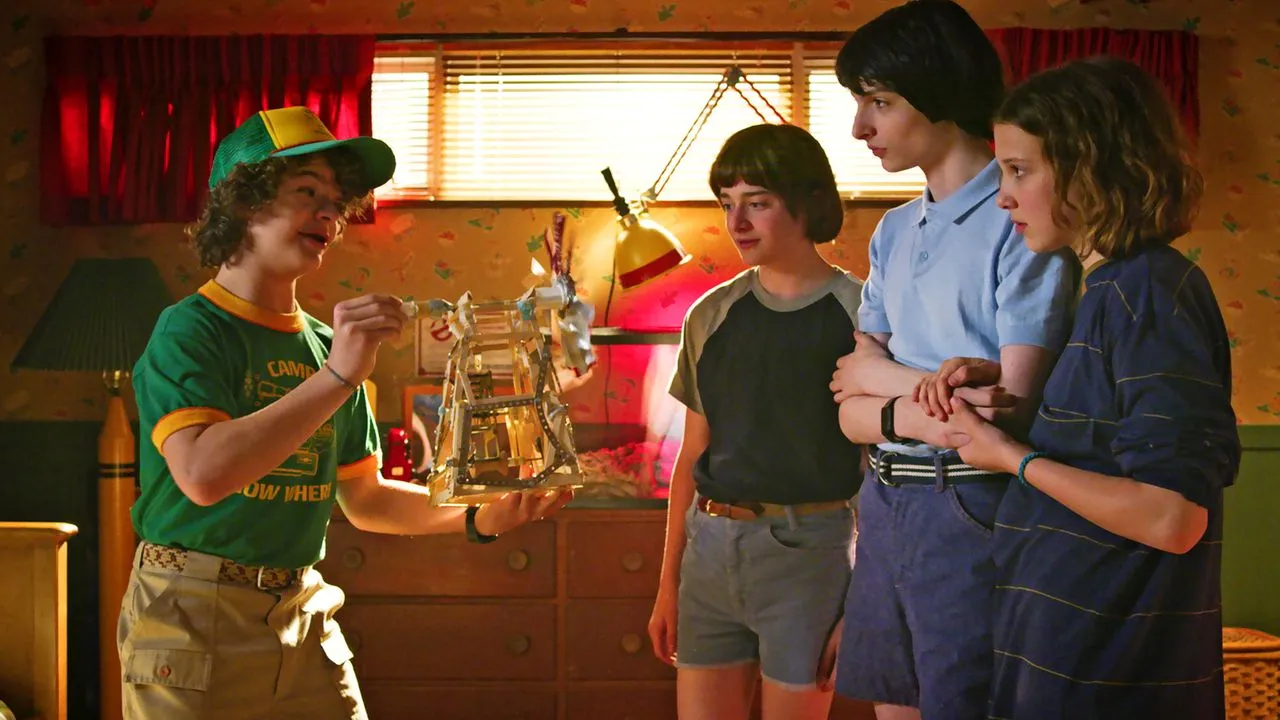
Netflix’s Stranger Things, which debuted in July 2016 and hit a decade milestone in 2016-2026 discussion, pulled educators, physics groups, and even the U.S. Department of Energy into using its sci-fi hook to teach real science. For decision-makers, it’s a case study in how mainstream entertainment can move measurable attention from disengaged audiences toward STEM and critical thinking.
In July 2016, Stranger Things stormed into pop culture, and by the time it hit the “at 10” conversation, it had done something unusually strategic: it made science feel like something teenagers wanted to talk about, not endure. Educators and physics leaders described it as a bridge, and they were explicit about the problem they were trying to solve: when science or engineering enters the room, “they run away.”
That quote is from University of Liverpool physics professor Carsten Welsch, speaking to NPR, where he said Star Wars references were no longer cutting it with his students, and that Stranger Things science gave him a way to talk about physics “which can be quite a challenge, especially with teenagers.” The Institute of Physics’ Louis Bearson, director of science, business, and education, echoed the same theme: physics needs to be “more representative of the community at large,” and using a cultural phenomenon like Stranger Things can widen the base of people interested beyond textbook explanations.
This matters to executives because it reframes entertainment as an attention engine, not just a content product. Stranger Things was built on ’80s nostalgia, horror, and sci-fi, but its influence extended into how institutions handle recruiting and learning. STEM pipelines are often discussed in terms of long-term outcomes, but the source makes a sharper point about earlier stages: it’s “often underestimated how invaluable a show like Stranger Things has been to educators who want to turn around the declining numbers in STEM graduates.” Whether a show increases interest directly or indirectly, the direction of travel is the key signal for boards and leaders watching youth engagement.
And it wasn’t only classrooms. Government communications took the same approach. The U.S. Department of Energy used the premise of the Upside Down to explain its own work, especially its search for other dimensions and how that is done in a real-world setting. The source is careful here: the information was “always out there for anybody interested,” but it questions how many people would have actually read it without the gravitational pull of Stranger Things.
Bearson’s point about “delicate unpacking of complex topics like quantum physics” also shows why this wasn’t just marketing fluff. In textbook culture, complex ideas can feel like a wall. In narrative culture, those ideas show up as puzzles, mysteries, and investigations. The source says the show’s devices and how they are unpacked can widen appeal because they’re easier to enter than formal explanations. Executives in media, education, and science-adjacent sectors should notice the mechanism: Stranger Things didn’t need to be a physics lecture. It needed to make the audience willing to keep asking, then provide a reason to learn more.
The second-order effect gets even more interesting when you zoom out to fandom itself. The source describes Reddit and social media forums “flooded” with young fans discussing what they watched, where it might go, and even explanations for others who might not have understood scientific concepts. That creates a kind of distributed learning loop, where curiosity becomes social and explanations become community labor. In an online world described as full of trolls, rage-bait, and conformity pressure, the story frames Stranger Things as a rare pocket of intelligent discourse.
There’s also a critical thinking angle. In 2017, Olivia Richter, then a student writer for The Eagle at the School of Communication and College of Arts and Sciences, wrote a column arguing Stranger Things served as a modern role model for curiosity. She said the Hawkins gang expressed “a great thirst for knowledge” and dispelled the idea that being smart or nerdy is something to be ashamed of. Richter wrote, “It is encouraging a culture of curiosity and learning in its viewers,” and noted that much of the science is fiction, but the show is still “highly successful in making science look exciting and fun.” The operational takeaway: fictional scaffolding can still train real cognitive habits if it makes viewers ask questions instead of checking out.
After the series finale, the source describes the Conformity Gate theory spreading “like wildfire” online. Fans rallied to find clues and provide evidence for their hypothesis about the ending, even if some people called it a conspiracy theory. The piece emphasizes that they “questioned, critiqued, and researched to such an extent,” which it treats as a positive sign that the show’s message landed. That does not claim the fans were right. It claims the behavior was valuable: curiosity, effort, and verification attempts.
For leaders thinking about content strategy, education outreach, or public-facing science programs, the headline lesson is simple: Stranger Things didn’t just entertain. It created a reason for young people to care about science and then gave educators and institutions a usable narrative vehicle for reaching them. In a world described as riddled with fake news and false information, that kind of “neuron-firing programming” becomes more than a cultural moment. It becomes infrastructure for curiosity. All five seasons of Stranger Things are on Netflix.
This story's Key Insights and Take-aways are locked.
Create a free account to unlock Executive Actions for one credit.
Register to UnlockAlways free for Executives Club members. Join the Club
More in Science

Alaska's 1,580-foot tsunami had warning signs. Scientists just found them.
Rapid glacier retreat, heavy rainfall, and thousands of tiny tremors preceded Alaska's 1,580-foot tsunami, a warning for every coastal community in a warming world.

The rare mutation that lets high-risk brains dodge Alzheimer's
Scientists found a natural defense against protein buildup, opening a new path to preventive treatments.

3,000 steps a day may halve Alzheimer's decline, study finds
New research links a modest daily walk to less tau buildup and nearly half the cognitive and functional decline, even for those with early signs.