
Neurosurgeon Matthew Willsey implanted Paradromics' first long-term brain chip
A four-hour, repeatable procedure aimed at scaling fully implantable brain-computer interfaces beyond lab prototypes.
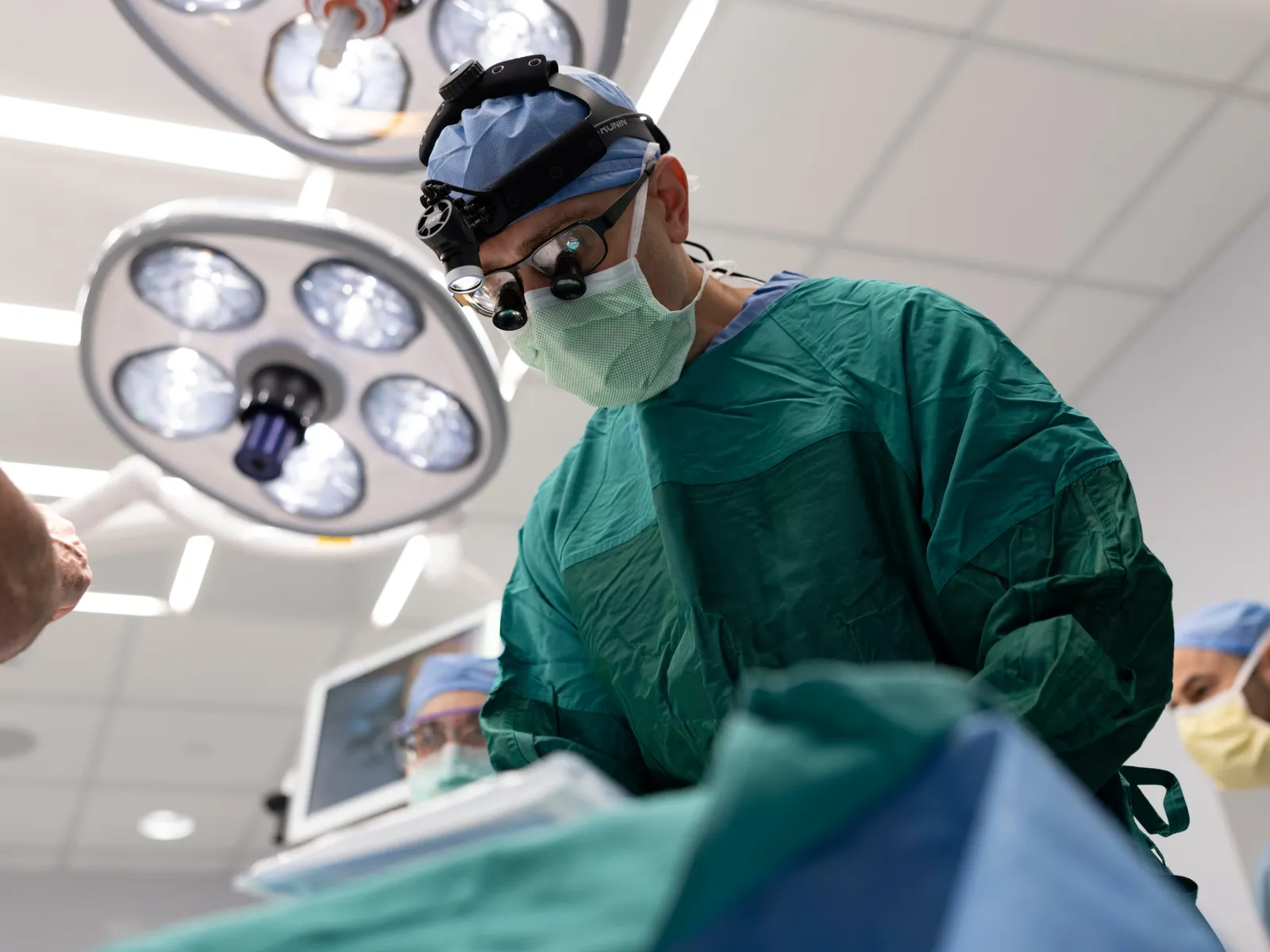
Dr. Matthew Willsey, a neurosurgeon at the University of Michigan Health and a BCI-focused researcher, led the team that implanted Paradromics' first long-term brain chip. For decision-makers, the real story is how the operating room plan, device architecture, and patient selection make BCI scaling a practical engineering and clinical problem.
Dr. Matthew Willsey, a neurosurgeon at the University of Michigan Health, led the team that implanted Paradromics' first long-term brain chip. The procedure is built to be repeatable and fully implantable, with a brain component connected to a transceiver placed in the chest, then validated before leaving the operating room.
Willsey says the surgery must become routine before the technology can scale. That is the tension at the center of brain-computer interfaces right now: the science can look astonishing in a lab, but turning it into a clinical product means solving the boring parts, too, like implantation workflow, safe patient selection, and a system that does not depend on a tether to external equipment.
The background starts with Willsey's own career pivot. Before becoming a neurosurgeon, he worked as an electrical engineer. He graduated from MIT for his undergraduate degree and pursued a master's in electrical engineering. His thesis was with Alan Oppenheim, a professor who helped pioneer the field of digital signal processing, which focuses on extracting information from signals. Willsey later describes that mindset as closely related to what brain-computer interfaces do: record brain activity, find patterns, and translate intended actions into output.
The spark, he says, came around 2009 when he saw a video of electrodes implanted into the brain enabling someone to control a computer cursor or a robotic arm. He calls it the coolest thing he had ever seen. Soon after, he shadowed a neurosurgeon in Texas, and the combination of seeing brain-computer interfaces and then seeing surgery convinced him neurosurgery was the right career path. He attended Baylor College of Medicine, matched into a neurosurgery residency at the University of Michigan, then spent three years doing research and completed a Ph.D. focused on brain-computer interfaces. Today, his practice is functional neurosurgery with specialties in deep brain stimulation and epilepsy, and he runs a research lab studying brain-computer interfaces.
To understand why this implantation detail matters, it helps to anchor the use case. There are diseases and injuries where the brain is largely functioning fine, but the pathway connecting the brain to the body or mouth is interrupted or degraded. Willsey uses ALS as an example: people may know what words they want to say, but cannot produce speech. A BCI attempts to record brain activity, recognize patterns, and determine what someone intends to do. That intent can then be mapped to text on a screen or control signals for a robotic arm or a computer cursor.
The Paradromics system described here aims to be fully implantable. That is a key distinction from many prior research-lab BCIs, which often had connections passing through the skin to link to a computer. From a product scaling standpoint, that tether is not a trivial inconvenience. If you want devices to be used widely, you ideally want fully implantable systems so patients do not have to be tethered to external hardware.
Willsey describes the clinical workflow as starting with careful patient selection. The goal is to choose someone who has enough impairment that they could benefit, but not so much impairment that surgery becomes unsafe. For the operation, the team started with the cranial portion. They made an incision, took the bone off, opened the dura, and exposed the cortex. Using navigational systems, their own sight, and preoperative imaging, they identify the exact location where the array or implant should be placed. Willsey specifically notes using live-imaging navigational equipment to plan the implant site.
The implantation itself is mechanical, but the stakes are not. The array is gently placed onto the brain and then inserted into the cortex. After securing the lead, the team closes the dura, puts the bone back, then makes an incision in the chest for the transceiver. An extension lead runs under the skin from the brain component down to the chest component. Before leaving the operating room, Willsey emphasizes validation: you want to know the electrodes are in the brain, bleeding has stopped, the tissues are closed appropriately, and the whole system is communicating. The procedure takes about four hours. He also draws a parallel that matters for scaling: the operation is not technically different from a surgical standpoint, because neurosurgeons already know how to perform a craniotomy and access the brain.
That is why his comment about “routine” is more than optimism. He argues that if BCI technology is going to scale, neurosurgeons need to be able to pick it up easily. He frames the surgery as largely business as usual for the surgical team, punctuated by moments where they have to pause and recognize what they are doing: placing the array over the cortex with the expectation that everything will work correctly. Once the patient wakes up, postoperative exams follow. When the patient is doing well, the team can then step back and acknowledge the milestone: having someone implanted with a novel brain-computer interface.
For executives and board members watching the brain-computer interface space, the second-order implications are clear. The path from breakthrough to category-scale depends on repeatability in the operating room, a device architecture that does not rely on external tethering, and a validation loop that proves the implant is communicating immediately after surgery. In other words, the next frontier is not only algorithm performance or electrode science. It is operationalizing safety, workflow, and adoption so this stops being a one-off and starts becoming a product line. Willsey says one of the reasons he entered medicine was to bring new therapies to the people who need them, and fulfilling that mission now looks like turning a highly specialized procedure into something neurosurgeons can do reliably, again and again.
This story's Key Insights and Take-aways are locked.
Create a free account to unlock Executive Actions for one credit.
Register to UnlockAlways free for Executives Club members. Join the Club
More in Technology

Nvidia's $89B data center quarter: the 9 companies cashing in
The AI buildout is minting fortunes beyond GPUs, and memory, cloud, and cooling suppliers are riding the same wave.

Google quietly links your phone number to every Android account on your SIM
Adding a SIM now ties your phone number to all Google accounts - and future accounts inherit it. Here's the security and privacy stakes.

Hijacker AI 'Skynet mode' runs 100,000 attack steps against exposed models
Symantec caught a criminal AI agent that borrows other models, steals data, and mines crypto; the only relief is no confirmed victims yet.