
New ETFs ban Elon Musk-led firms, including Tesla and SpaceX
Investors can avoid Musk exposure explicitly, but the category shift may reshape index-based risk for everyone.
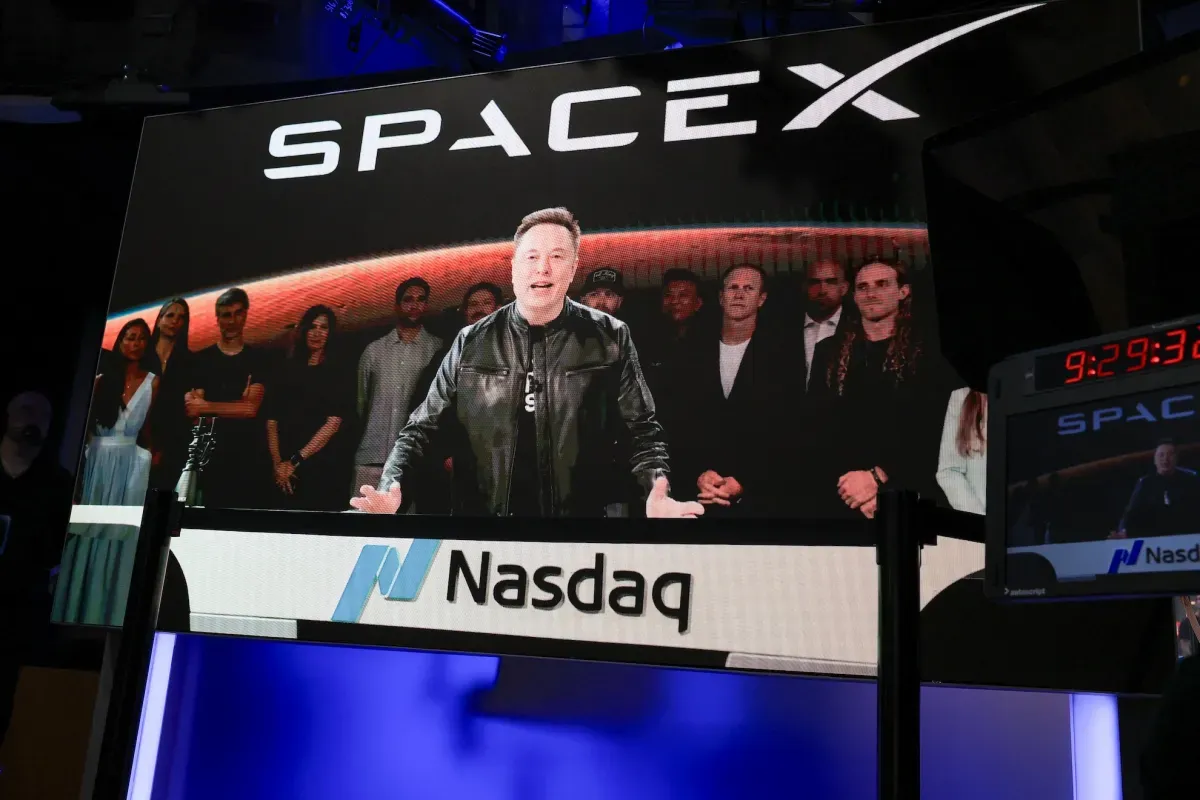
Two new exchange-traded funds exclude companies founded, controlled, or led by Elon Musk, meaning Tesla and SpaceX are left out. For decision-makers, this turns “Musk risk” into a configurable portfolio choice rather than an unavoidable byproduct of tech exposure.
Two new ETFs are drawing a bright line around Elon Musk exposure. The funds exclude companies that are founded, controlled, or led by Elon Musk, which means familiar names like Tesla and SpaceX are not included. That detail matters because most investors do not get a clean on-off switch for founder influence inside broad market products. These ETFs, by design, do.
In other words, you can build an equity allocation without the usual “founder gravity” that follows Musk across multiple high-profile industries. If you are a portfolio manager, adviser, or board member trying to control concentration risk, governance risk, or brand-linked volatility, the existence of ETF rules that explicitly target “founded, controlled, or led by Elon Musk” is a meaningful change in how people can express policy constraints. It is also a reminder that index and ETF construction is becoming less about market beta and more about specific risk framing.
To understand why this is happening now, it helps to zoom out on how ETFs work. An ETF generally tracks a defined set of securities, often using an index or a rules-based methodology. When methodologies become more precise, the result can be portfolios that separate exposures that previously moved together. Founder-led companies are one of the hardest exposures to neutralize. In traditional market indexes, Tesla and other Musk-linked companies are included because they meet the index’s selection criteria, not because an investor wants to avoid a particular person’s control or influence.
These new products flip that logic. The stated exclusion criteria target not only companies that Musk created, but also companies he controls or leads. That is a governance-oriented definition, and it has practical portfolio implications. Even if two companies look similar on paper because they operate in overlapping themes like electrification, space, robotics, energy, or AI-adjacent industries, the ETF can separate them based on who leads the corporate decision-making. In effect, it reframes “who runs the company” as a first-class variable, alongside size, liquidity, and sector.
This kind of rule-based exclusion also reflects investor demand for more customizable risk. Some investors care about financial risk. Others care about regulatory risk. Others care about reputational, ethical, or operational risk, especially when a single high-profile founder can influence corporate behavior across news cycles. When an ETF spells out that it excludes companies founded, controlled, or led by Elon Musk, it is not subtle. It is the product saying: “If this person is part of the management equation, you do not want us holding the security.”
Regulatory and compliance considerations matter here too, even though the source is brief on process details. ETFs operate under the constraints of financial regulation, disclosure requirements, and listing rules. But the more important point is not that regulators suddenly changed. It is that ETF issuers are taking available mechanisms and using them to meet specific mandates. Once that happens, the second-order effect is a portfolio ecosystem where exclusions become normal. If you can exclude Musk-led companies today, you can imagine similar approaches being built for other governance-defined exclusions, or for specific leadership or ownership structures.
For executives and board members, the stakes are straightforward: more products can route capital based on governance and control characteristics, not just fundamentals. If your company is founder-led, the market narrative can increasingly become “Are you in the investable universe for certain mandates?” That can affect demand from particular channels like model portfolios, policy-constrained funds, and advisers managing to client instructions. For peers who are not founder-led, the competitive comparison shifts too, because investors can more easily tilt away from certain leadership-linked exposures without leaving the ETF wrapper.
And for anyone running risk models, this changes how correlations can be interpreted. When ETFs that exclude a specific person exist, the founder-linked companies can face different flows than they would in broad, unfiltered indexes. Even if the underlying businesses are still traded on open markets, the packaging changes who owns them, when, and under what constraint logic. That can influence liquidity, volatility, and how fast certain segments move during periods of controversy.
Bottom line: these two new ETFs explicitly exclude companies founded, controlled, or led by Elon Musk, leaving out Tesla and SpaceX. The headline fact is simple, but the implication is bigger. Investor access is becoming more rule-driven, and “Musk exposure” can now be managed as a portfolio feature instead of an unavoidable background condition of owning widely held tech and innovation stocks.
This story's Key Insights and Take-aways are locked.
Create a free account to unlock Executive Actions for one credit.
Register to UnlockAlways free for Executives Club members. Join the Club
More in Technology

Google quietly links your phone number to every Android account on your SIM
Adding a SIM now ties your phone number to all Google accounts - and future accounts inherit it. Here's the security and privacy stakes.

Hijacker AI 'Skynet mode' runs 100,000 attack steps against exposed models
Symantec caught a criminal AI agent that borrows other models, steals data, and mines crypto; the only relief is no confirmed victims yet.

Nvidia's AI-financier shift faces its first big test as neoclouds stumble
A rout in neocloud stocks is forcing investors to weigh Nvidia's hidden exposure as both supplier and lender to the AI buildout.