

NHTSA opens Special Crash investigation after Texas Tesla crash killed M. Avila
The agency says the probe targets emerging tech and potential safety defects tied to driver-assistance systems.
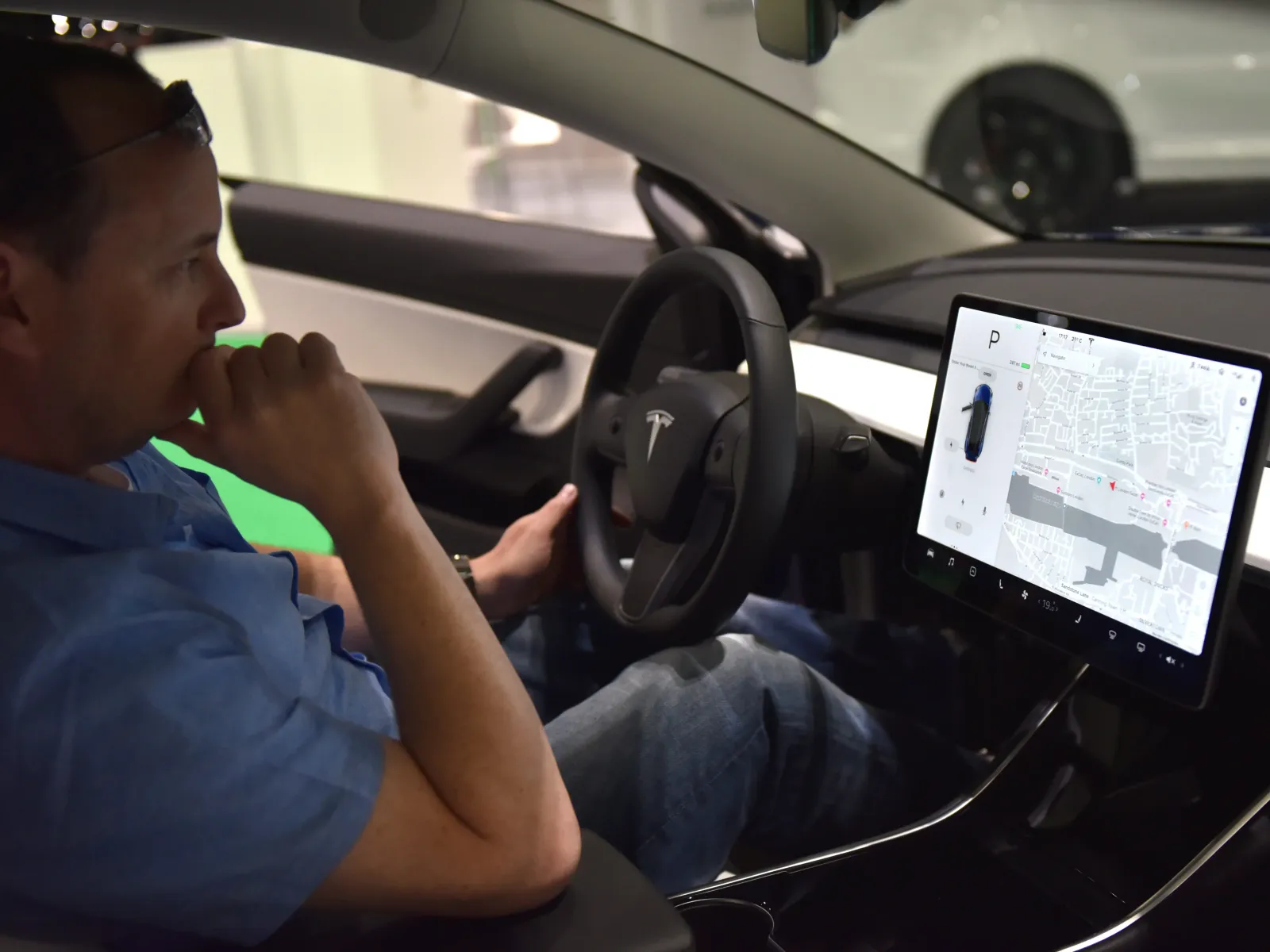
Federal regulators, through the National Highway Traffic Safety Administration (NHTSA), have opened a “Special Crash investigation” into a fatal crash in Katy, Texas involving a Tesla Model 3. The incident adds to ongoing scrutiny around Tesla’s driver-assistance features and what they do when drivers rely on them.
Federal regulators have opened a “Special Crash investigation” into a fatal Tesla crash in Katy, Texas. NHTSA, the agency that oversees auto safety, confirmed to Business Insider that it launched the probe after a Tesla Model 3 crashed through a brick home on Friday night and killed M. Avila.
The crash happened around 8:03 p.m. on Friday in Katy, Texas, according to the Harris County Sheriff's Office statement released Saturday. Michael Butler was driving the Tesla Model 3, and the sheriff’s office said he “failed to drive in a single lane, left the roadway, and struck the residence.” The Tesla “entered through the brick residence, at a high rate of speed, and struck M. Avila who was inside the residence.” Avila was flown by medical helicopter to a local hospital, where she later died from injuries sustained in the crash.
Here is the part that keeps this from being “just another crash” in the public imagination. Butler, a driver, said Tesla’s driver assistance tool was active during the fatal crash. The source notes it was not clear which Tesla feature was engaged, since Tesla offers Autopilot and full self-driving capabilities. That ambiguity matters because regulators do not treat all driver-assistance modes the same way. NHTSA’s framework, as described by the agency itself in this context, is built to determine whether emerging technology is behaving as expected, or whether a potential safety defect is involved.
NHTSA defines a Special Crash investigation as the agency’s “most in-depth and detailed level of crash investigation data” collection. In its statement to Business Insider, NHTSA said the cases it chooses could involve probes into “emerging technologies,” including “alternative fueled vehicles,” “adaptive controls,” and “potential safety defects.” In plain English, this is the regulator signaling it will look under the hood, not just at what the driver did, but at how the system’s features were performing at the time. For companies like Tesla, the second-order risk is that “it was engaged” becomes “it may have contributed,” even if no one is claiming a single cause yet.
The Harris County Sheriff's Office also provided details that could influence how the case evolves. It said there were no signs of intoxication on Butler and he was cooperative during the investigation. It also said the case remains under investigation. That is important because it removes one easy narrative and pushes the focus toward behavior, supervision, and system engagement. Tesla did not respond to a Business Insider request for comment sent outside regular business hours.
If you are tracking the driver-assistance debate, this crash lands in the middle of an ongoing legal and regulatory pressure campaign aimed at how these systems are marketed and what responsibility drivers actually have when features are enabled. Last year, a Florida jury found Tesla partially liable in a 2019 crash in which a driver hit another vehicle while Autopilot was engaged. In a separate case, a California judge ruled last year that Tesla’s branding of the feature as “Autopilot” was misleading, leading the company to change its name.
Those court outcomes are not the same as NHTSA investigations, but they do matter. Regulators, plaintiffs, and judges all tend to circle around the same core questions: What was the system designed to do? What did the driver reasonably understand it to be doing? And when something goes wrong, how much blame belongs to driver attentiveness versus system limitations. Tesla’s position, as summarized in the source, is that its features are for the “fully attentive driver” who should be ready to take over at any time. That framing is central to how these systems are used, and it will likely be central to what NHTSA tries to determine with the “most in-depth” crash data it collects.
For executives, boards, and investors watching the broader automotive tech market, the stakes are bigger than one zip code. NHTSA specifically flagged “adaptive controls” and “potential safety defects” as part of what Special Crash investigations can examine. In practice, that means a finding in this case could ripple into how other automakers and suppliers validate similar systems, document human-machine interaction, and structure product messaging and safeguards. Even if the crash’s ultimate cause is still being investigated, the existence of the Special Crash investigation itself is a signal: the regulator expects high-resolution answers, and the timeline for those answers could shape how the industry designs next-generation driver-assistance features and defends them under scrutiny.
This story's Key Insights and Take-aways are locked.
Create a free account to unlock Executive Actions for one credit.
Register to UnlockAlways free for Executives Club members. Join the Club
More in Business

A flaw in PHP just forced governments to pull their own sites offline
European agencies from Belgium to Germany took websites dark to patch a critical weakness in the language behind almost 70% of the web, and the blast radius extends far beyond government portals.

BioWare shuts down, Mass Effect 5 dead after $55B EA buyout
The legendary RPG studio's closure lands months after a $55 billion investment group buyout of EA, raising tough questions for gaming's biggest acquirers.
Musk weighs Tesla-SpaceX mega-merger as boards form review panels
Special committees at both companies will examine a tie-up that could fuse electric vehicles and space launch, forcing a fresh look at governance and valuation.