
NHTSA orders autonomous vehicle makers to stop first-responder interference by end of July
Administrator Jonathan Morrison says there is a clear pattern of driverless vehicles disrupting emergency scenes, and he wants fixes fast.
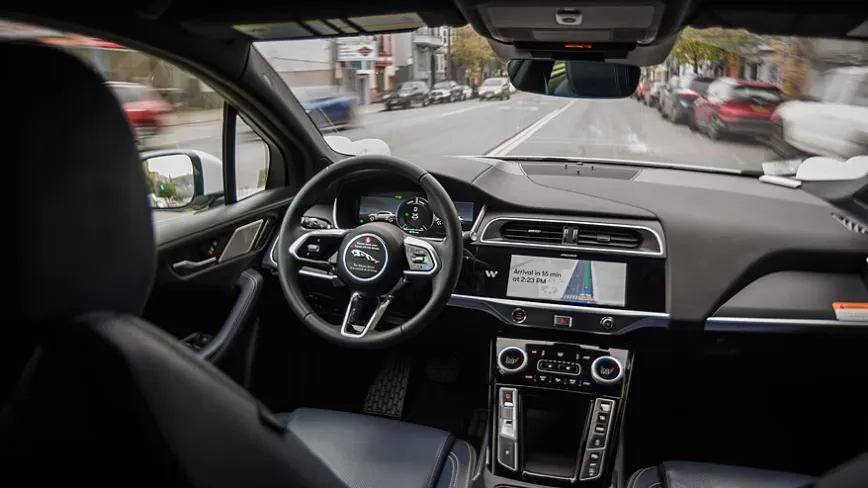
The U.S. National Highway Traffic Safety Administration directed autonomous vehicle developers to present solutions to a clear pattern of interference with first responders and law enforcement, by end of July. Administrator Jonathan Morrison warned that driverless vehicles have driven into active emergency scenes, blocked ambulances and firefighters, and failed to recognize warnings like flashing lights, flares, and smoke.
The U.S. National Highway Traffic Safety Administration just issued a Wednesday directive with a blunt message for autonomous vehicle developers: fix first-responder interference, and do it by the end of July. In the agency's framing, this is not a one-off glitch. It is a “clear pattern” of driverless vehicles disrupting active emergency scenes.
Administrator Jonathan Morrison is the public face of the order, and his description of the problem is specific and operational, not theoretical. He said vehicles have driven into active emergency scenes, blocked ambulances and firefighters, and failed to recognize signals like flashing lights, flares, smoke, and fire. That is the kind of failure mode regulators do not ignore, because it turns a road-safety technology into an emergency-safety liability.
To understand why this matters beyond the headlines, look at how autonomy is typically deployed and evaluated. Autonomous systems often get tested against predictable, structured signals. The real world is messier. Emergency scenes are chaotic. There are moving vehicles, responders on foot, altered lanes, temporary barriers, and visual cues that might not match what a model learned from routine driving. When Morrison points to failures to recognize flashing lights, flares, smoke, and fire, he is effectively saying the system is not reliably handling the “human-managed exception” cases. Those are exactly the moments where autonomy has to be conservative and decisive.
The directive also signals how NHTSA is thinking about the “proof” regulators want. The agency is not just asking companies to claim they will improve. It is demanding that autonomous developers present solutions to stop what NHTSA described as a clear pattern. That distinction is important. A company can argue about edge cases, but a regulator calling out a pattern is inviting a different level of accountability. Boards and executives should hear this as a shift from monitoring performance to requiring remedial plans.
For decision-makers inside the autonomous vehicle ecosystem, the clock is the real constraint. The order demands action by end of July, which compresses engineering timelines, slows nothing, and forces prioritization. Companies usually have multiple workstreams running in parallel, but when a regulator puts a date on the calendar, the organization has to decide what gets accelerated and what gets deferred. That is where internal dynamics can get messy. Product teams want broader coverage; safety leads want worst-case hardening; legal teams want defensible documentation. When the directive includes examples like blocked ambulances and firefighters, it also creates an immediate reputational risk that legal cannot paper over.
There is also a market implication here, especially for anyone selling autonomy as “ready” or “nearing deployment.” Even if a company believes it has handled the problem in controlled settings, NHTSA is drawing attention to interference with law enforcement and first responders. In the real world, that is the difference between being treated as an experimental technology and being treated as a public hazard. If emergency agencies see driverless vehicles entering active scenes, that can influence how quickly municipalities, state partners, and deployment stakeholders approve expansion.
Second-order, this kind of directive tends to reverberate across the supplier stack. If developers are required to demonstrate solutions that address recognition of flashing lights, flares, smoke, and fire, that pushes demand onto sensors, perception models, and safety logic that specifically handle those cues. It can also pressure verification processes, since executives will need evidence that the fixes work under the exact conditions regulators highlighted: active scenes, blocked routes, and ambiguous visual environments. Even companies not named directly in the directive will feel the gravitational pull, because the industry will update what it considers “table stakes” for autonomy safety.
Strategically, peers in similar roles should assume this will set a new benchmark for what “safe enough” means in regulator terms. NHTSA is effectively narrowing the safe-driving conversation down to a high-stakes corner of the map. If autonomous systems cannot reliably avoid active emergency scenes and understand emergency signals, regulators have a clean line to justify enforcement attention, deployment restrictions, or follow-on actions. The end-of-July deadline is the near-term headline. The longer-term stake is that emergency-scene behavior will become a central part of how autonomous vehicles win trust, approvals, and continued room to operate.
This story's Key Insights and Take-aways are locked.
Create a free account to unlock Executive Actions for one credit.
Register to UnlockAlways free for Executives Club members. Join the Club
More in Technology

Google quietly links your phone number to every Android account on your SIM
Adding a SIM now ties your phone number to all Google accounts - and future accounts inherit it. Here's the security and privacy stakes.

Hijacker AI 'Skynet mode' runs 100,000 attack steps against exposed models
Symantec caught a criminal AI agent that borrows other models, steals data, and mines crypto; the only relief is no confirmed victims yet.

Nvidia's AI-financier shift faces its first big test as neoclouds stumble
A rout in neocloud stocks is forcing investors to weigh Nvidia's hidden exposure as both supplier and lender to the AI buildout.