
Nicholas Bloom says 2026 World Cup commuting chaos locks in hybrid for professionals
World Cup schedules, heat, and gas prices are pushing employers away from “full office” again, and Bloom sees no 2019 rollback.
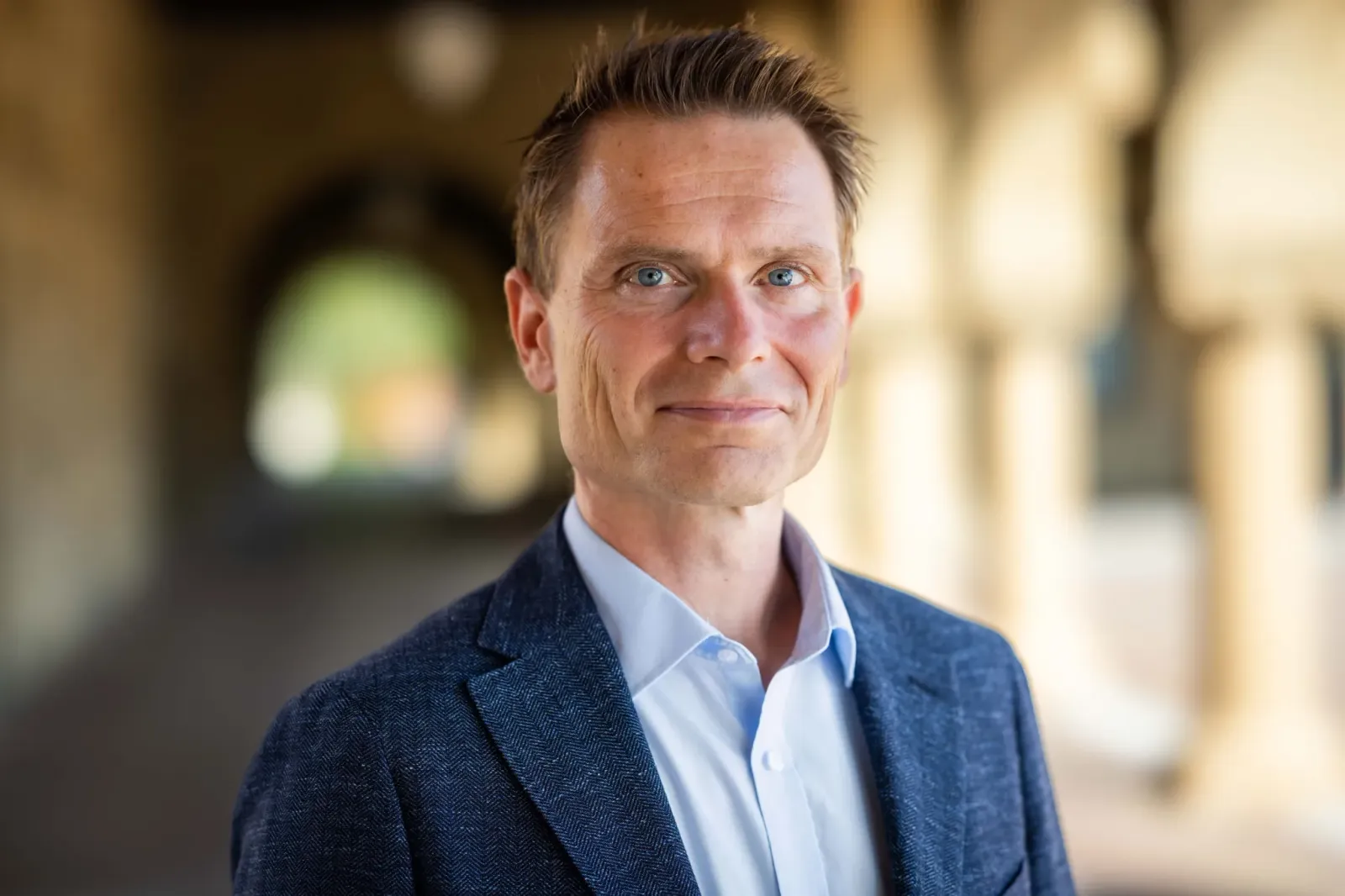
Stanford economist Nicholas Bloom, who has studied remote work for two decades, says this summer’s World Cup and commuting costs are reinforcing hybrid as the durable default. For decision-makers, that means the cost-benefit of return-to-office is being re-litigated in real time, not on PowerPoint.
Stanford professor Nicholas Bloom says the “Pandora’s box” of working from home is open, and he does not see companies going back to 2019 working-from-home arrangements. In his view, the 2026 FIFA World Cup is the latest stress test that makes hybrid feel less like an employee perk and more like a practical operating system. Bloom told Fortune, “There is absolutely no way we are now going back to 2019 on WFH,” and he argues many firms are now permanently adopting hybrid for professionals and managers.
Why? Because this summer is stacking multiple forces that make the office objectively worse at the exact moments people would prefer not to commute. Bloom points to a combo of World Cup matches, punishing heat waves, and higher gasoline prices tied in part to the Iran war. Workers, he says, are increasingly looking to avoid the office when they can, and employers are watching that behavior play out. He frames it as more than convenience, calling out a broader pattern: “If it's a weather event, sports event, protest, disaster or pandemic you see WFH as a way to flex on commuting.” The consequence is straightforward. Once remote flexibility starts absorbing these disruptions, “lost productivity” becomes harder to claim, because employees are already proving they can log on.
This is also where the economics get real for boards and C-suites. Years of high-profile return-to-office mandates, including those from Amazon and JPMorgan Chase, did not prevent the current shift in worker expectations. Even Bloomberg-style “culture” arguments run into a basic question: what is the firm actually buying with a full in-office schedule, especially when outside conditions are forcing commuting to become a cost center? Bloom’s point is that the answer is often “not much,” while the downside shows up immediately for employees and indirectly for retention.
Bloom’s comments arrive as major banks show how quickly policy can bend under operational pressure. Late last month, the Financial Times reported JPMorgan and Goldman Sachs were temporarily allowing employees to request remote work on match days during the 2026 FIFA World Cup. The schedule matters. Several games are set to end close to midnight on the East Coast, often on weeknights, which makes “just show up” a harder sell. The policy design is telling: it is not a wholesale reversal of office strategy; it is a narrow permission slip that functions like a trial. But once a trial exists, decision-makers have to answer the follow-on question Bloom keeps returning to: what changes when people work from home during specific chaos events?
That second question is getting empirical backup. A recent study using Census Bureau data, conducted by the Federal Reserve Bank of Minneapolis, found that hybrid work in the U.S. has mostly stabilized. Even as remote work declined from pandemic highs, the data shows nearly 22% of workers still worked at least partly from home in 2025, only 1 percentage point less than the number who partly worked from home during the year prior. Translation: the market is not crashing back to pre-pandemic levels. So for leadership teams trying to forecast space needs, hiring plans, and workplace spend, the decision is less about whether hybrid exists and more about what shape it takes.
Meanwhile, the commuting pain Bloom describes is not theoretical. He cites temperature and fuel costs as concrete drivers nudging workers to stay home when they can. The average temperature for the continental U.S. was 70.6 degrees Fahrenheit in June, above the 20th century average, according to the National Oceanic and Atmospheric Administration. Some cities, including Washington, D.C., hit record temperatures over the Fourth of July weekend. For commuters who bike, walk, or rely on public transportation, heat can turn the commute into a daily performance test. For drivers, costs can spike quickly.
On fuel, the context is volatile. Bloom notes renewed strikes on Iran and a declaration by President Donald Trump that the ceasefire is “over,” bringing back worries that gas prices could rise and raise commuting costs. AAA’s national average price for a gallon of regular gasoline was $3.84 as of Thursday. That was flat compared to last week but about 70 cents above the $3.16 price from a year ago. Bloom estimates Americans driving a typical 30-mile daily commute spend an additional $5 to $10 a day when gasoline prices rise. Even if you do not run this exact model, the underlying point holds: when a week of driving costs increases, the “extra hours in traffic” argument loses to “extra hours online.”
Boards should also pay attention to how Bloom reframes remote work internally. He argues companies could treat remote access as a way to maintain productivity during harsh conditions, rather than viewing it as a one-off employee perk. In other words, if the firm can keep output steady during disruptions like severe weather, surging fuel prices, or the World Cup, then hybrid becomes a business continuity tool, not a morale concession.
Finally, Bloom thinks the meeting layer will improve. He called out startups such as Noro, which builds life-size video conferencing displays designed to make remote meetings feel more natural than a Zoom call and help ensure engagement by capturing a full body. Bloom wrote that seeing full body cues can reduce multitasking during online meetings, because people cannot “email, texting or watch soccer while they are on the video-call.” His claim is specific: it has a “huge impact” when everyone is paying attention rather than multitasking. If that technology trend holds, it could shrink one of the classic objections to remote work: that online communication is inherently less engaging and more distracting.
So the strategic stakes for executives are simple, even if the path is messy. Hybrid is not just a trend being debated in employee surveys anymore. It is being stress-tested by real world scheduling, real climate pressure, and real transportation costs. Bloom’s bottom line is that companies now have to plan for a world where “return to office” is not a binary switch. It is a set of permissions and policies that flex around events, and once that habit forms, going back to 2019 is not the plan.
This story's Key Insights and Take-aways are locked.
Create a free account to unlock Executive Actions for one credit.
Register to UnlockAlways free for Executives Club members. Join the Club
More in Science

Alaska's 1,580-foot tsunami had warning signs. Scientists just found them.
Rapid glacier retreat, heavy rainfall, and thousands of tiny tremors preceded Alaska's 1,580-foot tsunami, a warning for every coastal community in a warming world.

The rare mutation that lets high-risk brains dodge Alzheimer's
Scientists found a natural defense against protein buildup, opening a new path to preventive treatments.

3,000 steps a day may halve Alzheimer's decline, study finds
New research links a modest daily walk to less tau buildup and nearly half the cognitive and functional decline, even for those with early signs.