
Nissan quietly halts full-electric Qashqai development in Sunderland to cut costs
A top-selling Europe model goes off the EV roadmap as Nissan aims to cut a fifth of its models.
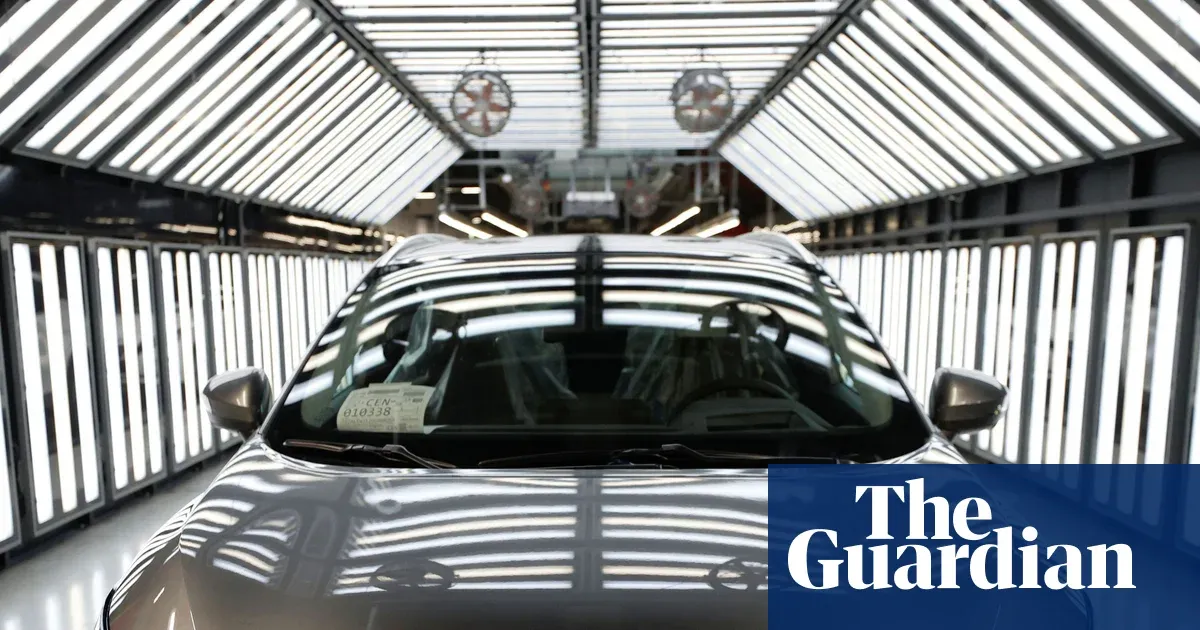
Nissan has reportedly stopped developing a fully electric version of the Qashqai, its top-selling model in Europe, at its Sunderland plant in the UK. The move is tied to a broader cost-cutting plan that targets cutting a fifth of its models.
Nissan has reportedly shelved its full-electric version of the Qashqai, halting development at its Sunderland plant in the UK. According to Reuters, the carmaker “quietly halted development” of a full EV Qashqai at Sunderland last year, even as it was developing the project previously.
The strategic punch here is that the Qashqai is not some niche experiment. It is Nissan’s top-selling model in Europe, and it is also the kind of vehicle that becomes a company’s volume engine and margin stabilizer. Pulling the plug on a full EV version at that level signals something bigger than one program trouble. Nissan is, reportedly, cutting costs by cutting a fifth of its models, and this development pause reads like one of the quiet ways that plan gets executed.
To understand why executives should care, zoom out to what the EV race looks like inside a legacy automaker. Building an EV is not just swapping the engine for a battery. It typically forces changes to supply chains, component sourcing, engineering timelines, manufacturing setups, and marketing commitments. Even if an EV platform shares some parts with existing vehicles, the cost structure, the procurement plan, and the manufacturing ramp are usually separate enough that leadership has to bet on demand and policy support.
In Europe, the policy backdrop has added urgency. Regulators have pushed automakers to improve fleet emissions performance, and electrification has become the roadmap to meeting tightening requirements. That does not mean every model must go fully electric at once. In practice, many companies pursue a mix: hybrids, plug-in hybrids, and battery electrics. The key point is that each electrification decision ties up capital and attention. If demand, costs, or competitive positioning shift, boards often react by canceling or slowing programs.
That is where Nissan’s reported cost strategy lands. The Guardian piece frames the halt as part of Nissan’s effort to cut costs by cutting a fifth of its models. For decision-makers, the meaning is not only “fewer EVs.” It is “fewer bets.” When a company reduces its model lineup, it can consolidate engineering work, streamline production complexity, and reduce the overhead required to support many different vehicle programs. In that context, stopping a full EV Qashqai development effort can be seen as pruning a project that might have required too much investment relative to what Nissan expects to execute or monetize.
There is also a plant-level angle that matters to operators and investors watching industrial capacity. Sunderland is described as the site of the UK’s largest car factory. When EV plans change at major plants, it affects more than engineers. It touches supplier commitments, workforce planning, and the timeline for factory upgrades. Even a “quiet halt” creates ripple effects: vendors may pause tooling investments, internal teams may get reassigned, and future product cadence can move.
For Nissan, the Qashqai decision is especially consequential because it is tied to a volume brand. Top-sellers have a special gravity in corporate planning. They often anchor dealer networks, customer acquisition funnels, and brand perception in a region. If the EV version is shelved, Nissan is implicitly choosing either to delay it, switch strategy, or prioritize other electrified variants. The source, however, is clear about what happened operationally: development of a fully electric Qashqai was halted at Sunderland last year, per Reuters.
So what should peers take from this? Board members and CFOs at other automakers should treat Nissan’s reported move as a reminder that electrification roadmaps are not immutable. They are living plans, subject to cost discipline and portfolio pruning. If you are running a large automotive group, the risk is becoming trapped in sunk-cost thinking, where teams keep funding programs because they already started them. Nissan’s reported decision suggests the opposite approach: stop development even on an important model if the cost equation or strategic fit stops working.
Finally, for leaders tracking Europe’s EV transition, this is also a signal about timing. Full EV programs can be delayed when firms cut breadth and focus capital. That means customers, competitors, and supply-chain partners may see uneven EV availability across segments. For executives, the strategic stake is straightforward: every canceled development cycle changes competitive pressure in the market, and every delay affects who captures mindshare and share in the next purchase cycle. In that environment, agility is a competitive advantage, and Nissan’s quiet halt at Sunderland looks like exactly that.
This story's Key Insights and Take-aways are locked.
Create a free account to unlock Executive Actions for one credit.
Register to UnlockAlways free for Executives Club members. Join the Club
More in Business

A flaw in PHP just forced governments to pull their own sites offline
European agencies from Belgium to Germany took websites dark to patch a critical weakness in the language behind almost 70% of the web, and the blast radius extends far beyond government portals.

BioWare shuts down, Mass Effect 5 dead after $55B EA buyout
The legendary RPG studio's closure lands months after a $55 billion investment group buyout of EA, raising tough questions for gaming's biggest acquirers.
Musk weighs Tesla-SpaceX mega-merger as boards form review panels
Special committees at both companies will examine a tie-up that could fuse electric vehicles and space launch, forcing a fresh look at governance and valuation.