
NJ homeowner’s swift glove-and-jar move produced the rarest CM1/2 meteorites scientists know
A Hillsborough meteorite fall on July 16, 2024 tracked by Doppler radar now offers unusually pristine clues to briny asteroid chemistry.
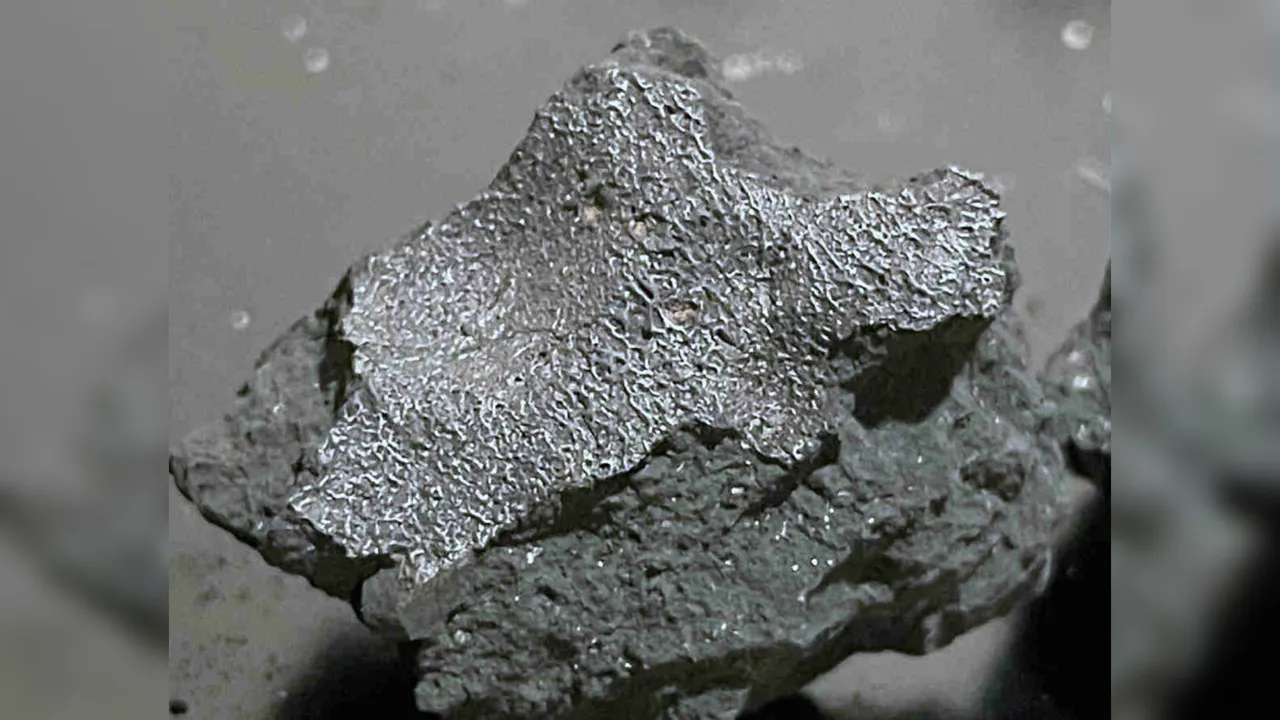
SETI Institute and NASA Ames meteor astronomer Peter Jenniskens and NASA Johnson meteoriticist Mike Zolensky led analysis of the Hillsborough meteorite that crashed through a New Jersey house after a July 16, 2024 fireball. The pristine samples, preserved thanks to rapid, careful recovery, reveal a CM1/2 meteorite with briny, water-altered chemistry that may better explain how organic compounds and amino acids formed.
On July 16, 2024, a fireball triggered a sonic boom over New York City. The space rock was roughly 110 pounds (50 kilograms), and it ultimately crashed through a roof and into a bedroom in Hillsborough, New Jersey, where the homeowner found it reeking of sulfur. Scientists now say the homeowner’s quick reaction is the reason the team could study what may be the most pristine CM1/2 meteorites they know of.
The key detail is not romantic. It is operational. The homeowner put on gloves and collected the rock fragments into jars almost immediately. In meteorite science, that matters because carbonaceous chondrites “just suck in every moisture you can think of.” Jenniskens explained that if the samples had been handled with bare hands, oils and moisture could have contaminated the rocks, which is common in found meteorites. The team also reports that small parts of the fragments picked up fiberglass and even carpet remnants after impact, but the integrity of the meteorites was still “incredibly well-preserved” for scientific investigation.
That preservation paid off because the Hillsborough meteorite is scientifically weird in a very useful way. After collection, the samples were analyzed led by co-author Mike Zolensky, a meteoriticist at NASA’s Johnson Space Center. The researchers classified the meteorite as a CM2 carbonaceous chondrite, which they describe as primitive meteorites formed in the early solar system. Typically, CM2 meteorites come from parent asteroids that have not been significantly altered by water, while a related type, CM1, typically comes from asteroids with water.
The Hillsborough case does not fit neatly. Even though it was classified as CM2, the team found evidence its parent asteroid must have had water, which led them to further classify it as CM1/2, a category between 1 and 2. In fact, they note this is only the second meteorite of this type observed on Earth. That ambiguity is not just taxonomy nerd bait. It changes what scientists can infer about the environment where the chemistry happened.
The researchers’ most consequential clue comes from the rock’s contents. They found the meteorite is full of organic compounds created through chemical reactions with minerals also present in the rock, as well as amino acids. They also found the rock was more altered by water than other meteorites of its kind. They found small, salty fragments inside the meteorite and concluded it likely came from near the surface of its parent asteroid, where liquid water evaporated and salt accumulated.
Why execs should care about “briny asteroid” chemistry: it is a concrete testbed for ideas about life’s origins. The team describes a salty brine on the parent asteroid as potentially important because such a brine could ignite chemical reactions between organic molecules and minerals that could create life. The study also echoes broader theories suggesting life on Earth began thanks to minerals and molecules deposited by crashing meteorites. The researchers do not claim to know the full story, but they say early analysis suggests the amino acids present formed on the parent asteroid with the help of chemical reactions in this briny environment.
There is also a second layer of “operational excellence,” this time on the tracking side. Even before the lab work, experts built the meteorite’s trajectory using reports from the public and camera footage across the eastern U.S., including doorbell cameras. Doppler weather radar at Newark Airport helped detect a long trail of pebbles falling from the rock as it fell apart, stretching from Staten Island to New Jersey. That combined intel let the experts estimate the object’s speed and direction, and then tie it back to the asteroid belt. Jenniskens said the team could say where the fragments came from in the asteroid belt, describing it as coming out of the inner asteroid belt.
This is the part that connects to today’s broader space ecosystem: the researchers suggest the parent asteroid likely came from an area of the asteroid belt already observed in a flyby by NASA’s Lucy mission, which is exploring the asteroids of the solar system. Could Lucy have effectively “seen” the same bit of rock that later ended up in a New Jersey house? Jenniskens did not answer that directly. But he framed it as a legitimate possibility tied to where the trajectory implies it originated.
For decision-makers watching space science, the strategic takeaway is simple: data quality is a competitive advantage, and it can come from the smallest front-line action. In this case, the difference between contaminated and pristine samples was a homeowner grabbing gloves and jars instead of waiting or improvising. The study was described in a publication in Science Advances, and some meteorite fragments will be on display at the American Museum of Natural History. If you want a reminder of how public participation, instrumentation, and fast field procedures can accelerate high-value research, this fall provides it. And if you ever hear about a meteorite fall near you, the researchers basically told the public to preserve evidence, including dash cams, video cameras, security ring cameras, and cell phones, because footage can tighten trajectories and improve what scientists learn.
This story's Key Insights and Take-aways are locked.
Create a free account to unlock Executive Actions for one credit.
Register to UnlockAlways free for Executives Club members. Join the Club
More in Science

Alaska's 1,580-foot tsunami had warning signs. Scientists just found them.
Rapid glacier retreat, heavy rainfall, and thousands of tiny tremors preceded Alaska's 1,580-foot tsunami, a warning for every coastal community in a warming world.

The rare mutation that lets high-risk brains dodge Alzheimer's
Scientists found a natural defense against protein buildup, opening a new path to preventive treatments.

3,000 steps a day may halve Alzheimer's decline, study finds
New research links a modest daily walk to less tau buildup and nearly half the cognitive and functional decline, even for those with early signs.