
Noah Greenberg turns LinkedIn job posts into a $10M content engine
Stacker’s CEO uses viral hiring listings to argue that “brand journalism” is real work, funded by a new model.
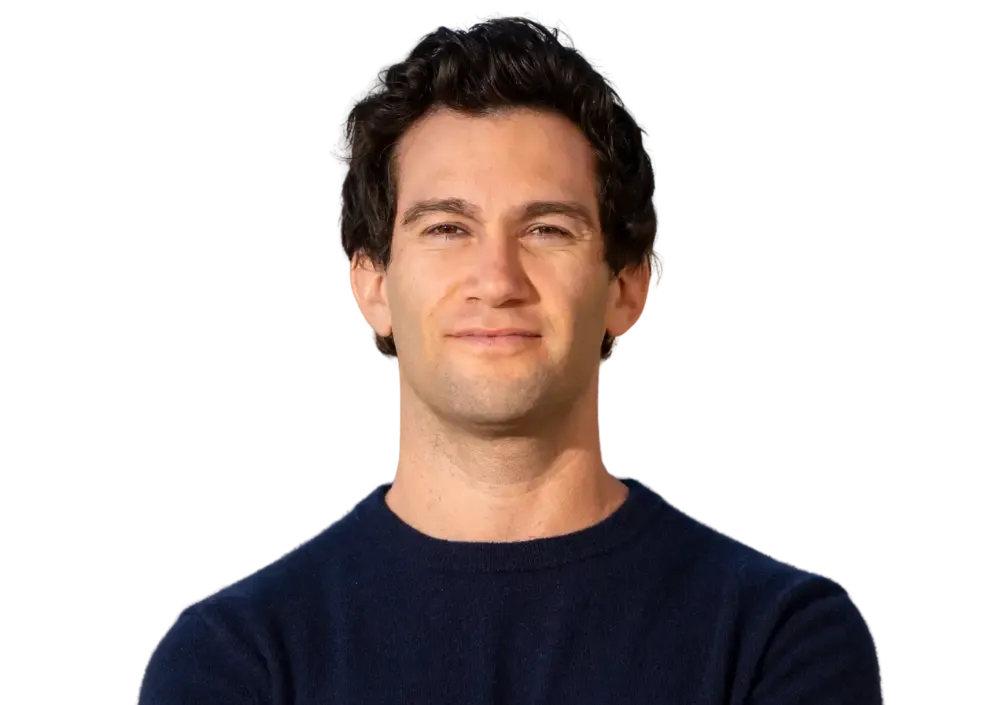
Noah Greenberg, CEO of Stacker, has posted viral LinkedIn job listings to spotlight “brand journalists” and content roles, tied to Stacker’s growth. For decision-makers, the bet is that news distribution and editorial standards can shift away from legacy mastheads without killing journalism.
Noah Greenberg, CEO of content syndication company Stacker, says the reason he started posting LinkedIn lists of newsroom-adjacent jobs was “because no one had heard of us.” Two years in, it “caught fire” anyway. The point is not subtle. Greenberg admits the tactic is a marketing ploy, then pivots immediately to the bigger claim: it’s evidence of a structural shift in who funds journalistic-style work.
That shift is no mere theory. Greenberg’s company grew from a $3 million run rate to north of $10 million in under two years, and Stacker has “never raised outside funding,” according to records reviewed by Fortune. When Greenberg shares job listings that go viral, he says three types of people message him: journalists curious about moving, journalists who already made the leap and evangelize, and journalists who are furious that he is drawing an equivalence between these content roles and journalism. He doesn’t deny the controversy. He tries to manage it. “To me,” he told Fortune, “it’s less important what it’s called, and more important that the work exists.”
Here’s what makes this more than internet drama. Greenberg is cataloging a trend where corporate teams are hiring editorial leaders and storytellers, then pushing the output through distribution pipes that look a lot like publishing. He points to real moves: “The tech editor at the Wall Street Journal is now the managing editor at NVIDIA,” referring to Shara Tibken. He also notes Robinhood has purchased multiple newsletters, citing Chartr and MarketSnacks, and hired [former Verge, Vox and Bloomberg editor] Josh Topolsky to be editor-in-chief. The subtext: if legacy titles can’t keep talent, and brands can, the “center of gravity” for certain kinds of media work shifts.
Greenberg also frames the debate around incentives, not labels. He says he is “not celebrating the death of journalism.” What he’s documenting is that distribution and editorial labor are being reorganized. In practice, Stacker sits between brands that want to publish and the thousands of outlets that will take that material. The Stacker Connect model, as described by Fortune: brands pay Stacker to help produce and distribute data-driven features; Stacker runs each piece through an in-house editorial team before it reaches the newswire; and several thousand news outlets, “90% of them local,” pull from the feed at no cost and without obligation. Partners listed include McClatchy, Lee Enterprises, Gray TV, and the Local Media Consortium.
Staying power matters, and Stacker’s numbers are part of the argument. Total revenue for Stacker Connect exceeded $5 million last year and is on pace for $10 million in 2026, according to Fortune’s review of records. It also earns revenue from a services/studio business and selling advertising on its site. That “bootstrapped wiring” matters because it suggests the system is working without venture capital hype. It can iterate based on what audiences and partners actually accept, rather than what an investor deck promises.
But the most interesting detail for media operators may be the editorial bar. Greenberg describes Stacker’s in-house standards as stricter than some might expect, using examples. Instacart can’t describe itself as “the number one food delivery service in the country.” Experian can’t slip in a line recommending its credit-boosting product. And a recent shipping logistics piece on the impact of tariffs went out untouched because the underlying data was real and the story was newsworthy. That is, Stacker is positioning itself as an editorial gate for brand-funded material that still needs factual grounding.
On the other side of the pipeline, Fortune profiles brand-journalism practitioners who see the job as editorial work with corporate stakes attached. Tracy Middleton spent about 20 years in magazines, including editor-in-chief of Yoga Journal, before joining Hone Health, a telehealth clinic and longevity platform focused on hormone health, nearly five years ago to build its editorial operation. Middleton calls herself a “brand journalist.” Her team includes an executive editor from Reader’s Digest, Prevention and U.S. News & World Report, plus an SEO/GEO specialist who went to journalism school. One of her proudest stories started with patient data, not an editorial meeting. After noticing many Hone members were military veterans, she drilled into why, interviewed veterans, engaged an independent fact-checker, and called the VA for comment. She published a deep dive about traumatic brain injury, chronic stress, and sleep deprivation during service contributing to hormone imbalances, including what she says the VA was not adequately addressing. The piece won an award from the Association of Health Care Journalists, which Middleton cited as evidence that brand journalism can be impactful.
Anneken Tappe, now at Chime, the fintech company, adds the career perspective. She previously worked at CNN and Marketwatch as an economics reporter. She calls out the trade-off: breaking news desk moments can be “one of the most exhilarating moments” in a journalist’s career. Her new role channels the same instincts, she says, but with corporate storytelling where the stakes are the business itself. She described it as strategic because you are “sitting very much at the pulse of your company,” applying editorial muscle with stakes tied to the company, not just the story.
For executives and board members watching this, the second-order implication is hard to ignore: if corporate teams can recruit editorial talent and distribute original data-driven reporting at scale, traditional newsrooms are no longer the only production hubs for certain formats. Greenberg’s argument is that the work is still work, even if the paymaster changes. And for journalists, the question becomes whether standards, verification, and distribution are being enforced by institutions with different incentives than legacy publishers. The debate is emotional in comment sections, but the business math is concrete: Stacker’s growth, its distribution network, and the hiring listings that keep going viral. In a media economy where attention is fragmented and funding is contested, the real stake is who gets to decide what counts as credible information, and who can afford to publish it.
This story's Key Insights and Take-aways are locked.
Create a free account to unlock Executive Actions for one credit.
Register to UnlockAlways free for Executives Club members. Join the Club
More in Business

Lee Raymond ran Exxon Mobil’s takeover spree, then fought climate science until his death at 87
The former CEO shaped Exxon Mobil with acquisitions and cost cuts, while rejecting climate consensus, leaving a governance lesson for boards.

Northwood Space’s Bridgit Mendler says ground infrastructure unlocks space economics now
As constellations and launch capacity surge, Mendler argues Earth networks decide whether satellites become a mass market.

BYD’s rebound from China #1 slip: overseas deliveries jumped 76% as oil spiked
Energy shock plus EV acceleration pushed BYD back past Geely, turning a near-miss into a fast comeback.