
Nothing keeps CMF Phone 3 Pro plans, but memory crunch killed a budget vision
AI driven memory demand is turning handset economics into product constraints, forcing a rethink inside Nothing’s CMF line.
Nothing is not scrapping its planned CMF Phone 3 Pro, but its co-founder says it could not build a budget phone that felt like “a genuine step forward.” The implication for decision-makers is that AI memory price pressure is now shaping what companies can ship, not just what they charge.
Nothing is still moving forward with its planned CMF Phone 3 Pro, despite an AI driven memory crunch that the company says has become a direct product killer for its budget aspirations. In comments from its co-founder, Nothing effectively argues that the team could not build a phone at the CMF price point that also delivered the kind of “a genuine step forward” experience customers expect.
That is the real pivot this week. For roughly a year, AI’s hunger for memory chips has mostly been discussed as a price story, meaning your next laptop or phone might cost more because memory supply and pricing tightened. But the CMF Phone 3 Pro update turns that narrative into a product story. Nothing is not saying it is canceling the device. It is saying the memory economics and what they enable or prevent have constrained what the company believes it can deliver in the budget segment.
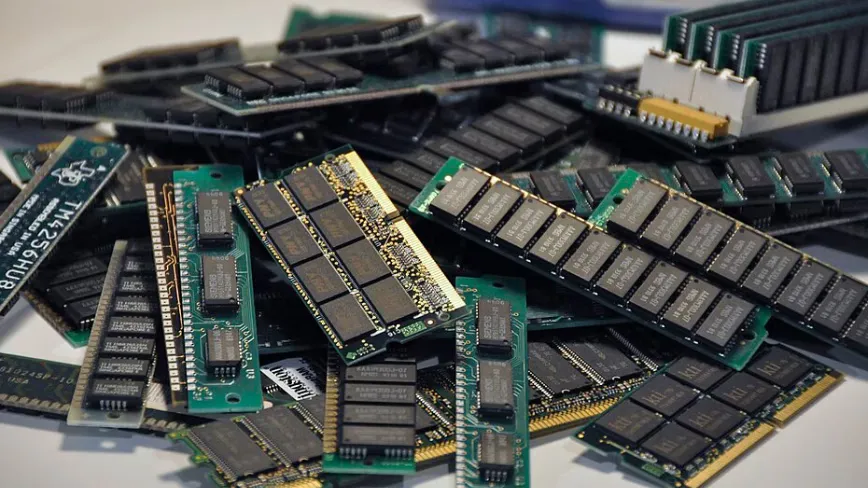
To understand why this matters, zoom out to how memory fits into modern hardware. Memory chips are not a small, optional component. They are part of the foundation that determines how devices run applications smoothly, handle multitasking, and support on-device features. When AI models and AI workflows drive demand for memory across the supply chain, handset makers feel it even if the phone is not training models locally. The pressure shows up in what memory configurations are available at a given cost, and in the pricing of components that manufacturers need to incorporate at scale.
This is also where strategy gets uncomfortable for boards and executive teams. If memory becomes expensive or harder to procure, companies have to pick which product promise they can afford to keep. “Budget phone” typically means tighter margins, and sometimes a narrower range of specifications that can be sustained across production. In that environment, the question is not simply whether a manufacturer can assemble a phone. The question becomes whether it can assemble a phone that meets its own definition of progression, the one Nothing highlights with the co-founder’s point about being able to make something that feels like “a genuine step forward.”
Now layer in incentives and timing. Consumer hardware companies live on release schedules, but also on investor expectations for predictable pipelines. Canceling a planned product often signals a deeper operational or financial problem. Preserving the CMF Phone 3 Pro plans, even while acknowledging that a budget device could not meet the company’s quality bar, suggests a more nuanced tradeoff. It implies Nothing still believes it can ship something, but it is acknowledging that AI driven component pressures influence what “something” can be.
Regulatory background is not the headline here, but it shapes the environment. In recent years, regulators across major markets have increased scrutiny around supply chain transparency, consumer protection, and product labeling. While the source story focuses on internal feasibility and component pricing dynamics, the second-order implication is clear for executives: when supply chain and component constraints tighten, companies may have less room to experiment with configurations that could trigger additional compliance burdens. That can tilt teams toward shipping a stable, defensible configuration instead of rolling out a bolder spec that might be costly or unavailable at the needed time.
For decision-makers at handset makers, component suppliers, and investors, the takeaway is that AI memory pressure has moved from spreadsheet to product roadmap. Nothing’s statement is a clue that budgets are not merely being squeezed by higher component costs. They are being constrained by a mismatch between what engineers want to deliver and what the economics and procurement realities allow.
Peers should treat this as a signal, not because CMF Phone 3 Pro is canceled, but because the reasoning highlights the new failure mode. The failure mode is not “we will pay more.” It is “we cannot ship the experience we wanted.” In that world, product leadership becomes inseparable from memory strategy, supplier relationships, and procurement timing. And if you are on a board, the question shifts from “Will margins be pressured?” to “Can the company still keep its product promise within the cost envelope memory pricing creates?”
This story's Key Insights and Take-aways are locked.
Create a free account to unlock Executive Actions for one credit.
Register to UnlockAlways free for Executives Club members. Join the Club
More in Business

Accenture’s $4.18bn play fails as AI fears spark a 20% worst-ever stock plunge
On Thursday, Accenture hit its biggest one-day drop on record after forecasting worries that AI could hollow out consulting.

SpaceX stock jumps 3% after it overtakes Amazon’s market cap
CNBC says SpaceX’s shares surge following its IPO Friday, forcing investors to reprice what “space” and “AI” are worth.

SpaceX’s first options day breaks U.S. records after a $85B IPO win
Big IPO, bigger options debut: what it means for investors, risk teams, and anyone benchmarking market appetite.