

Nvidia’s Vera CPU details force buyers to re-run AMD and Intel comparisons
New data-center CPU information from Nvidia reshapes the checklist AI infrastructure teams use when evaluating x86 competition.
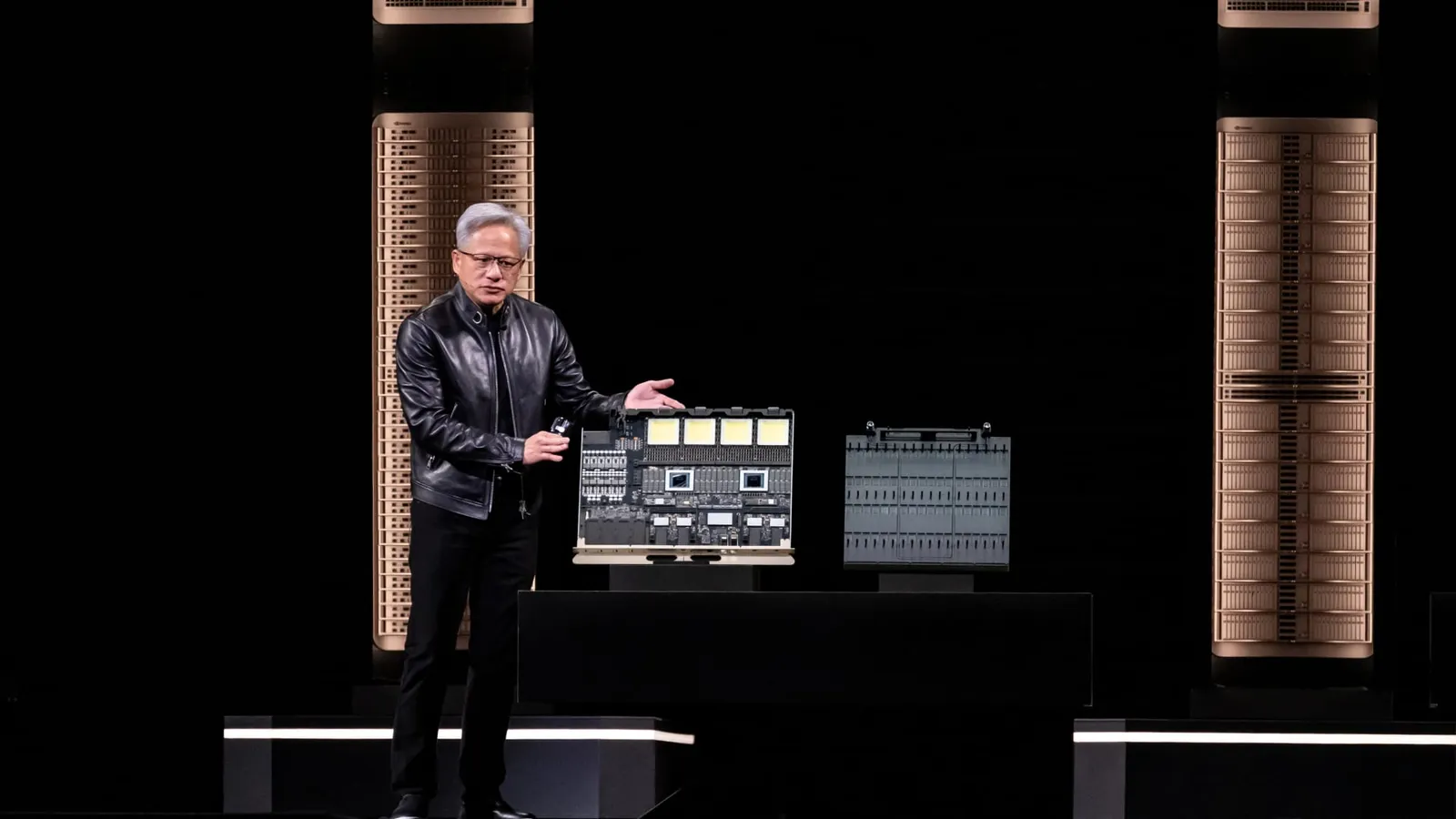
Nvidia released new information about its next-generation data center CPU called Vera, urging prospective customers to fully evaluate the chip. For decision-makers, it sets up a fresh competitive benchmark versus AMD and Intel in AI infrastructure buildouts.
Nvidia has released new information about its data center CPU, called Vera, and the message is blunt: prospective customers need to fully evaluate it. In practice, that means teams building AI compute stacks cannot treat Nvidia's CPU roadmap as a “nice to know” side plot. They need to re-run their comparison frameworks, because Nvidia is now pushing the Vera conversation beyond early interest and into actual purchasing due diligence.
That matters because the buying cycle for AI infrastructure does not reward half-measures. Once companies commit to servers, networking, and power infrastructure, the CPU choice becomes a long-lived constraint. Nvidia’s decision to publish additional details for Vera is essentially an invitation, and also a pressure test. If your current baseline assumes CPUs are commodity platforms for AI workloads, Nvidia is signaling that the baseline deserves another look.
Zoom out one layer and you can see why this is a big deal. In the data center, AMD and Intel have long owned the center stage for general-purpose compute, and their platforms are deeply integrated into the ecosystem of motherboards, firmware, OEM servers, and enterprise operating environments. Nvidia, by contrast, has typically been the GPU-centric actor, focusing on accelerators that do the heavy lifting for training and inference. A credible, detailed CPU roadmap from Nvidia is the kind of move that changes how buyers think about performance, compatibility, and total system efficiency, even when the primary work is done by GPUs.
This also plays into a simple operational reality: AI systems are not just “chips.” They are coordination. CPUs handle orchestration, data movement, host-side preprocessing, memory management, and all the glue logic that keeps workloads fed. If a vendor like Nvidia is asking for full evaluation, it is implicitly telling customers that the host layer is worth optimizing, not merely filling. For executives, that means the evaluation process likely needs to include more than raw benchmarks. It also needs to consider how Vera fits into real deployment constraints, like workload mix, integration effort, and the performance profile that shows up under typical production conditions.
There is another layer here: competitive positioning. AMD and Intel have spent years competing for enterprise mindshare in data-center CPUs, and their sales motions often rely on a “known quantity” advantage. Nvidia’s release of new Vera information changes the shape of that competition because it gives customers another serious option, coming from a vendor already central to AI infrastructure decisions. That can influence procurement conversations even for buyers who are initially cautious. Once Vera is on the spreadsheet, it becomes part of the risk and redundancy planning, and it may alter negotiation leverage.
Regulatory and compliance pressures are also part of the backdrop for data-center hardware choices, even when they are not the headline. Large deployments often must satisfy security standards, supply chain expectations, and documentation requirements for systems in critical environments. When a new platform enters the evaluation set, it triggers additional internal review steps. That is work. It can slow decisions. It can also accelerate them if the platform clears the internal gates quickly. Either way, Nvidia’s decision to provide prospective customers more information is directly relevant to how fast buyers can converge on a final architecture.
The strategic stake for decision-makers is straightforward: AI compute budgets are under constant pressure, and the cost of getting the foundation wrong can be measured in capex, power and cooling commitments, and delayed time-to-value. By detailing Vera and effectively forcing an updated evaluation cycle, Nvidia is setting up a challenge to AMD and Intel that extends beyond marketing. The implication is not that buyers should abandon existing CPU assumptions, but that they should treat Vera as a first-class variable in system design.
In the broader market, that creates second-order effects for boards and executive teams. Procurement leaders typically want stability. Architecture teams want performance and predictability. Finance teams want avoidable surprises minimized. Nvidia pushing Vera forward with new information increases the probability that these internal stakeholders will revisit their models and ask tougher questions about where performance bottlenecks live, how integration risk is managed, and whether the AI stack should be treated as a single vendor strategy or a hybrid arrangement.
Bottom line: Nvidia’s Vera push is a reminder that even in a market dominated by GPU performance, the CPU layer still shapes outcomes. With new information released about Vera, customers have less room to assume that “CPU choice doesn’t matter much.” And AMD and Intel now have to defend not just performance, but relevance in Nvidia-led AI system conversations.
This story's Key Insights and Take-aways are locked.
Create a free account to unlock Executive Actions for one credit.
Register to UnlockAlways free for Executives Club members. Join the Club
More in Technology

Google quietly links your phone number to every Android account on your SIM
Adding a SIM now ties your phone number to all Google accounts - and future accounts inherit it. Here's the security and privacy stakes.

Hijacker AI 'Skynet mode' runs 100,000 attack steps against exposed models
Symantec caught a criminal AI agent that borrows other models, steals data, and mines crypto; the only relief is no confirmed victims yet.

Nvidia's AI-financier shift faces its first big test as neoclouds stumble
A rout in neocloud stocks is forcing investors to weigh Nvidia's hidden exposure as both supplier and lender to the AI buildout.