

Nvidia tells scientists agentic AI is taking over supercomputing with Vera Rubin stacks
Dion Harris says Los Alamos will run the first agentic AI supercomputers, powered by a new scientific compute stack.
Nvidia senior director Dion Harris used ISC High Performance 2026 in Hamburg to argue agentic AI is shifting supercomputing from question-answering to autonomous task execution. He tied Nvidia’s pitch to Los Alamos National Laboratory’s Mission and Vision systems and a software toolkit Nvidia says connects agents, simulators, and AI into one workflow.
If agentic AI sounds like yet another buzzword you can ignore, Nvidia just tried to plant it inside the world’s most expensive machines. At ISC High Performance 2026 in Hamburg, Germany, Nvidia senior director of HPC and AI Factory Solutions Dion Harris said the Mission and Vision systems at Los Alamos National Laboratory (LANL) will be the world’s first agentic AI supercomputers when they come online. The implication is simple and kind of wild: the “autonomous agent” conversation that’s been happening in chatbots and copilots is now being mapped onto scientific workflows that demand serious compute, memory, and networking.
Harris framed this as an inflection point. He told the media in a briefing, “We are currently witnessing a massive inflection point with agentic AI. AI is shifting from a tool that simply answers questions to an autonomous system that executes complex tasks.” In his telling, the leap matters because science does not just need AI as a calculator. It needs AI that can plan, call simulations and surrogate models, and iterate in a continuous loop where AI and data analytics converge into one single workflow. If you’re responsible for research budgets, infrastructure roadmaps, or vendor decisions, that is a different problem than “which model gives better answers.” It’s “which platform can run autonomous scientific loops reliably at scale?”
To make that pitch credible, Nvidia is arguing that agentic AI needs a new scientific computing stack, not just a faster GPU. Harris described a setup where agents act like co-scientists, calling simulators and surrogate models alongside tools and applications. That means agentic workflows must integrate with applications, data, and the simulation layer, so agents can do everything from planned experiments to writing code to run simulations, to the analysis afterward. Nvidia’s claim is that this stack is the bridge from “AI that helps” to “AI that executes.”
And yes, this is an anything-but-trivial compute demand. Harris said the workload needs an incredible amount of compute, memory, and networking, and Nvidia’s answer is a combination of its next-gen Vera Rubin platform and Grace Blackwell platforms plus Quantum InfiniBand networking and new software. The software bundle Nvidia highlighted includes ALCHEMI, DAQIRI, and cuPhoton, each aimed at a specific choke point in scientific throughput.
ALCHEMI is positioned as a domain-specific toolkit for chemical and material discoveries, using Nvidia’s BGR microservice for simulating millions of molecules and structures. DAQIRI is meant for next-generation scientific instruments, connecting sensors directly to real-time AI inference points, according to Harris. He gave a concrete example from CERN’s ATLAS experiment: less than 2 percent of collision data can typically be stored. DAQIRI, in his description, introduces a GPU accelerated AI trigger pipeline where FPGAs handle low latency routing while GPUs run deep learning models so scientists can learn from significantly more data. Then there’s cuPhoton, built to process petabytes of camera and telescope data, so scientists can analyze massive cosmic datasets in minutes rather than months. Harris also provided a test claim: in testing with 32 Grace Blackwell superchips simulating data from the Rubin Observatory, cuPhoton loaded and read images 15,000 times faster and accelerated signal processing and analysis by up to 8,000 times.
Now for the platform math Nvidia wants you to care about. Harris said the next-gen silicon is the foundation for agentic supercomputing. The Vera Rubin NVL rack is scheduled for availability in Q4 this year and Nvidia’s target is up to 144 GPUs per rack delivering 5 petaFLOPS of FP64 floating-point performance. He also argued that memory bandwidth is a common limiter for many high-performance computing workloads. Vera Rubin, he said, increases memory bandwidth by 2.8 times compared to Blackwell, with 41 TB of HBM4 memory per rack to achieve three petabytes per second of bandwidth.
He tied this directly back to the LANL deployments. Mission and Vision are the “first agentic AI supercomputers” in the world in Nvidia’s framing, and Nvidia said their GPU counts are substantial: Mission has 2,160 Rubin GPUs plus 1,080 Vera CPUs, while Vision has 1,298 Rubins and 648 Veras. Harris also mentioned Veritas, announced at ISC, described as deploying 576 Rubin GPUs along with 288 Vera CPUs. The message to buyers is that these agentic workflows will not be a thin layer over existing systems. They’re being built on top of a platform Nvidia is actively sizing for bandwidth and scale, with Quantum InfiniBand networking and its software accelerators meant to keep the loop fed.
If you zoom out to second-order implications, Nvidia’s pitch has a governance dimension too. Harris addressed the core philosophical objection: do you need agentic AI to do science? “Agentic AI, or in fact any AI, is not required to do science,” he told The Register. But he argued Nvidia believes agentic AI is already emerging as a powerful tool for science at a scale humans alone cannot drive. His rationale was not just speed. He said agents do not need to sleep, eat, or take breaks, and they can consume thousands or millions of technical papers while remembering details. He also claimed, in some cases, agents benefit from PhD-level understanding across diverse fields “from astrophysics to zoology,” and he expects human scientists to have a team of agents running around the clock to execute investigations they could not perform themselves.
For decision-makers, the practical question becomes: what does “around the clock” mean for procurement cycles, reliability expectations, and evaluation metrics? It changes the test from “did the model answer correctly” to “did the autonomous system run the right experiments, trigger the right data pathways, and complete end-to-end workflows fast enough to matter.” It also reshapes internal infrastructure planning. A stack that combines agents, simulation, and AI in one single workflow has a bigger footprint than a single model rollout, and it likely requires tighter integration between HPC administrators, data teams, and application developers.
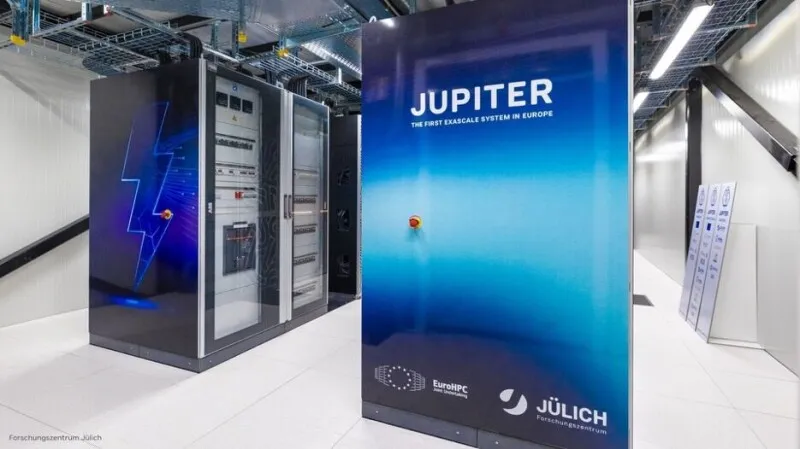
Nvidia closed with a regional market claim, saying Europe is now a hotspot for HPC, with 35 new supercomputers brought online in the past year, all using Nvidia tech. It listed examples including Jupiter, Europe’s exascale system; MareNostrum 5 at the Barcelona supercomputing center; Bavaria AI’s Blue Swan; HammerHAI at the University of Stuttgart; and Italy’s CINECA. Whether you care about Nvidia as a vendor or as an indicator, the direction is clear. If agentic AI is going to become a mainstream scientific workflow, the institutions that land first will control the early “runbooks” for how agents plan, execute, and iterate under real constraints. And the institutions that arrive later may still benefit, but they will be learning from the mistakes and benchmarks created by those first deployments at scale.
This story's Key Insights and Take-aways are locked.
Create a free account to unlock Executive Actions for one credit.
Register to UnlockAlways free for Executives Club members. Join the Club
More in Technology
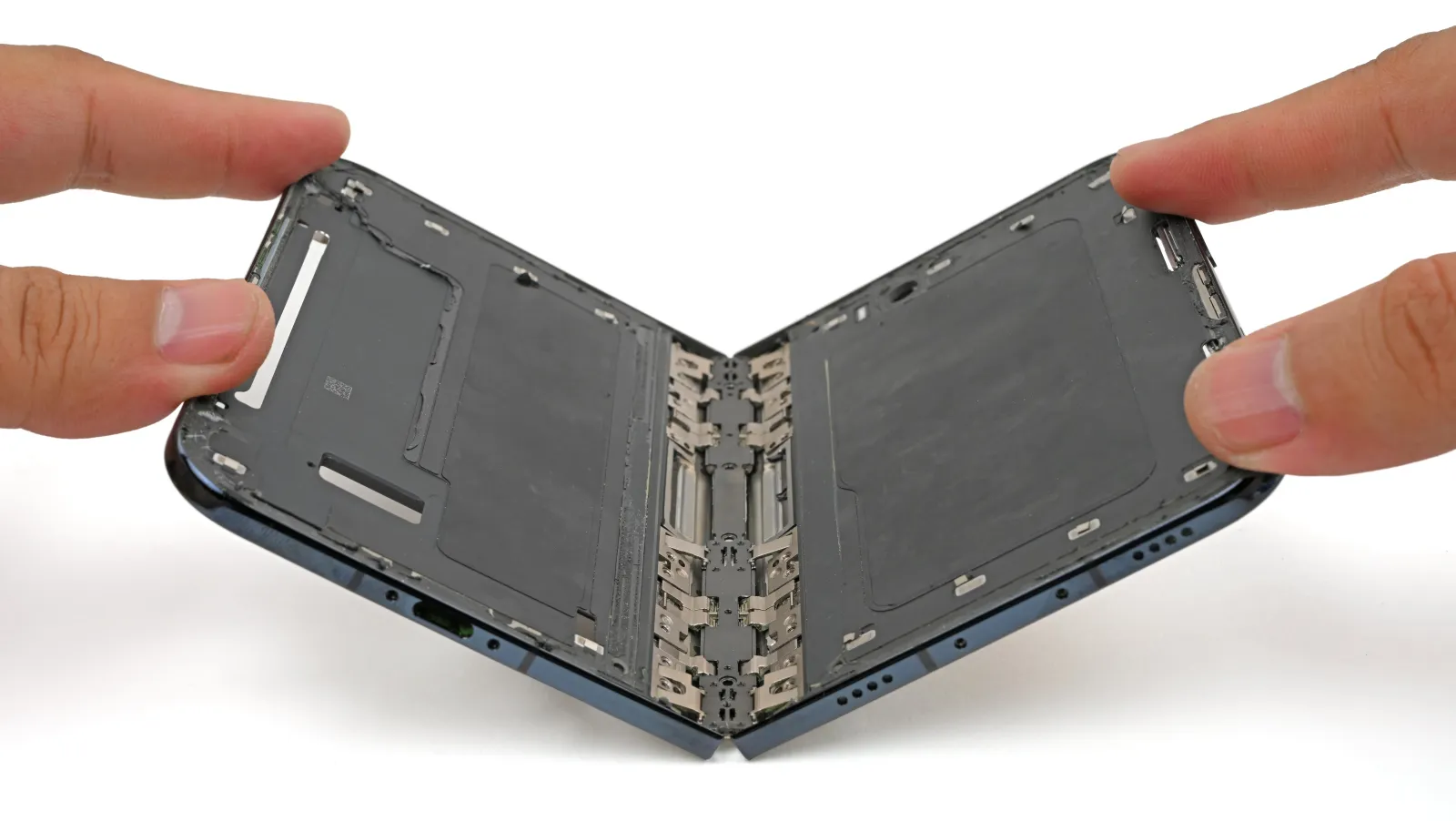
iPhone Duo screens crack above hinge - Apple confirms issue, iFixit tears it down
Within hours of launch, new foldables broke at the crease. Apple is replacing units, and teardown expert Shahram Mokhtari is inside the hinge.
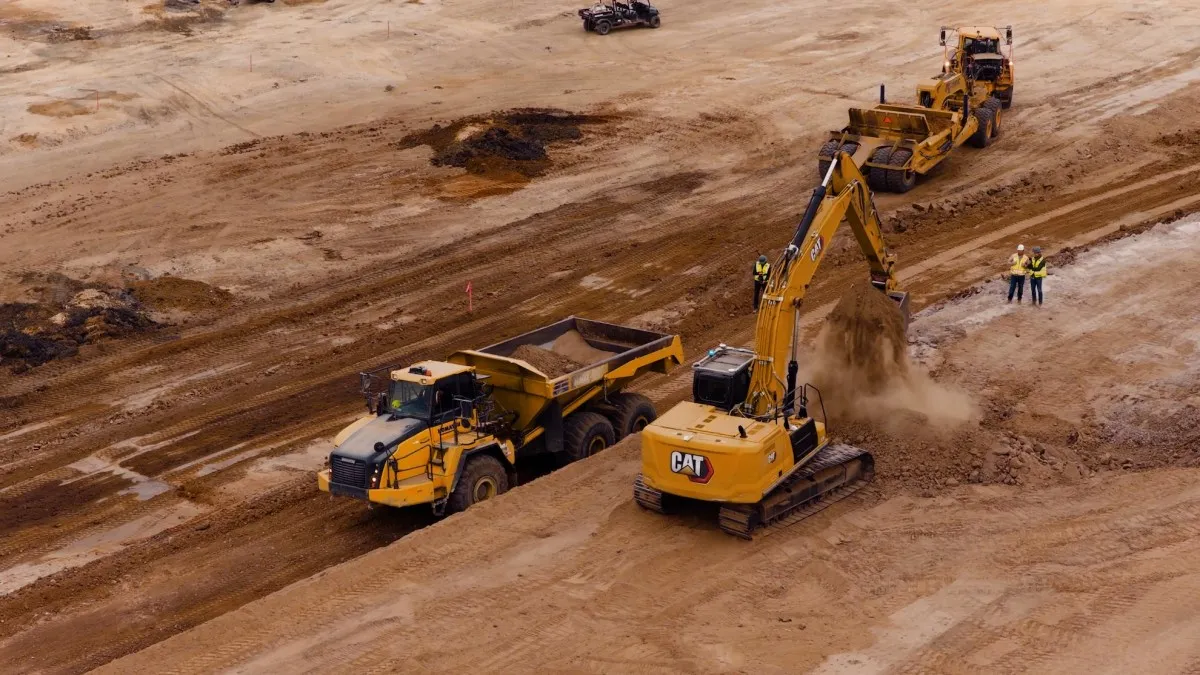
Self-driving excavator startup Bedrock digs up $600M, now worth $4.1B
Bedrock Robotics banks $600M to automate excavators, valuing the startup at $4.1B.

Microsoft offers buyouts to 60,000 as AI efficiency push reshapes its workforce
The voluntary buyout offer is the clearest sign yet that Microsoft will trim headcount even as it accelerates AI infrastructure spending.