
NYPL saw teen programming attendance jump 27% since 2023 by designing curiosity-driven “third spaces”
Loneliness and screen fatigue are pushing young adults toward libraries, chess clubs, and book bars that make learning the social glue.
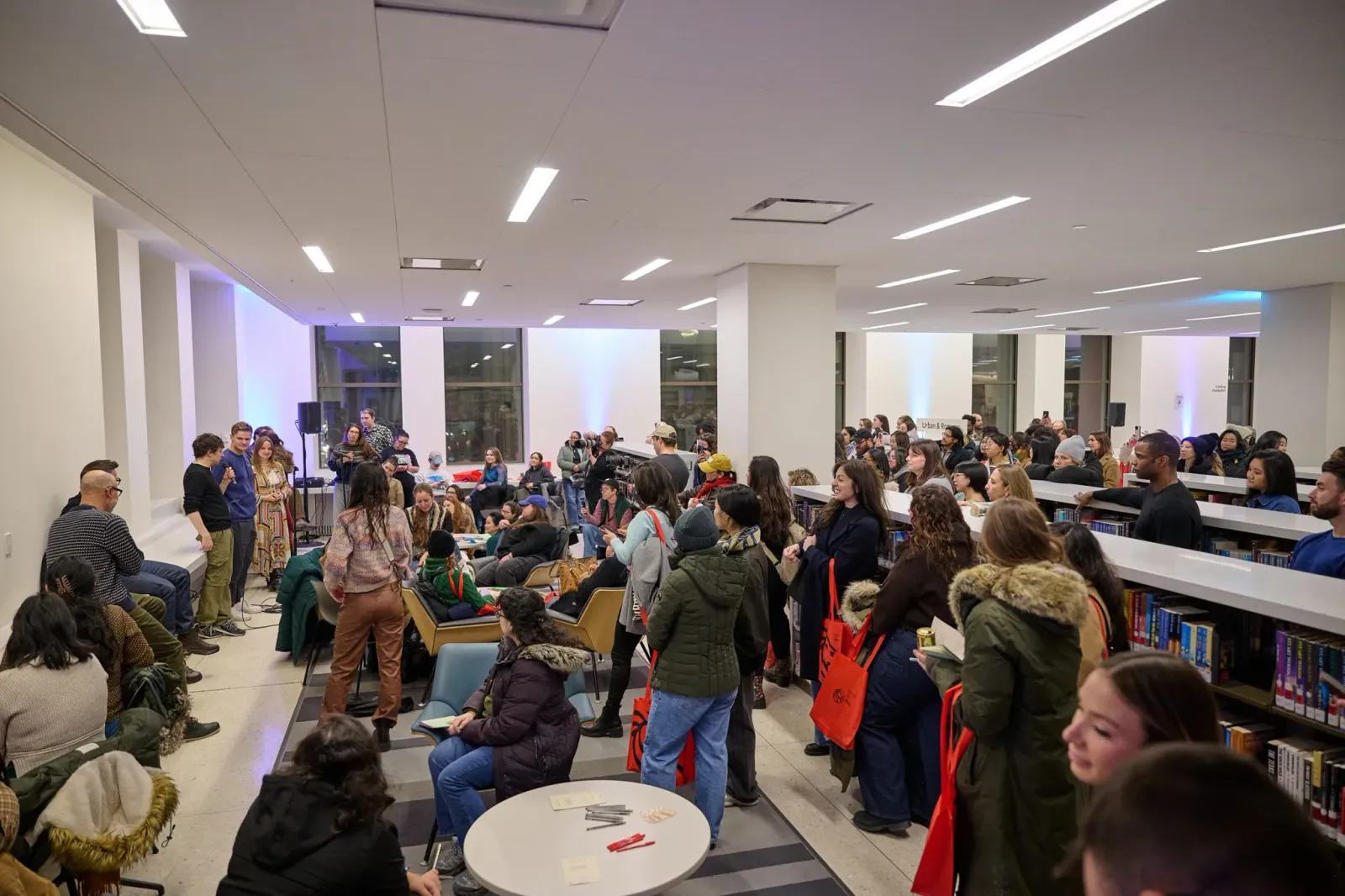
Fortune reports the New York Public Library’s branch and teen programs are gaining momentum as young people seek offline connection built around curiosity. For decision-makers, the business lesson is clear: spaces that replace passive consumption with shared attention are quietly winning mindshare and community loyalty.
On the coldest nights of New York, people lined up outside the New York Public Library, not for a new restaurant opening or a concert, but to read silently for 20 minutes and then talk to a stranger about the book. The point is simple and telling: when people build a reason to leave the house and a low-pressure way to connect, they show up in numbers that surprise even the people running the place.
That demand is showing up in NYPL’s data. Branch library program attendance rose 10% in fiscal 2026 compared with the previous year, and research library attendance increased 6%. Overall visits climbed 2% and 4% across all ages, respectively, according to data provided by NYPL. Teen programming is moving even faster: teen program attendance is up 27% since fiscal 2023, reaching 146,000 last year, after double-digit increases of 12% and 14% the two years before that. Total teen visits, a separate measure from program attendance, reached at least 400,000 in fiscal 2025.
This is not just “people like libraries again.” It is the emergence of a new type of third space, meaning a place that is neither home nor work. Traditionally, coffee shops handled the role of “somewhere to work,” and bars handled “somewhere to socialize.” But loneliness and digital fatigue are changing the default settings of free time. Young adults still want people. They also want a social script that does not require performing, impressing, or drinking. Libraries, chess clubs, and book-centered gatherings are adapting by treating conversation as a byproduct of curiosity, not a high-stakes social test.
At NYPL, that shift began about 15 years ago, when the library started rethinking how it served teenagers, a group that had historically been squeezed between children’s programming and adult services. Instead of leaving teens to wait their turn, NYPL built dedicated teen spaces stocked with recording studios, 3D printers, and graphic novels, and staffed them with teen mentors who design their own programming. The result is a pipeline of activities that naturally generate conversation starters: book clubs, chess clubs, author-led writing workshops, and creative technology courses. In Bannon’s example from a Harlem branch, teens were not just playing chess, they were surrounded by strategy books and the kind of shared focus that makes talking feel effortless.
Bannon frames it as “what interests you.” When people show up to a reading party, whatever they are reading becomes the conversation point, which lowers the social stakes. Instead of trying to win someone over, strangers begin with something they genuinely care about. He also draws a direct line between that format and chess: “It allows you to be social without being social.” The chess community is familiar with competition. The new twist is that the gathering can feel casual, intentional, and non-intimidating.
That blueprint shows up elsewhere in the story in a different disguise: Pawn Chess Club. Founders Simone Robert and Isabel Münter started the club in May 2023 in the borrowed private dining room of a friend’s restaurant. They were not trying to revive chess. They wanted somewhere to play that felt more like the bars and restaurants people already enjoy than the intensely competitive chess clubs that can intimidate newcomers. Today, the club regularly draws more than 100 people to weeknight events, and roughly half of attendees show up alone.
Pawn’s approach is explicitly designed to slow people down. The founders aim for curated events that force guests to “slow down” and be intentional, whether with friends or strangers. They partnered with Hinge, whose One More Hour initiative encourages people to spend more time connecting offline. That matters because loneliness and isolation are not portrayed here as abstract issues, but as problems the founders read about in government reports describing epidemic levels among younger generations. The club says it has watched friendships form, first dates unfold, and strangers return week after week. One of Münter’s observations is especially operational: people come in after a “shitty day” and decide to stay, not because they are trapped by a bar tab, but because the format feels like it ends the day on a high.
This is where the “analog life” argument enters. The story ties the rise of these curiosity-driven third spaces to a broader backlash against an internet designed to capture attention instead of enrich it. Cal Newport, author of Digital Minimalism, argues that simply telling people to use devices less rarely works. The better approach is to create an analog life so compelling that digital distractions pale in comparison. Newport traces forces that help explain the shift: social apps chasing TikTok’s algorithmic model at the expense of actual networking, a souring public view of Silicon Valley leadership since Steve Jobs, and now an AI boom that he described as unusually “joyless and often unnerving,” with little visible upside for most people’s daily lives.
For operators and decision-makers, the strategic implication is that “offline” is not a marketing theme. It is a product design constraint. Pawn Chess Club appeals in part because guests do not feel obligated to drink or stay out late. NYPL’s Bannon says he stopped short of calling the link more than a hypothesis, but he has noticed a similar dynamic. Maura Cheeks, who opened Liz’s Book Bar in Brooklyn in June 2024, is building the same concept in a different wrapper. Cheeks says her goal was not just to open another bookstore, but to create a neighborhood space where people can meet, learn, and leave knowing someone they did not before. Customers become friends. Regulars build community. Romantic relationships begin between people who first met in the space. The crowd is not only young adults, Cheeks says, attributing that partly to the neighborhood and to something practical: reading is tactile, and these gatherings ask very few people to sign up for “five courses” when you can just find something you find interesting.
Put these threads together and you get a market signal that is hard to ignore: when loneliness is rising and screen fatigue is real, people do not just want entertainment. They want a reason to gather that turns shared attention into an experience. These institutions are learning that curiosity can be the hook that makes social connection feel safe, structured, and even fun. And for peers in media, education, hospitality, and community building, the stakes are direct. If you keep building spaces that only optimize attention or passive consumption, you may find the next wave of loyalty going to the places that reliably produce connection, one shared book, one chess move, one deliberate hour at a time.
This story's Key Insights and Take-aways are locked.
Create a free account to unlock Executive Actions for one credit.
Register to UnlockAlways free for Executives Club members. Join the Club
More in Technology

doubleAI's Maxwell rewrites code while it runs, claims 38x speedups
The Tel Aviv startup's code execution model formally verifies optimizations, turning AI into an agent for the hardware itself.
Saudi military official paid to fly OpenAI bugging suspect's family out, prosecutors say
A court filing says a Saudi military official funded the family's exit and Riyadh offered bail, putting foreign-influence risk squarely on AI boards.
AI researcher's 26,000-word claim: Neural nets aren't tangled after all
Nick Cammarata's Goodfire post has the AI world split - if he's right, monitoring frontier models just got a lot easier.