

Oak trees keep pulling CO2 after growth stops, reshaping carbon-storage forecasts
Photosynthesis and wood production are weaker linked than assumed, with direct consequences for how much forests can store in warming futures.

Research highlighted by ScienceDaily finds oak trees continue absorbing carbon dioxide long after annual growth ends. For decision-makers, it means current forest carbon forecasts may need updating to reflect ongoing carbon uptake.
Oak trees keep absorbing carbon dioxide long after their annual growth has ended. That is the headline from ScienceDaily, and it lands with a thud because it challenges a simplifying assumption many models bake in: that carbon uptake largely tracks the years trees are actively building new wood.
The key result is exactly what the original summary claims. Oak trees do not stop behaving like carbon sponges at the moment their growth season ends. Scientists say this finding reveals photosynthesis and wood production are not as tightly linked as previously believed, meaning the pathway from “green leaves doing photosynthesis” to “more wood mass” is more complicated than the field once assumed.
So why should executives care? Because carbon storage is not just a climate curiosity. It is a forecasting problem with money, policy, and risk attached. Forest carbon estimates show up in everything from climate targets and corporate sustainability reporting to regulatory design, carbon accounting, and investment underwriting for land-based credits. If the relationship between photosynthesis and wood production is different than assumed, then any model that uses wood growth as a proxy for carbon storage might undercount what forests can keep pulling from the atmosphere after the “visible” growth period ends.
This matters even more in a warming future. The ScienceDaily piece flags that the finding could reshape forecasts of how much carbon forests will be able to store in a warmer future. That is a big deal for boards and finance teams because carbon storage projections influence both liability and opportunity. If forests store more carbon than expected, it could change the expected supply of natural carbon sinks. If they store less under heat stress or altered seasons, it could change the expected permanence of those sinks. Either way, the forecast inputs need to reflect what trees are actually doing, not what the easiest assumption suggests.
There is also a second layer for anyone working on strategy: incentives often reward the metrics they can measure. Wood production and tree-ring growth are tangible indicators, which is one reason they became such a convenient stand-in in carbon modeling. But the discovery that oak trees continue absorbing CO2 after their annual growth ends implies that forests may deliver carbon uptake services beyond what those growth metrics capture. In practice, that can shift how analysts interpret seasonal data and how organizations think about timing, reporting periods, and the credibility of “forest-only” narratives.
For executives dealing with climate risk, this is a reminder that nature does not follow the tidy logic of spreadsheets. Photosynthesis can continue even when a tree has stopped expanding its annual growth. Wood production is only one downstream outcome of living physiology. If the coupling between them is weaker than expected, then models that link “carbon uptake equals wood gain” risk missing a sustained process happening in plain sight.
If you are on a board overseeing climate commitments, you do not necessarily need to become an ecophysiology expert. But you do need to treat the assumption layer as a governance issue. Forecasting frameworks are built on specific relationships, and relationships can be wrong. Here, ScienceDaily points to an overlooked decoupling in oak trees: carbon absorption continues after growth ends. That should trigger a careful review of how internal or third-party forecasts translate forest growth into carbon storage, especially when those forecasts feed into targets, disclosures, or any strategy tied to carbon-credit economics.
The strategic stakes are straightforward. Forecast uncertainty is not abstract when it touches financial outcomes. When new research shows that trees can keep absorbing carbon beyond the period models assumed, it can change the range of expected carbon storage and affect the confidence with which decision-makers plan. For peers in similar roles across sustainability, risk, and climate finance, the takeaway is to pressure-test the “simple linkage” assumptions that quietly run through so much carbon accounting. If trees keep taking in CO2 after growth stops, then the carbon story is bigger than the growth story.
This story's Key Insights and Take-aways are locked.
Create a free account to unlock Executive Actions for one credit.
Register to UnlockAlways free for Executives Club members. Join the Club
More in Science

Two Milky Way spiral arms are 10% farther, forcing a possible mass and shape rethink
Chandra and XMM-Newton gamma-ray burst echoes suggest the Outer and Scutum-Centaurus arms sit thousands of light-years further out.

New fossils suggest the earliest animal handedness, reshaping how we think about behavior evolution
Researchers argue newly uncovered fossils could be the first real signs of behavioral “handedness” in animals, with bigger implications for evolutionary biology.
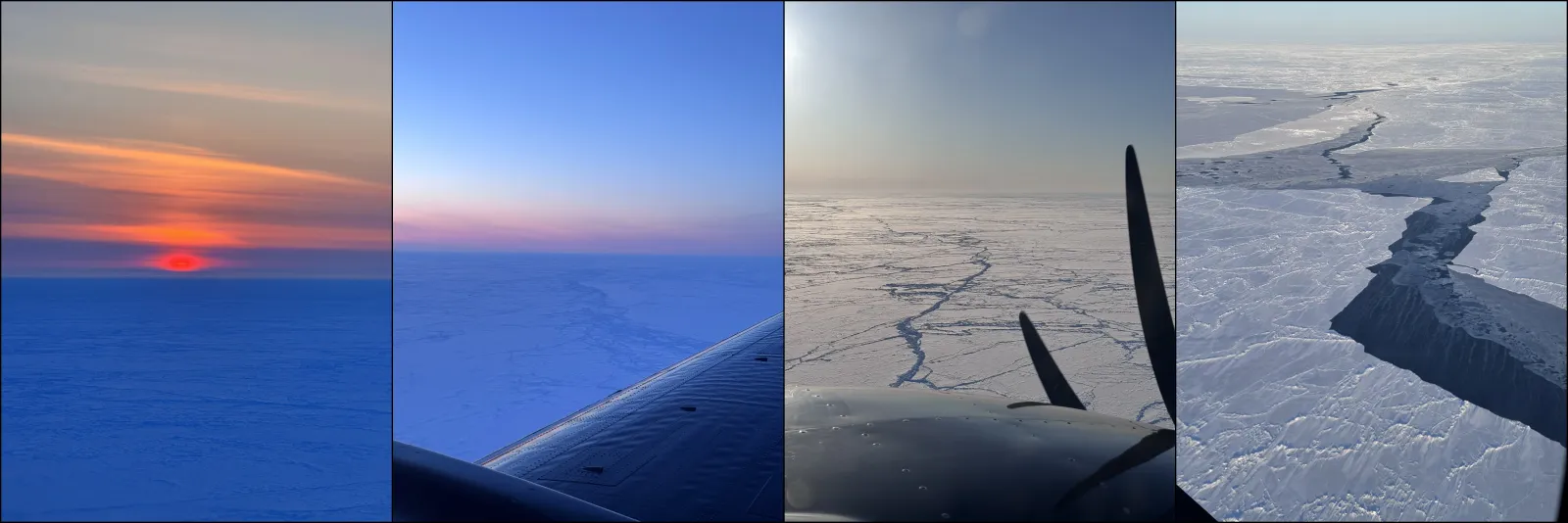
JPL tests an Arctic sea-ice sensor, flying 50 hours to prep for a launch in a year
A two-week Canadian campaign timed aircraft and satellites to improve sea-ice thickness measurements that matter for climate, navigation, and future missions.