

Off-the-shelf thermal cameras extend LIGO’s reach by ~33 million light-years
UC Riverside’s Jonathan Richardson and team correct heat-warping mirror distortions without new instrumentation tech.
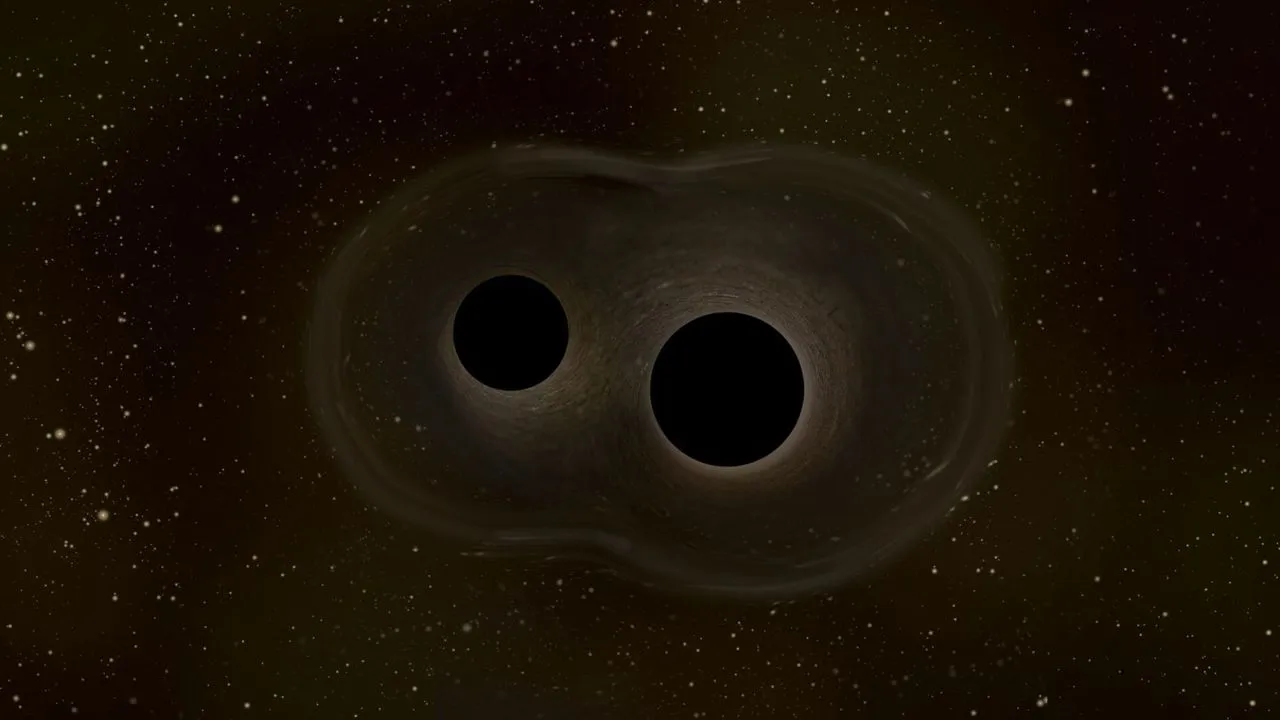
Jonathan Richardson at the University of California, Riverside, led a team that developed a technique pairing commercial thermal imaging cameras with computer models for LIGO. The fix targets heat-induced mirror distortions and is estimated to extend LIGO’s reach by roughly 33 million light-years when incorporated into LIGO’s upcoming upgrade.
LIGO was built to detect the universe’s tiniest betrayals: gravitational waves from cataclysmic events like merging black holes. Now a new approach from Jonathan Richardson’s team at the University of California, Riverside is aiming to widen the net. By using commercially available thermal imaging cameras plus computer models, the team developed a method to correct tiny heat-induced distortions in LIGO’s mirrors, a flaw the scientists say currently limits how far into deep space LIGO can look. When incorporated into LIGO’s upcoming upgrade, the researchers estimate the fix would extend the observatory’s reach by roughly 33 million light-years.
That number is the headline, but the mechanism matters just as much for decision-makers who fund and govern large scientific programs. The core claim is blunt: the solution does not require new technology development, which Richardson said is almost unheard of for solving a LIGO instrumentation problem. In other words, this is not a “new laser, new detector, new architecture” pitch. It is an instrumentation-precision upgrade that leans on off-the-shelf sensing and existing models to measure distortions accurately enough to apply corrective heating with the precision the observatory needs.
To understand why this is a big deal, you have to picture LIGO’s setup. The observatory uses twin L-shaped facilities in the U.S., located in Washington and Louisiana. Inside each detector, a laser beam travels down two 2.5-mile-long (4-kilometer-long) tunnels, bouncing off pristine mirrors at each end. When a gravitational wave passes through Earth, it subtly stretches one tunnel and squeezes the other. That microscopic change slightly alters the laser beams, producing a tiny flicker of light that signals a distant cosmic event.
Those signals are so small that every photon counts. LIGO’s mirrors are polished to reflect 99.9999% of the laser light that strikes them, which makes them among the purest optical components ever built. But even near-perfect mirrors have a persistent physical reality: they absorb a tiny fraction of the intense laser light. That absorbed energy turns into heat, warping the mirror surface by just a few nanometers. Physicists already knew they could counteract these distortions by applying targeted heat to the back of the mirrors. The hard part was measurement. The team’s challenge becomes: how do you measure distortions accurately enough that the correcting heat can be applied with exact precision?
The technique Richardson’s group tested uses infrared thermal images and existing computer models to reconstruct a map of distortions across the mirror’s surface. Richardson compared it to diagnosing a car engine from the temperature pattern on the outside: “You can think of it like taking an infrared picture of a car engine,” he said in a statement. “An engineer can look at the temperature pattern on the outside and infer what's happening inside the engine. We're doing the same thing with LIGO's mirrors.” This analogy is doing a lot of work. It frames the approach as inference from heat signatures, not guesswork. And in instrumentation terms, that is what turns an engineering annoyance into a controllable input for the correction system.
The expected payoff is not linear. The team estimates a reach extension of roughly 33 million light-years. A reader could dismiss that as a small number compared with the universe’s scale, but the source highlights the consequence of looking further: because space expands in three dimensions, pushing a detector’s reach even slightly opens up an exponentially larger window of space. More volume means more gravitational-wave events within LIGO’s sensitivity. In the paper’s framing, that increases the potential for discovering violent cosmic collisions that lie beyond LIGO’s reach today.
Importantly, this is not being treated as a one-off fix for a single facility. The technique is expected to become part of the foundational design for Cosmic Explorer, a proposed next-generation U.S. gravitational-wave observatory targeted for the mid-2030s. Cosmic Explorer is designed with 25-mile-long (40-kilometer-long) arms, about 10 times larger than LIGO’s. Larger arms help detect events far beyond today’s capabilities. But the next-generation goal also includes a materials and physics constraint. Richardson said the goal for the next generation of gravitational-wave detectors is to achieve about 10 times the sensitivity of today’s instruments, and one key obstacle is reducing the fundamental quantum mechanical noise that limits measurement precision. In that ecosystem, improving mirror distortion control is a meaningful way to preserve signal quality while the program tackles harder noise floors.
For executives and boards overseeing complex R&D, the deeper story is the credibility of “instrumentation without reinvention.” The described approach, published in a paper on July 16 in Classical and Quantum Gravity, uses commercially available thermal imaging cameras rather than bespoke sensors, and it targets a known failure mode: heat-warping induced by laser absorption. That matters because it suggests lower technical risk than a full-stack redesign, and it creates a pathway to reuse across programs. If Richardson’s method performs as intended in LIGO’s upcoming upgrade, it sets a template for how large scientific collaborations can squeeze more capability out of existing infrastructure, not just by scaling size and budgets, but by scaling measurement discipline. In gravitational-wave land, where every photon is precious and every nanometer can matter, that kind of precision upgrade is the difference between “detecting something” and “detecting many more.”
This story's Key Insights and Take-aways are locked.
Create a free account to unlock Executive Actions for one credit.
Register to UnlockAlways free for Executives Club members. Join the Club
More in Science

Alaska's 1,580-foot tsunami had warning signs. Scientists just found them.
Rapid glacier retreat, heavy rainfall, and thousands of tiny tremors preceded Alaska's 1,580-foot tsunami, a warning for every coastal community in a warming world.

The rare mutation that lets high-risk brains dodge Alzheimer's
Scientists found a natural defense against protein buildup, opening a new path to preventive treatments.

3,000 steps a day may halve Alzheimer's decline, study finds
New research links a modest daily walk to less tau buildup and nearly half the cognitive and functional decline, even for those with early signs.