
Olivia Rodrigo’s Daisy Chain Fields lands Aug. 29 in Irvine with all-women lineup
A star-studded bill, 100% of net proceeds to women and girls charities, and presales start June 24.
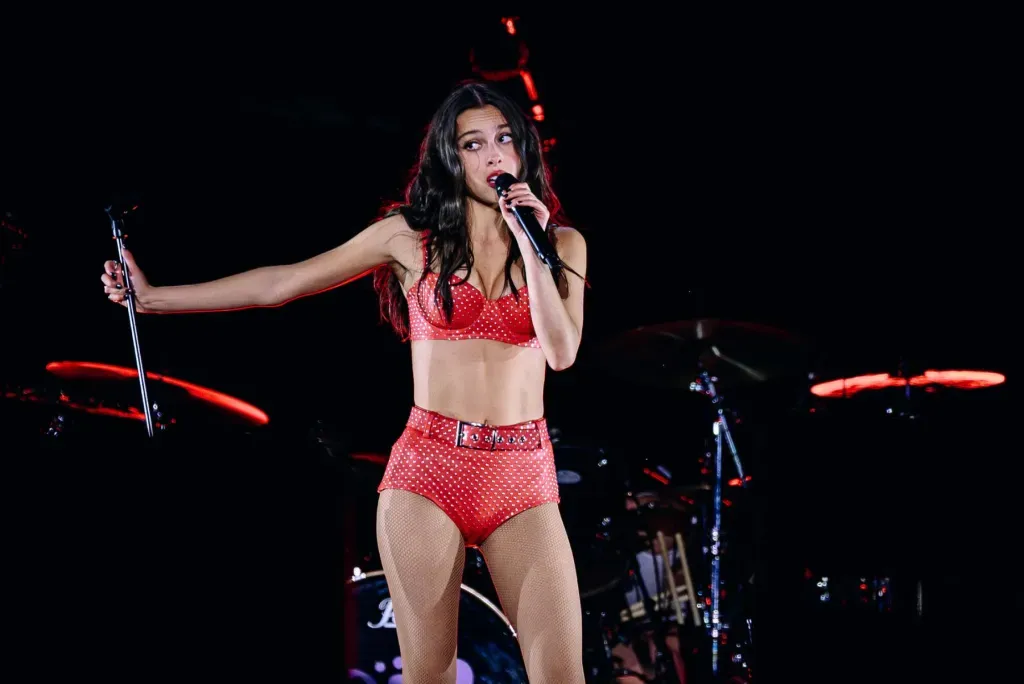
Olivia Rodrigo announced her inaugural all-women, charity-focused festival Daisy Chain Fields, set for Aug. 29 in Irvine, Calif., with Chappell Roan, KATSEYE, Doechii, Stevie Nicks and more. For decision-makers, it is a high-visibility test of how mainstream events can convert brand reach into direct funding for women and girls organizations.
Olivia Rodrigo is turning her momentum into a movement with Daisy Chain Fields, her first all-women festival, announced on Monday (June 22). The event is scheduled for Aug. 29 in Irvine, Calif., and Rodrigo says 100 percent of the net proceeds will go to charities dedicated to advancing and advocating for women and girls.
Rodrigo also revealed that the inaugural lineup is built like a victory lap for modern pop and alt royalty. Chappell Roan, KATSEYE, Doechii and Stevie Nicks are among the headline names, and the festival poster includes a wider performance roster: Rodrigo will take the stage alongside Bikini Kill, Die Spitz, Eli, Garbage, Mitski, Not for Radio, Quiet Life, Rachel Chinouriri, Stantigold and the Breeders.
Nicks is billed as one of three special guests, alongside Karen O and Sarah McLachlan. The “all-women lineup” framing is central here, not just aesthetic. Rodrigo is explicitly tying the program to a funding mission, and she put the mechanics upfront: Daisy Chain Fields will benefit a long list of organizations, including Baby2Baby, Black Mamas Matter Alliance, Center for Reproductive Rights, FreeFrom, Jhpiego, Johns Hopkins Center for Indigenous Health, National Domestic Workers Alliance, National Institute for Reproductive Health, National Women's Law Center and Planned Parenthood.
That list matters for executives and operators because it shows how a cultural event can become an operational funding pipeline. When an artist commits “100 percent of the net proceeds,” the risk shifts from “brand awareness” to “resource allocation.” Ticketing, partner economics, and budgeting become tied to outcomes, and the charities become the beneficiaries the public can verify. For boards and sponsors, this is also a reputational alignment exercise: the more mainstream the headline acts, the more visible the charitable math.
Rodrigo’s announcement included a clear personal pitch, and it also fits a broader arc in how pop stars are increasingly acting like media companies with social infrastructure. She positioned Daisy Chain Fields around joy, community and music as drivers of meaningful change. And it is not a one-off. In 2024, she launched her Fund 4 Good to raise money for reproductive rights, education and actions against domestic violence. Later that year, she announced she had donated more than $2 million to charities through proceeds raised on her Guts World Tour. In 2025, Planned Parenthood presented her with its Catalyst of Change award.
Daisy Chain Fields also appears designed to resonate with the blueprint of Lilith Fair, the groundbreaking all-women festival started by McLachlan in 1997, with Rodrigo appearing in a 2025 documentary about the music event. That lineage is strategically useful. It signals that this is not just a “moment,” but a format with history, audience expectations, and a recognized cultural reference point.
Tickets will go on presale at 10 a.m. PT on Wednesday (June 24). Fans have until then to sign up via the newly created Daisy Chain Fields website to receive a presale passcode. In practical terms, this is where the festival moves from announcement to execution: audience capture, conversion, and friction management all determine whether the charitable mission gets translated into actual dollars. And because Rodrigo’s festival comes just 10 days after the release of her Billboard 200-topping third album, You Seem Pretty Sad for a Girl So in Love, the timing leverages peak attention rather than trying to fight for it later.
For other executives in music, talent management, and event production, Daisy Chain Fields raises a question worth watching: can an all-women lineup plus a tightly defined charity promise become a scalable model rather than a press-friendly headline? If the presale, ticketing outcomes, and public reception match the scale of the lineup, it could further normalize the idea that mainstream tours and festivals do not just entertain; they also distribute leverage. The strategic stake is simple: when culture becomes a dependable channel for direct funding to organizations focused on women and girls, the next deal, partnership, and sponsorship pitch will likely be judged less on vibes and more on measurable impact.
This story's Key Insights and Take-aways are locked.
Create a free account to unlock Executive Actions for one credit.
Register to UnlockAlways free for Executives Club members. Join the Club
More in Business

A flaw in PHP just forced governments to pull their own sites offline
European agencies from Belgium to Germany took websites dark to patch a critical weakness in the language behind almost 70% of the web, and the blast radius extends far beyond government portals.

BioWare shuts down, Mass Effect 5 dead after $55B EA buyout
The legendary RPG studio's closure lands months after a $55 billion investment group buyout of EA, raising tough questions for gaming's biggest acquirers.

Musk weighs Tesla-SpaceX mega-merger as boards form review panels
Special committees at both companies will examine a tie-up that could fuse electric vehicles and space launch, forcing a fresh look at governance and valuation.