

Olivia Tremor Control announce first album in 27 years: unfinished work finally lands
Bill Doss and Will Cullen Hart’s Athens, Georgia legacy gets a massive double album release after two decades.
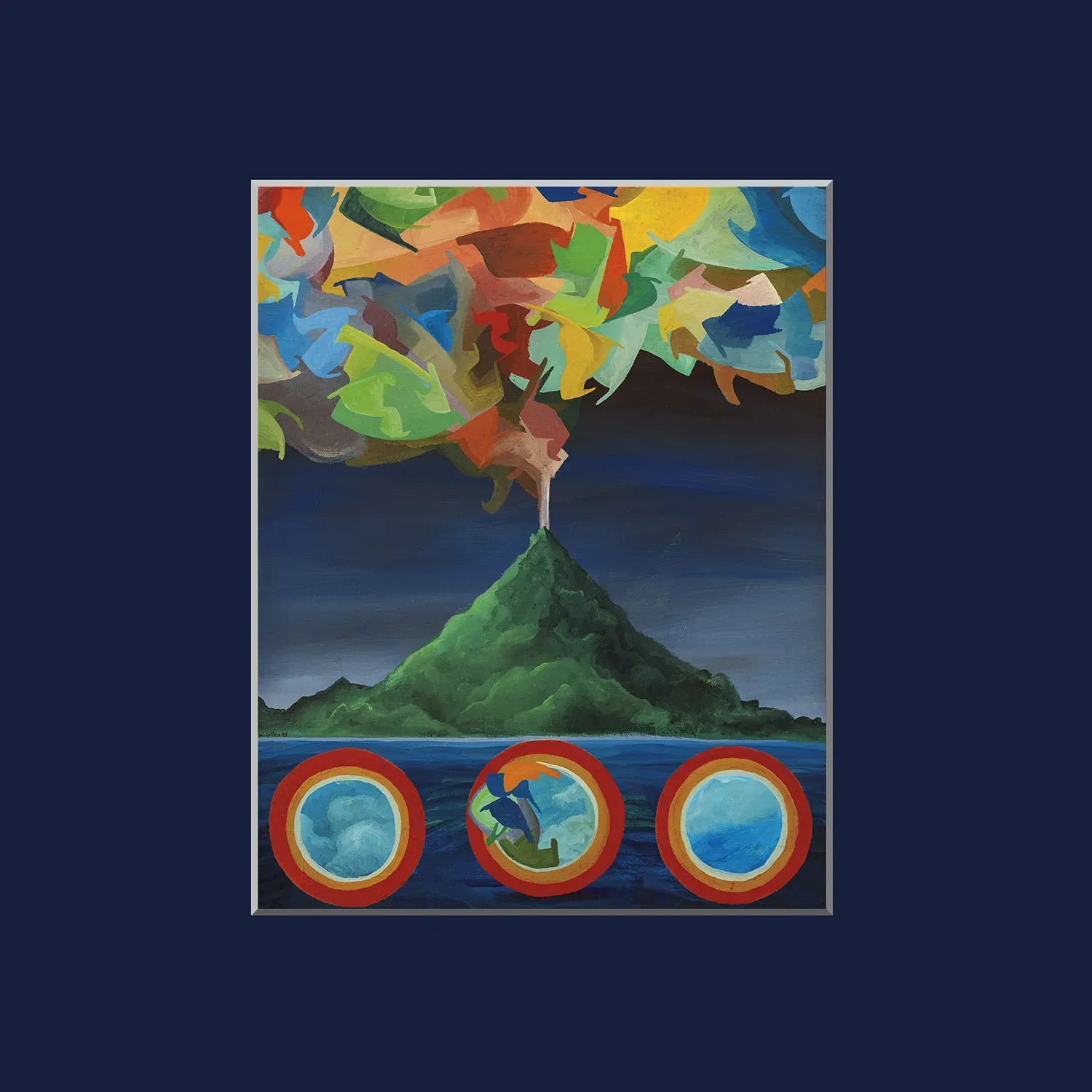
Olivia Tremor Control, the lo-fi psychedelic pop band tied to Athens, Georgia’s Elephant 6 collective, announced its first new album in 27 years, titled The Same Place. The double album completed by bandmates finalizes work started 20 years ago after co-leaders Bill Doss (died 2012) and Will Cullen Hart (died 2024) passed away.
If you grew up on cult-beloved records, this one matters: Olivia Tremor Control is releasing its first new album in 27 years, The Same Place, and it is not a tease or a compilation cash-in. The project is the culmination of work the band started 20 years ago, then finished without the two co-leaders who originally began it. In other words, a “wait, can this even happen?” scenario just became a release calendar reality.
Here is the exact chain of events. Olivia Tremor Control was a key driving force in Athens, Georgia’s Elephant 6 collective in the 1990s, but the band only put out two studio albums: 1996’s Dusk At Cubist Castle and 1999’s Black Foliage: Animation Music Volume One, before breaking up. Reunion shows happened years later, led by co-leaders Bill Doss and Will Cullen Hart, but both are now gone, with Doss passing away in 2012 and Hart in 2024. Despite that, Doss and Hart’s bandmates finished the massive double album they started together and are now bringing it out, as announced in Stereogum.
For executives, this is a fascinating case study in long-horizon creative assets. Most music business timelines run on short cycles: marketing windows, streaming algorithms, tour schedules, quarterly performance. Olivia Tremor Control’s story flips the script. The band’s earlier records became cult touchstones, and then the “asset” sat for years as a kind of emotional equity. That matters because labels, publishers, and artist services companies do not just deal in songs. They deal in survivable demand, and cult catalog demand is often the most durable kind, even when production pauses.
Elephant 6 is the context that explains why this got so much attention in the first place. The collective connection, especially around Athens, Georgia in the 1990s, gave Olivia Tremor Control a scene-level distribution of influence. In these scenes, bands often share creative DNA and audiences. When a project tied to that ecosystem returns after decades, it does not arrive alone. It reactivates an entire network of listeners who associate those releases with a distinct era and aesthetic. Even for people who never owned the original vinyl, the “Elephant 6” label signals a certain kind of lo-fi psychedelic pop that got built into subculture identity.
There is also a governance angle, even if nobody calls it that publicly. When co-leaders die, completion requires collective coordination. The source does not describe internal processes, but it does confirm the core fact: Doss and Hart’s bandmates finished the massive double album the two of them started work on 20 years ago. That implies a handoff of creative direction and finishing standards from the original starters to later curators. In board terms, this is what you want to see when leadership is lost: continuity, stewardship, and accountability that outlasts individuals.
Now, bring this to the “regulatory background and second-order implications” layer. The source is about a music release, not government policy, so there is no mention of regulators or compliance actions. Still, the modern music industry environment is shaped by platforms, rights management, and catalog administration across jurisdictions. When a long-lost project emerges, the operational details become real quickly: mastering credits, publishing splits, metadata accuracy, and rights registrations that must map cleanly onto digital distribution systems. Those are not glamorous boardroom topics, but they are the difference between a release landing cleanly versus being delayed or misattributed. In practical terms, teams often discover that “we have the album” is only half the job. The other half is ensuring the right version, the right artwork, and the right rights data flows through every system that sells or streams it.
Second-order, the stakes for peers are straightforward. If Olivia Tremor Control can complete a massive double album that dates back 20 years, other catalog-heavy artists and labels may reconsider how they treat unfinished or archival work. Not every project will be “finished” after loss, time, and evolving tech. But the existence of The Same Place is proof that creative work can be completed late, not just promptly. For executives and investors, that changes how you think about the tail of an IP curve. For creators, it is a reminder that even when a release seems impossible, unfinished work can still find its moment.
And for the audience, the emotional stakes are just as concrete. Dusk At Cubist Castle (1996) and Black Foliage: Animation Music Volume One (1999) were released before the breakup. Now the band is returning with a full follow-through, including the weight of two deaths that could have stopped everything. The Same Place arriving after 27 years is not just a novelty. It is the payoff for listeners who kept the catalog alive in their heads while the world moved on.
This story's Key Insights and Take-aways are locked.
Create a free account to unlock Executive Actions for one credit.
Register to UnlockAlways free for Executives Club members. Join the Club
More in Entertainment

12TB Steam 'teraleak' goes beyond Valve: GTA 3, Mafia 2 prototypes exposed
A 12-terabyte dump of Steam data reveals prototypes and builds of third-party classics like GTA 3 and Mafia 2, plus unreleased Valve content, rewriting game history.

LinkedIn's romance problem: 1 in 4 workers say dating on it is fair game
A new survey shows a quarter of U.S. employees treat the professional network as fair game for romance, even as LinkedIn bans it and removes hundreds of thousands of offending posts.

Enhypen's first No. 1 album breaks K-pop's Billboard 200 streak
The K-pop group's 98,000-unit debut tops the chart while Dolly Parton's catalog reentry shows how death reshapes streaming.