

Olivier Rousteing is Rabanne’s new creative director, ending a 27-year couture drought
Rousteing leaves Balmain after 14 years, with Rabanne signaling couture, celebrity, and beauty scale could be back.

Olivier Rousteing has been appointed creative director of Rabanne, after spending the last 14 years at Balmain. The shift matters because Rabanne has not shown a couture collection since 2000, when its namesake retired.
Olivier Rousteing just got a new job that fashion people will feel immediately and the rest of the world will notice soon: he has been appointed the new creative director of Rabanne. The move lands with extra weight because Rabanne has not shown a couture collection since 2000, when the brand’s namesake Paco Rabanne retired. In other words, Rousteing is stepping into a brand with a visible gap in its own storytelling, and he may be the person best positioned to fill it.
This is the same Rousteing who spent 14 years at Balmain, where he helped build the brand into a celebrity and social media machine, and where he also became one of fashion’s most recognized creative directors through early Instagram adoption. The article notes he has 9.4 million followers, and the Balmain playbook was unmistakable: celebrity campaigns, front rows that became their own content engine, and a “Balmain Army” effect amplified by Kim Kardashian and others. That matters because Rabanne, now under Puig ownership, has a proven revenue lever: the brand was the first Puig-owned label to surpass $1 billion in sales, lifted mostly by fragrance.
Rousteing’s hiring is also a kind of strategic continuity, not a wild left turn. The article points out that Rousteing recognized early that Hollywood’s power brokers were not just movie stars, but reality TV and social media personalities. He then became one himself, including high-profile public-facing partnerships and an ecosystem of celebrity visibility. At Balmain, Kim Kardashian became a muse and friend, meeting Rousteing at the Met Gala in 2013 and later starring as part of the brand’s rise. The piece also ties Rousteing’s work to Beyoncé, noting he designed her 2018 Coachella stage costumes and later collaborated with her on 17 Balmain couture looks inspired by her 2023 “Renaissance” album. If you are Puig, this isn’t just about aesthetics. It is about translating celebrity attention into product demand, and ultimately into beauty sales that already power the bottom line.
There’s another incentive structure here that executives should understand: creative direction is rarely only creative. It is also brand risk management. Rabanne has been guided by Julien Dossena for the last 13 years, and while his ready-to-wear collections were “consistently innovative,” the article says he was relatively unknown outside of fashion circles. That is an important distinction for a luxury brand trying to grow beyond the runway. When you add a creative director with a massive mainstream audience, you effectively change your marketing physics. You can sell the same product language with more reach, and you can justify larger budgets for campaigns and collaborations.
And budgets are exactly where the competitive pressure shows up. The article frames Rousteing’s move into a “crowded field” of buzzy new creative directors, plus big spenders on Hollywood integration. It notes that Chanel and Dior spend millions on Hollywood ambassadors and campaigns. This is why Rousteing’s profile, friends, and platform matter. If you are a board member, you care about whether the company can keep pace with attention-driven luxury marketing without sacrificing margins. If you are an operator, you care about whether the next brand chapter converts into demand in the categories that pay rent, especially fragrance and other beauty-linked lines.
What makes the story even more consequential is the brand’s ownership context. Puig is described as no financial slouch, and the article emphasizes that Rousteing still has high profile and powerful friends. That sets up the likely second-order play: use fashion as the credibility layer, and use film, TV, and costume as the demand multiplier. The piece also flags Rousteing’s own cross-industry credibility with his César Award-nominated 2019 documentary “Wonder Boy,” directed by Anissa Bonnefont. That film chronicled his life, including his rise at Balmain and recovery from a devastating accident, and the search for his biological parents. The article suggests a follow-up could document his rise at Rabanne, potentially with Amazon, and coincide with a fragrance created under Rousteing’s direction, described as a high-low marketing move that capitalizes on his fame and Rabanne’s beauty business.
Rousteing’s first ready-to-wear runway collection will debut in March 2027, so the timeline is long enough to build anticipation and short enough that the market will expect measurable progress in the meantime. In the current fashion economy, that “in-between” period is where perception gets priced. If Rabanne uses the cue from its own Space Age roots, dating to its founding in 1966 and Paco Rabanne’s use of materials like metal, plastic, paper and chain mail, it can also reconnect with what made the brand culturally legible in the first place. And if Rousteing brings back haute couture, which Balmain regained after a 16-year lull, it would resolve the couture absence since 2000 directly, rather than letting it linger as a brand identity hole.
TheWrap also throws a parallel spotlight on Zendaya’s “The Odyssey” red carpet styling, which is a reminder of how costume and fashion visibility now operate like a shared marketing channel. Zendaya, who plays the goddess Athena in Christopher Nolan’s historical fantasy epic starring Matt Damon, Lupita Nyong’o, Elliot Page, Tom Holland and many more, has been dressing in an all-white goddess aesthetic with the help of stylist Law Roach. The article highlights specific looks across press moments, including Zendaya in a winged gown by Matières Fécales at Tuesday’s New York premiere, an archival Givenchy dress designed by the late Alexander McQueen at the Paris photo call, and a custom white lace Louis Vuitton gown in Paris. If you are Rousteing or any luxury executive watching distribution channels, this is the same core signal: audience attention is increasingly earned through visual identity, and costume is a distribution format, not just a costume budget.
For executives in creative leadership roles, the stakes are clear. Rousteing is walking into a brand with a known revenue engine in fragrance, a couture gap since 2000, and intense competition for Hollywood-level attention. The question is whether his Balmain conversion skills can turn Rabanne’s cultural DNA into renewed demand, not only on the runway but across film, TV, and the beauty categories that already generated over $1 billion in sales under Puig.
This story's Key Insights and Take-aways are locked.
Create a free account to unlock Executive Actions for one credit.
Register to UnlockAlways free for Executives Club members. Join the Club
More in Business

Uber buys Delivery Hero for nearly $15B, vaulting to top food delivery outside China
The deal doubles Uber's dual-services footprint and pushes a ride-and-eats bundling play into 50 more markets.

Epic and Google drop settlement bid, forcing rival Android app stores by July 22
Google told the court it is ready to carry third-party app stores starting Wednesday, July 22.
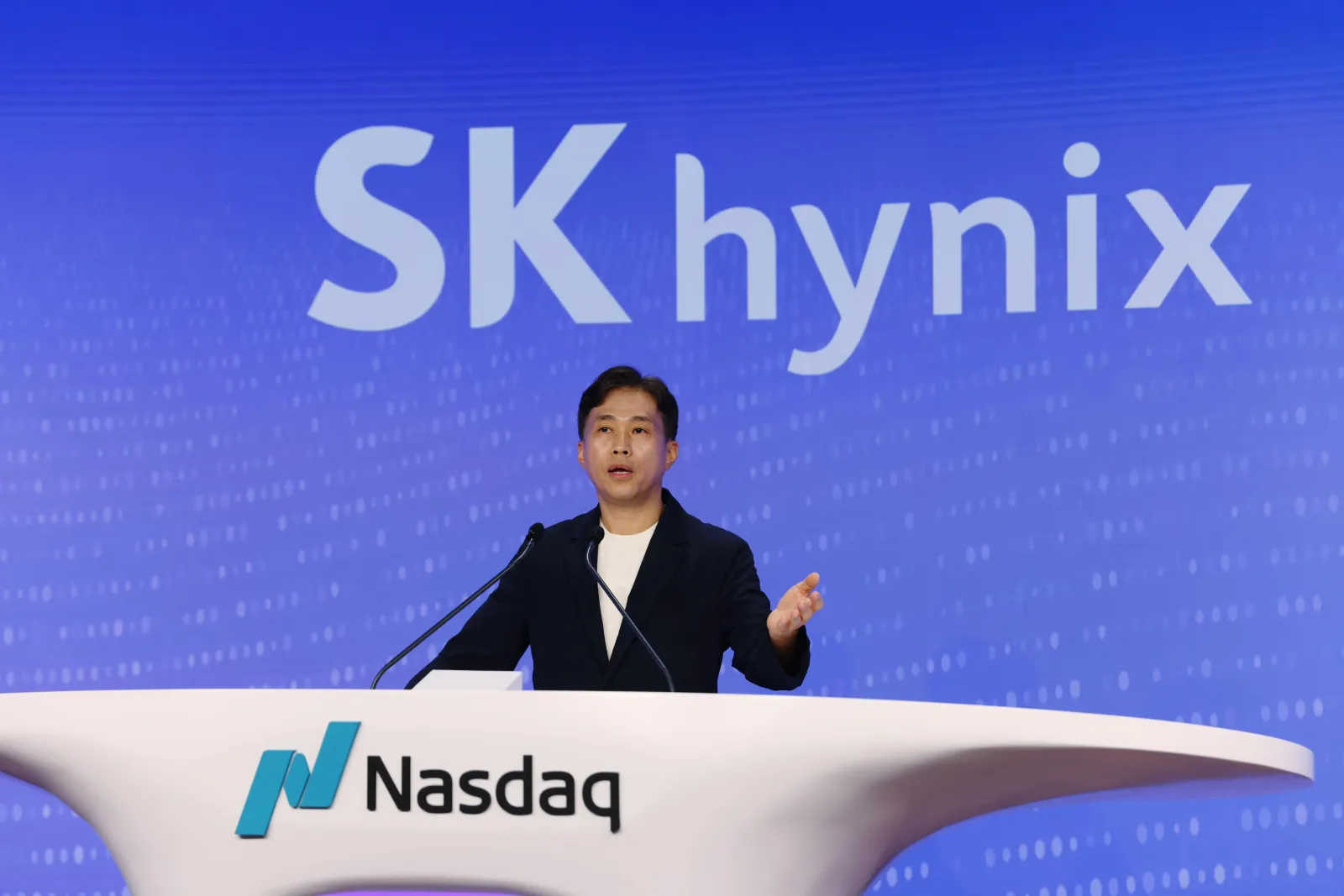
SK Hynix opens at $170, raises $26.5B, and tops foreign IPO records
In Friday's Wall Street debut, SK Hynix turns AI RAM demand into a $26.5B fundraising moment that rewrites comps.