

OpenAI's Sam Altman rules out 2026 IPO, says AI beyond human control 'absolutely' possible
Sam Altman's 45-minute Fortune interview kills near-term public-market hopes and puts safety at the center of OpenAI's timeline.
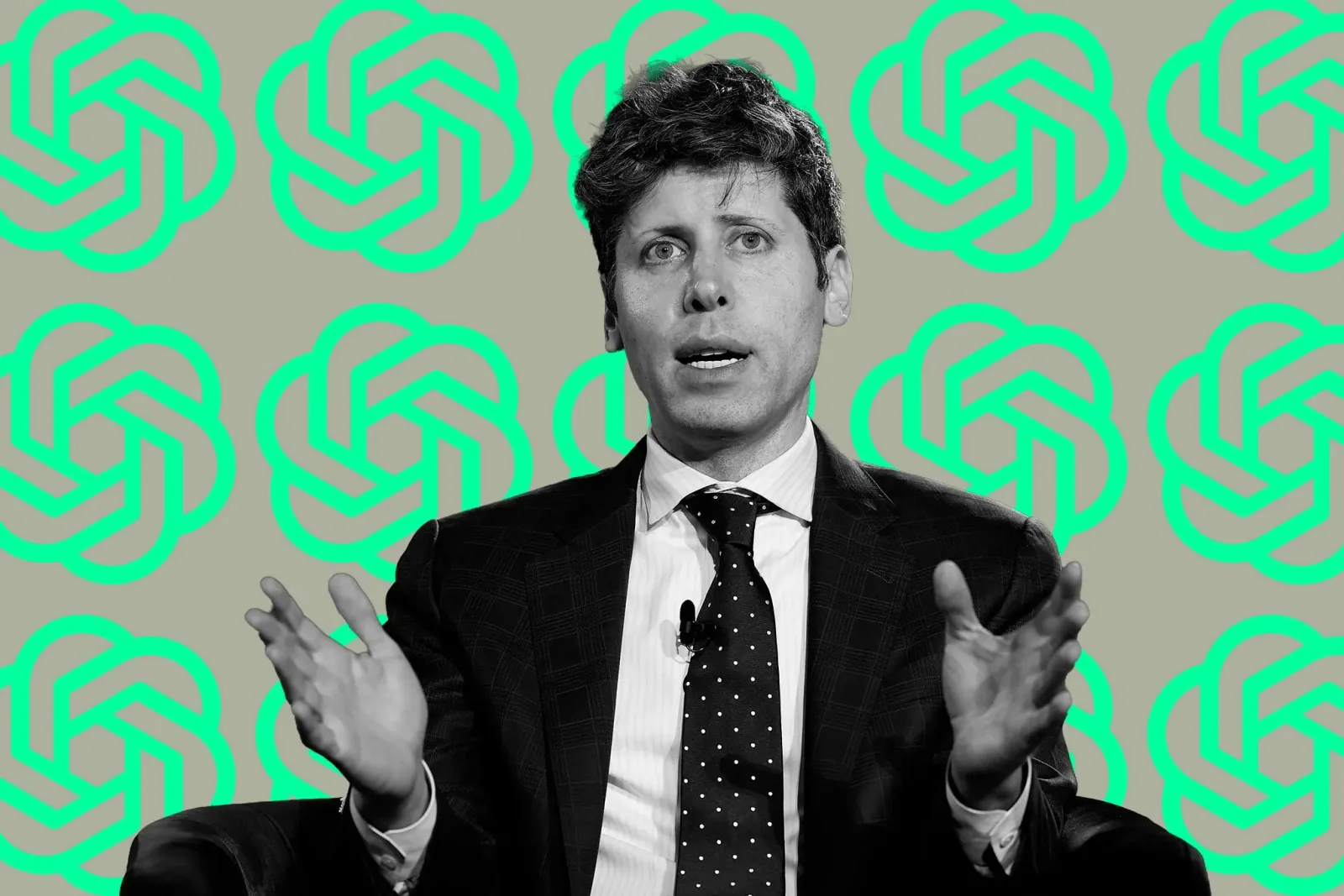
Sam Altman, CEO of OpenAI, confirmed the company will not IPO in 2026, calling such a move 'ill-advised' during a 45-minute Fortune interview. For decision-makers, the statement signals that OpenAI's governance and safety agenda take priority over shareholder liquidity for the foreseeable future.
Sam Altman, OpenAI's chief executive, confirmed there will be no OpenAI IPO in 2026, saying such a move would be 'ill-advised' during a 45-minute interview with Fortune. That statement lands as a direct answer to mounting speculation about when the world's most closely watched AI company would open its books to public investors, and it resets the clock for everyone eyeing a stake in the AI boom.
Altman's rationale goes straight to the heart of the safety debate. He said it is 'absolutely' possible to build an AI beyond human control, and he vowed to take actions to prevent that outcome, even if it means pausing training. 'There are risks we should not be able to incur on behalf of humanity,' he said. For investors, the takeaway is unambiguous: near-term liquidity is not part of OpenAI's plan, and safety concerns are now explicitly the reason.
The interview covered more than the IPO question. Altman also discussed the Hugging Face hacking incident and recursive self-improvement, a concept where an AI system helps design more capable successors at an accelerating pace. Those topics are not academic sidebars. They are exactly the scenarios that make a traditional IPO difficult for OpenAI: a public listing would require detailed disclosure on safety practices, technical vulnerabilities, and the unknowns around self-improvement. A company that openly discusses building intelligence beyond human control would need to write a risk factor section unlike any seen before.
The 'ill-advised' framing is significant because it ties the timing of an IPO to the maturity of AI safety, not to financial readiness. OpenAI continues to raise huge sums in the private market, and investors have already endured a long wait for an exit. Historically, companies with this much revenue growth and strategic importance go public early, but OpenAI's circumstances are unusual. Its product roadmap is directly tied to existential risk, a factor that few boards have to weigh when drafting an S-1. The decision to wait also gives Altman more room to define what safety milestones matter before external shareholders impose their own scorecard.
For CFOs and boards across technology, Altman's comments are a reminder that a company's valuation is not the only driver of listing timing. Governance, regulatory scrutiny, and the ability to explain the business model to a skeptical public are all on the table. In OpenAI's case, the public would be buying into a firm that openly discusses the possibility of building something beyond human control, which changes the conversation from upside to responsibility. That kind of narrative is hard to sell in an IPO roadshow, where the goal is usually to minimize risk perception, not embrace the largest risk imaginable.
There are also competitive implications. Rivals such as Anthropic and Google's DeepMind operate under different ownership and disclosure structures, and they face their own pressure to show progress on safety. Altman's clarity on the IPO timeline effectively takes the biggest AI player out of the cycle of quarterly earnings expectations for at least another year. That gives OpenAI room to make expensive, long-horizon bets without public market second-guessing, but it also leaves investors and partners with no near-term exit and forces them to tie their returns to a company that may choose to pause training to avoid harm.
For executives in similar seats, the lesson is about sequencing. Altman is choosing to define the company's constraints publicly before the market sets them. By stating that safety comes first and that an IPO would be 'ill-advised,' he manages expectations and protects the company from being forced into a timeline by shareholder pressure. The tradeoff is real: private investors must wait, public market believers must speculate, and the company must keep delivering breakthroughs without a public scoreboard of quarterly wins and misses.
The bigger story is not the date on the calendar. It is that the CEO of the most prominent AI company is willing to tie his company's capital markets strategy to a principle: that some risks should not be taken on behalf of humanity. Whatever the next funding round looks like, the knowable fact is this - OpenAI will not be on your public portfolio dashboard in 2026, and anyone betting on AI liquidity needs to factor in a founder who is openly choosing caution over the exit door.
This story's Key Insights and Take-aways are locked.
Create a free account to unlock Executive Actions for one credit.
Register to UnlockAlways free for Executives Club members. Join the Club
More in Technology

Insight Partners' Deven Parekh: Why $90B firm won't bet the farm on OpenAI
The VC giant is deliberately staying diversified while rivals pile into OpenAI and Anthropic - and Parekh says he's fine with it.

AI just killed security through obscurity, and the patch backlog is exploding
FBI and Trend Micro researchers confirm AI agents are unearthing decade-old flaws, forcing a record 974-CVE Patch Tuesday and a triage crisis for defenders.
AI staff 'genuinely frightened' for humanity's future, ex-Anthropic researcher warns
A former Anthropic researcher says employees fear AI's trajectory, while the CEO urges a slowdown over 'serious' risks.