

Orcas in the Gulf of California smash sunfish into thousands of pieces, researchers report
A pair of never-described hunting tactics turns a dead sunfish into a particle field and raises new questions about predation.
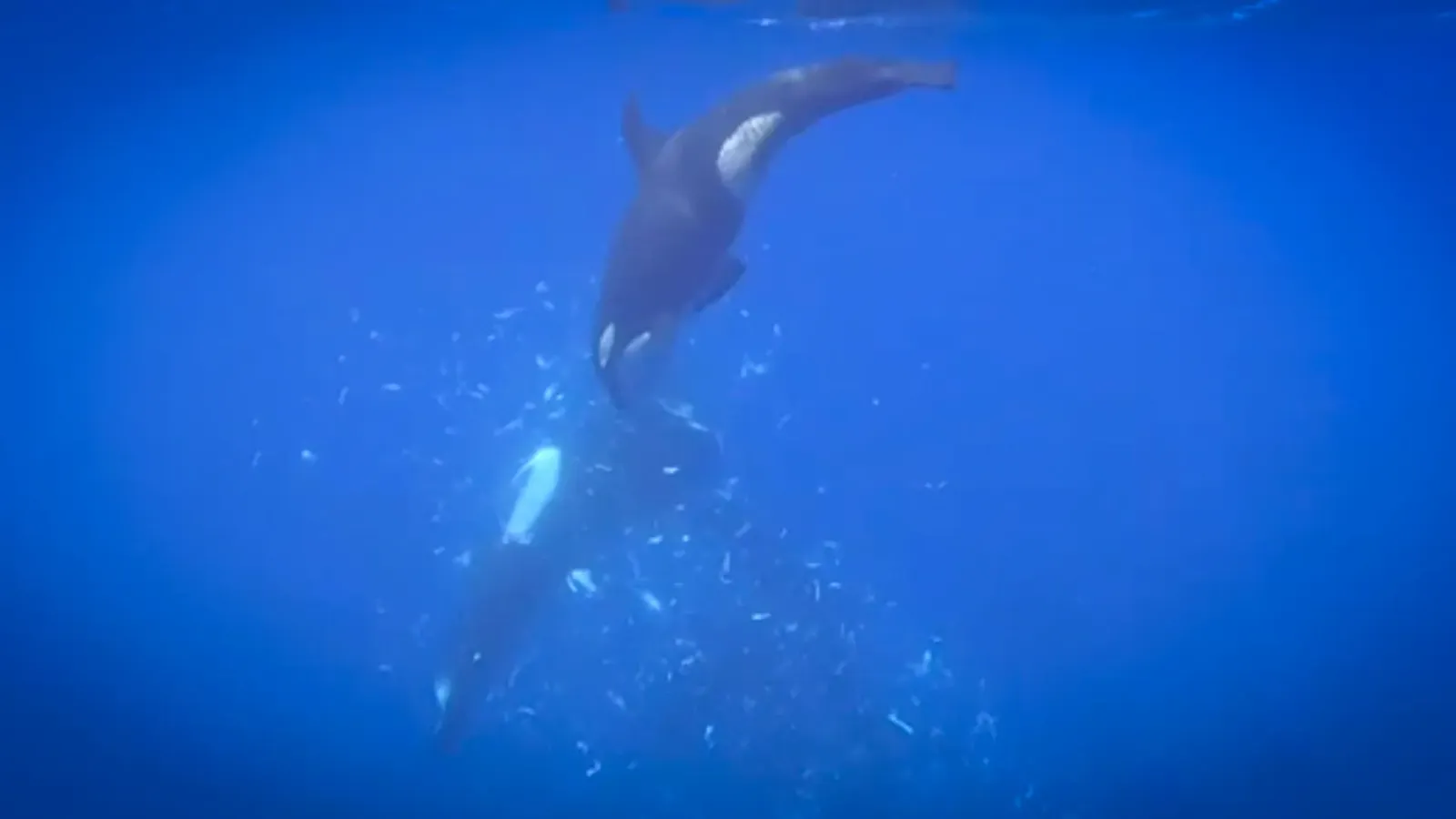
Researchers documented two separate encounters in the Gulf of California showing killer whales (orcas) using a fin grip and a high-speed charge on a dead sunfish. For decision-makers in science communication, conservation, and marine operations, the finding matters because it changes what we think orcas can do and how they may interact with prey remains.
Researchers studying the Gulf of California have now documented orcas smashing a dead sunfish into thousands of pieces in two separate encounters. The footage and field observations captured two distinct tactics: one orca gripped the carcass by the fin, while another charged into the sunfish at high speed, blasting it apart into thousands of pieces.
This is not just a “cool animal moment.” It is a behavior researchers say has never been described before, and that novelty is the point. If your mental model of how orcas feed and manipulate prey only includes known strike-and-swallow patterns, this adds a new variable: orcas can generate extreme fragmentation of a carcass using specific physical approaches. In other words, the scene is messy on the surface, but it is informative underneath.
To understand why this should land with executives and operators who work around marine ecosystems, it helps to zoom out to how behavior gets interpreted and why “new” matters. When researchers report a behavior never described before, they are effectively widening the map. The Gulf of California is a high-interest region for marine life and human activity, and any new description of predator behavior can cascade into how scientists model ecosystem interactions, how managers anticipate animal presence, and how organizations plan monitoring.
There is also an incentives angle that tends to be overlooked outside research teams. In conservation and marine operations, the most consequential data is often the least cinematic. But here, the cinematic part is doing heavy lifting. A carcass being reduced to thousands of pieces implies more than impact. It suggests a method of processing or interacting with remains that could affect how long prey material remains available, how predators re-engage, and how other animals might opportunistically respond to the fragmented bait.
From a regulatory and governance perspective, new scientific observations can create downstream pressure even when they do not immediately change law. Many marine policies rely on baseline assumptions about feeding behavior, habitat use, and disturbance sensitivity. If field evidence shows a predator using a previously undocumented technique, regulators and stakeholders may need to revisit monitoring protocols, especially for areas where human vessels, tourism, or fisheries overlap with marine mammal activity. The key here is not that this one event suddenly rewrites policy overnight. It is that the next round of assessments is built from what has been documented, and “never described before” is a data category that can trigger review.
There is a second-order boardroom implication too, even for teams that are not directly regulating marine mammals. Science-based organizations often manage reputational risk around accuracy and novelty. A report claiming a never-described-before behavior raises both opportunity and scrutiny. Opportunity, because it can sharpen public understanding of orca intelligence and ecological role. Scrutiny, because new claims must stand up to continued observation and consistent documentation. For leaders funding or communicating research, that means investing in the boring part that makes the exciting part credible: follow-up sampling, replication across encounters, and careful description of what was seen in each of the two separate encounters.
Finally, this finding has strategic stakes for anyone who tracks marine mammal behavior, from research institutions to companies operating in or near the Gulf of California. Orcas are often discussed in terms of hunting strategies, social dynamics, and intelligence. This report adds a new piece: a clear, physical interaction with a dead sunfish that ends in extreme fragmentation. That matters because marine ecosystems run on interactions, not isolated events. The next time orcas are observed around prey remains or near scavenging hotspots, this new behavior description becomes a reference point for interpretation. It can change what observers expect to see, what they record, and how they translate field notes into ecosystem understanding.
In short, researchers in the Gulf of California have documented two orca encounters where a dead sunfish was processed into thousands of pieces using a fin grip in one case and a high-speed charge in another. That “never described before” label is the headline, but the real payoff is how it expands the set of behaviors we think orcas can perform, with potential ripple effects across monitoring, conservation thinking, and marine operations planning.
This story's Key Insights and Take-aways are locked.
Create a free account to unlock Executive Actions for one credit.
Register to UnlockAlways free for Executives Club members. Join the Club
More in Science

Alaska's 1,580-foot tsunami had warning signs. Scientists just found them.
Rapid glacier retreat, heavy rainfall, and thousands of tiny tremors preceded Alaska's 1,580-foot tsunami, a warning for every coastal community in a warming world.

The rare mutation that lets high-risk brains dodge Alzheimer's
Scientists found a natural defense against protein buildup, opening a new path to preventive treatments.

3,000 steps a day may halve Alzheimer's decline, study finds
New research links a modest daily walk to less tau buildup and nearly half the cognitive and functional decline, even for those with early signs.