

Orcas ramming sunfish so hard it explodes may be play, not hunting
New observations show sunfish-smashing behavior where prey break into thousands of pieces, hinting at entertainment or teaching.
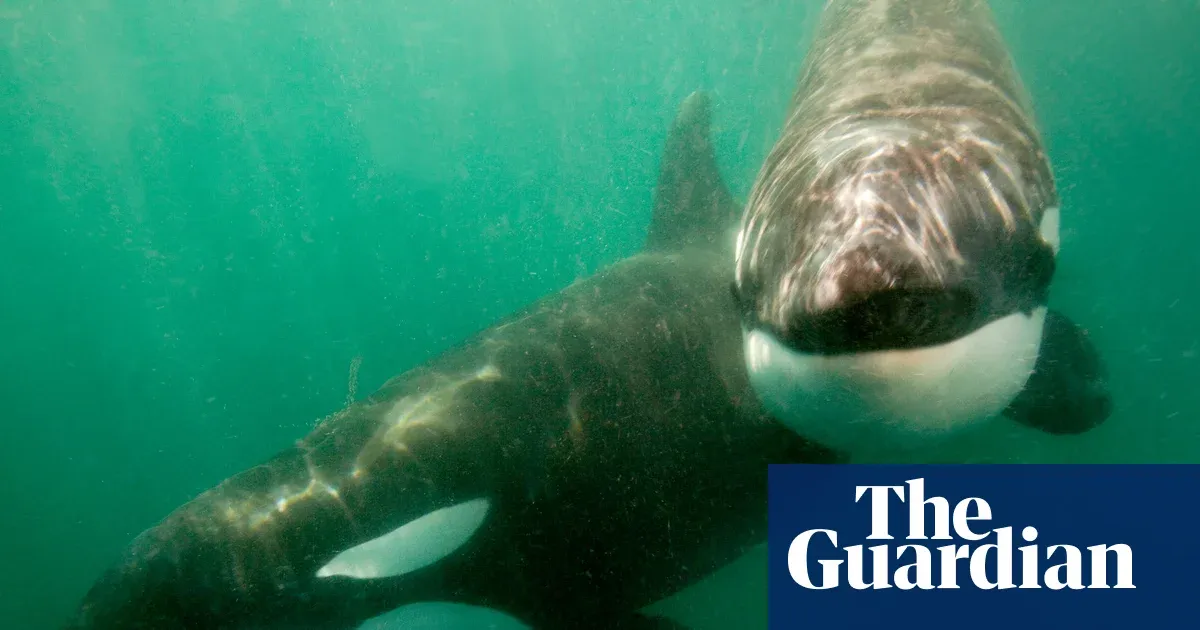
Scientists describe orcas that hold sunfish in their jaws while a second whale smashes the target at high speed. The behavior may be play, with possible implications for how younger whales learn to feed.
Orcas have been observed doing something that looks less like a clean kill and more like a brutal spectacle: ramming sunfish so violently that the prey breaks into thousands of pieces. In multiple sightings, orcas were seen holding a sunfish in their jaws while another whale hit it at high speed, causing the fish to explode into fragments. Researchers say the fish had already been killed, which matters because it shifts the likely purpose away from immediate hunting efficiency.
Instead of “just feeding,” scientists propose the sunfish-smashing behavior could be entertainment or play. Since the prey was already dead when the high-speed impact happened, the behavior may not be primarily about securing food. That distinction is the whole story here: the mechanics are the same as a hunt, but the timing suggests something else entirely, including potential roles in social behavior or learning, particularly involving younger whales.
To understand why this is interesting beyond marine biology trivia, zoom out. Animals repeat behaviors for reasons that ultimately tie back to survival and social stability: learning, cohesion, dominance displays, and, yes, play. When a behavior is observed in repeated “episodes” rather than one-off chaos, scientists naturally ask what incentive it serves. Here, the repeated pattern of one whale gripping the sunfish and a second whale delivering the high-speed smash reads like coordination. Coordination is expensive in the animal world. So if it is not strictly needed for killing, that implies value elsewhere, such as training younger whales or strengthening group dynamics.
The scientists’ reasoning leans on a specific detail in the observations: the sunfish appeared to have already been killed before the dramatic impact. That is what enables the “play” hypothesis. Play in many species often uses real objects or risky actions in a controlled way, letting participants practice motor skills, timing, and social rules without necessarily increasing immediate foraging returns. If orcas are turning a dead or already secured target into a high-impact action, the payoff could be skill building. For young whales, learning how to handle prey, coordinate with a partner, and time the sequence of actions could reduce mistakes later when the stakes are higher and the prey is not cooperative.
There is also the “gory entertainment” possibility. The source frames it as play or entertainment, which is a reminder that behavior can be emotionally and socially motivated, not just economically motivated. In human terms, think of practice drills versus a game that has no practical necessity. Orcas do not need a lesson on what a sunfish is. But they might need practice on teamwork, or they might simply engage in activity that their brains find rewarding. For decision-makers, the second-order takeaway is that incentive structures can be surprisingly non-obvious. If you only look at outcomes, you miss the reason behind the method.
Now, why does any of this matter for executives and boards outside the ocean? Because it touches the broader question of how we interpret observed behavior in complex systems. In regulated industries, the same temptation shows up: you see a pattern, assume the goal is the most obvious one, and ignore that the “real” purpose might be social, educational, or reputational. The orca case is a natural experiment in inference. Scientists are not claiming certainty. They are proposing interpretations based on sequencing, coordination, and context. That is a useful mindset for governance, compliance, and risk analysis: patterns deserve hypotheses, not just conclusions.
It also raises practical considerations for how marine research gets translated into policy and public understanding. When the media grabs “explodes” and runs, nuance matters. The key scientific pivot in the source is the suggestion that the fish had already been killed, which changes the interpretation. For regulators and research funders, that means observation quality matters as much as spectacle. If policy is based on wrong assumptions about animal behavior, the resulting actions can miss the real conservation needs, whether those needs relate to habitat pressures, fishing interactions, or human impacts on marine food webs.
Finally, the strategic stakes for peer organizations that care about science communication and evidence-based decision-making are simple. Misreading animal behavior leads to sloppy narratives. Sloppy narratives lead to bad incentives for stakeholders. And bad incentives lead to either overreaction or underreaction. In this case, the orcas’ coordinated sunfish-smashing might be play, possibly involving younger whales learning to feed, or possibly a kind of entertainment. Either way, it is a reminder that complex behavior is rarely one-dimensional. The ocean keeps receipts. Executives should too.
This story's Key Insights and Take-aways are locked.
Create a free account to unlock Executive Actions for one credit.
Register to UnlockAlways free for Executives Club members. Join the Club
More in Science

Alaska's 1,580-foot tsunami had warning signs. Scientists just found them.
Rapid glacier retreat, heavy rainfall, and thousands of tiny tremors preceded Alaska's 1,580-foot tsunami, a warning for every coastal community in a warming world.

The rare mutation that lets high-risk brains dodge Alzheimer's
Scientists found a natural defense against protein buildup, opening a new path to preventive treatments.

3,000 steps a day may halve Alzheimer's decline, study finds
New research links a modest daily walk to less tau buildup and nearly half the cognitive and functional decline, even for those with early signs.