
Orcas smashed a sunfish to bits. Researchers still can’t explain why
A Nature briefing unpacks unusual orca hunting behavior and what it could mean for how we interpret marine ecosystems.

Nature published a chat that includes video of unusual orca behavior, where researchers observed orcas smashing a sunfish to bits. Decision-makers in marine research and conservation should treat the finding as a signal that animal behavior still has blind spots we need to measure, not assume.
Orcas smashing a sunfish to bits is one of those video moments that makes you pause, rewind, and then wonder whether you are missing something fundamental. In a Nature News briefing (published online 31 July 2026, doi:10.1038/d41586-026-02419-2), researchers discuss that unusual orca behavior caught on video, and they say they are not sure why it happened.
The key point is simple and unsettling: the footage shows a behavior that is not obviously explained by what we think we know about hunting. Researchers are left without a clear mechanism. That uncertainty matters because orcas do not hunt in a vacuum. Their behavior shapes how prey populations are stressed, how ecosystems redistribute energy, and how managers decide what to watch for next. When the cause is unclear, the risk is that conservation or research strategies might be built on assumptions that the animals themselves have disproved.
Nature’s briefing also nods to scale elsewhere in the news cycle, noting a “massive survey of insects in the Amazon.” That detail is not just filler. It is a reminder that modern ecology is increasingly about large, data-heavy efforts to map what is happening across environments. Insect surveys and marine observations are different worlds, but they share a core problem: nature rarely tells its story in a straight line. If a single orca behavior cannot be confidently explained, then the dataset does not automatically become “less useful.” Instead, it becomes a prompt to refine hypotheses, improve measurement, and recognize that behavior can be context-dependent.
So why does “we are not sure why” hit different from “we observed something”? Because behavior is an actionable variable. If researchers can identify triggers for a hunting tactic, it can translate into better forecasting of prey impact. If they cannot, then the tactic becomes a form of biological noise that complicates modeling. This is especially important for decision-makers who fund studies, set monitoring priorities, or oversee protected areas. A surprising technique might indicate a learned strategy, a temporary environmental condition, or something about the prey itself. But without an explanation, you cannot responsibly turn the observation into policy or budgets.
There is also a communications problem that boards and executives should recognize, even outside their usual lanes. Nature’s format here is a chat, and the published item flags the uncertainty explicitly. That is how credible science handles ambiguity: it does not hide it. In the broader ecosystem of research funding, advocacy, and public-facing conservation, that transparency is valuable. It sets expectations that complex animal behavior does not always come with a neat answer attached. For investors and operators who support science initiatives, it also signals where demand may exist: tools that connect video and field observations to the conditions surrounding the event, such as prey availability, water temperature patterns, or local ecosystem structure.
Finally, think about the second-order implications. Orcas are iconic predators, and when their behavior looks unusual, the story travels fast. But fast stories are rarely matched with fast evidence. If decision-makers treat this kind of footage as confirming a ready-made theory, they may overcorrect. On the other hand, if they treat it as a cue to ask better questions, they can turn uncertainty into progress. In practice, that means building monitoring plans that can capture the “why” context, not just the “what” clip.
The strategic stakes are clear for anyone involved in marine conservation, research operations, or ecosystem management: even a single event captured on video can reveal how incomplete our interpretation still is. Orcas smashed a sunfish to bits, and researchers do not know why. The lesson is not pessimism. It is rigor. Nature will not let you stop at the spectacle, and neither should you. The next move is measurement that respects uncertainty, so tomorrow’s data can turn today’s mystery into actionable understanding.
This story's Key Insights and Take-aways are locked.
Create a free account to unlock Executive Actions for one credit.
Register to UnlockAlways free for Executives Club members. Join the Club
More in Science
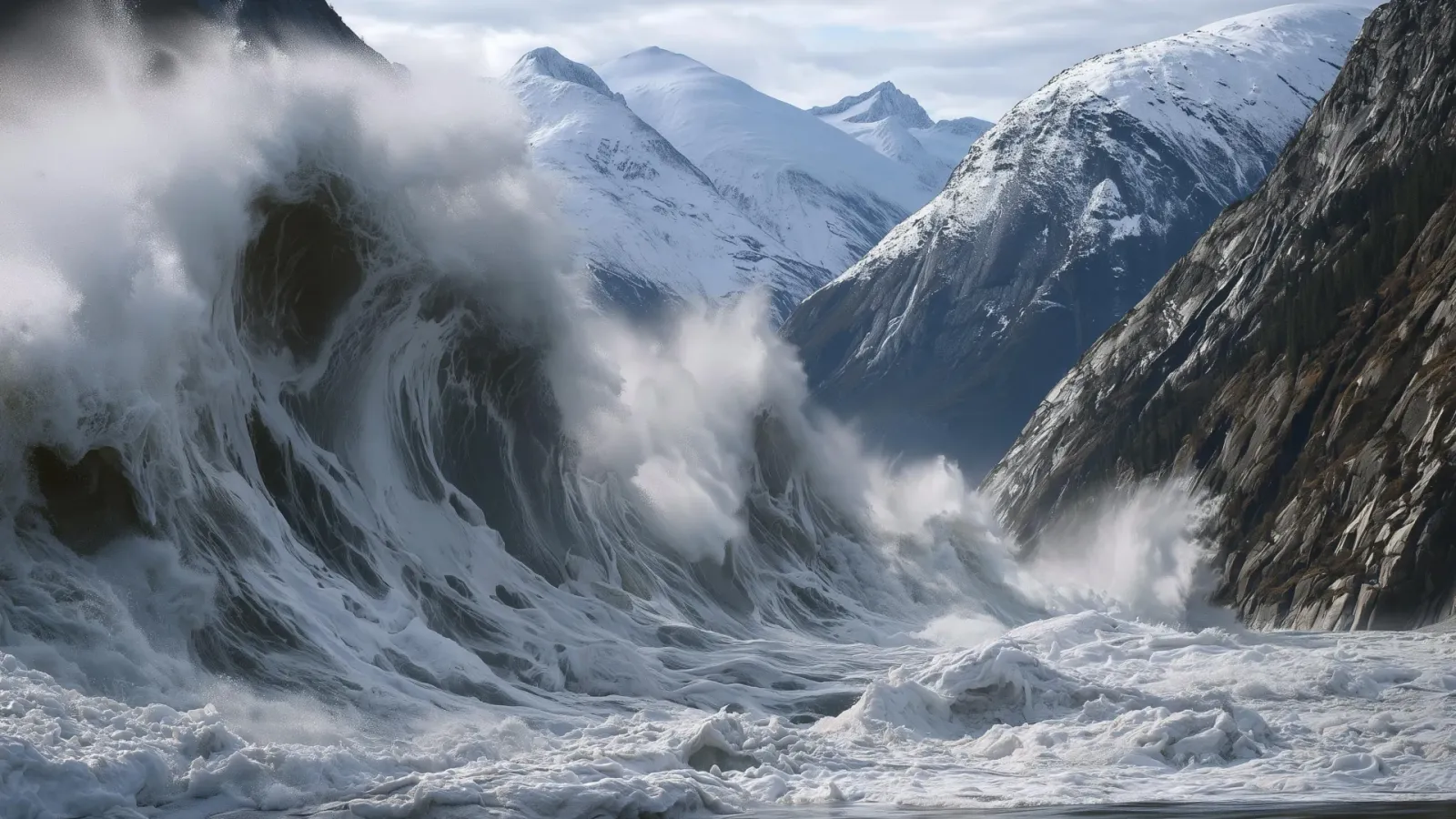
Alaska's 1,580-foot tsunami had warning signs. Scientists just found them.
Rapid glacier retreat, heavy rainfall, and thousands of tiny tremors preceded Alaska's 1,580-foot tsunami, a warning for every coastal community in a warming world.

The rare mutation that lets high-risk brains dodge Alzheimer's
Scientists found a natural defense against protein buildup, opening a new path to preventive treatments.

3,000 steps a day may halve Alzheimer's decline, study finds
New research links a modest daily walk to less tau buildup and nearly half the cognitive and functional decline, even for those with early signs.