

Orson Welles's Don Quixote may finally be completed from 30 hours of footage
European archives across France, Spain, and Italy are building a coherent film decades after Welles shot the first frames.
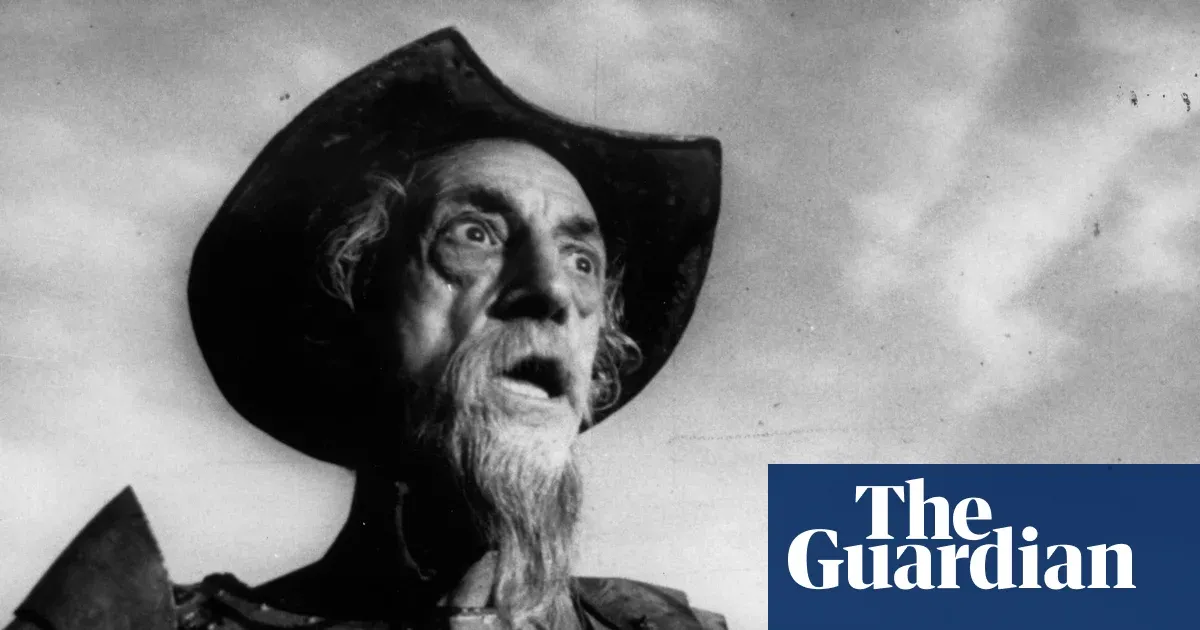
Orson Welles's long-stalled passion project, Don Quixote, is being driven by a consortium of European film archivists, with support from Munich film museum. Oja Kodar, Welles's partner and collaborator, has given her blessing, aiming to turn 30 hours of scattered footage into a coherent film more than 70 years later.
Orson Welles's ambitious Don Quixote project may finally be completed, using 30 hours of footage held across three countries. More than 70 years after he shot the first few frames, a consortium of European film archivists is trying to bring Welles's vision to life by stitching together material that has been scattered rather than preserved as a single, ready-to-edit master.
The key unlock is Oja Kodar. She is the American film-maker’s partner and collaborator, and the source says she has given her blessing to the project led by archives in France, Spain and Italy, along with the Munich film museum. With that approval in place, the team hopes to produce a coherent film out of the 30 hours of material they can access.
This is the kind of effort that sounds romantic, until you remember how film preservation actually works. Footage can end up fragmented because of international handling, changes in ownership, storage and cataloging gaps, and the simple reality that old productions often were never designed to be “completed” later. In many cases, what survives is not a finished negative sitting in one location, but a set of elements that must be identified, evaluated for condition, and then aligned creatively and technically. The “30 hours” matters because it is both a creative constraint and a logistical one: enough time to build a movie, but not enough to guarantee the project matches a single original cut plan.
There is also a governance angle that should matter to any operator in charge of legacy assets, whether that is a creative archive or a data archive. The consortium is not a single studio team with one chain of command. It is multiple archives plus a major museum institution, operating across borders. That means the project is effectively navigating ownership and stewardship boundaries, deciding what can be used, how it will be assembled, and what “coherent” even means when the source material is incomplete. Kodar’s blessing is presented as the missing permission to move forward. For stakeholders, that is not just a sentimental checkbox. It is a prerequisite to turn “protected fragments” into an actual release.
From a market perspective, this matters because legacy film properties increasingly behave like long-duration platforms. Even when nobody is making new versions, studios, distributors, and institutions are still allocating attention and resources to what can be monetized, licensed, or screened. A completed Don Quixote is not just a restoration story. It is a potential re-entry point for a name that carries weight. Orson Welles is a global brand in cinema, and “unfinished work” tends to attract a different kind of audience interest than completed classics. If the archivists succeed, they will not just preserve history. They will convert it into a living cultural product.
The European consortium is also a reminder that cultural work today often depends on infrastructure, not inspiration. Archives are rarely funded to do speculative reconstruction. They are expected to protect what exists, catalog it, and make it available for research, education, and preservation priorities. Turning preservation into production is a harder line to cross. That is why the source specifically frames the effort as a film archivists’ quest, not a typical commissioning project. The team is betting that the surviving material is coherent enough to support a finished film, and that the conditions across France, Spain, Italy, and Munich can align.
For executives and board members, the second-order lesson is how approvals and custodianship can determine whether an asset ever becomes usable. In corporate life, it is not just capital that unlocks value. It is authorization: rights clearance, stakeholder sign-off, and the trust required to transform scattered inputs into a coherent output. Here, Kodar’s blessing is what allows the consortium to pursue completion using 30 hours of footage. That dynamic echoes other “asset rescue” efforts in technology and media, where the hardest part is often the legal and relational sequencing, not the engineering.
If this project succeeds, peers in media, museums, and creative-tech adjacent companies will see a real-world playbook: find the fragments, secure stakeholder permission, and then build a coherent product from imperfect inputs. Done right, it can turn decades of uncertainty into a release that reshapes how audiences understand a filmmaker’s ambitions. Done poorly, it can burn credibility and waste irreplaceable material. This time, the source says the team is already moving, with Kodar’s blessing, and with archives in France, Spain and Italy plus the Munich film museum working together toward a single, finally completed Don Quixote.
This story's Key Insights and Take-aways are locked.
Create a free account to unlock Executive Actions for one credit.
Register to UnlockAlways free for Executives Club members. Join the Club
More in Entertainment

Russell Brand's accuser 'bewildered and confused' as he denies 7 sex charges
The criminal case against the comedian is a live test of how media companies manage talent risk when serious allegations go public.

'It's a Magic Trick': Ballet Experts Say Rosalía's SNL Pose Is Impossible
Three ballet experts tell Rolling Stone Rosalía's gravity-defying SNL stillness shouldn't be possible - and why the debate is now part of the show.

Activision CMO: GTA 6 Will Boost Call of Duty, Not Bury It
Activision's top marketer says Rockstar's blockbuster will drive players back to consoles and into Modern Warfare 4, even as the company admits its recent strategy failed.