

OTP uses Hong Kong funding to backstop Europe’s bank financing pivot east
Hungary’s biggest lender is tapping Hong Kong as European funding strains force lenders to widen their capital options.
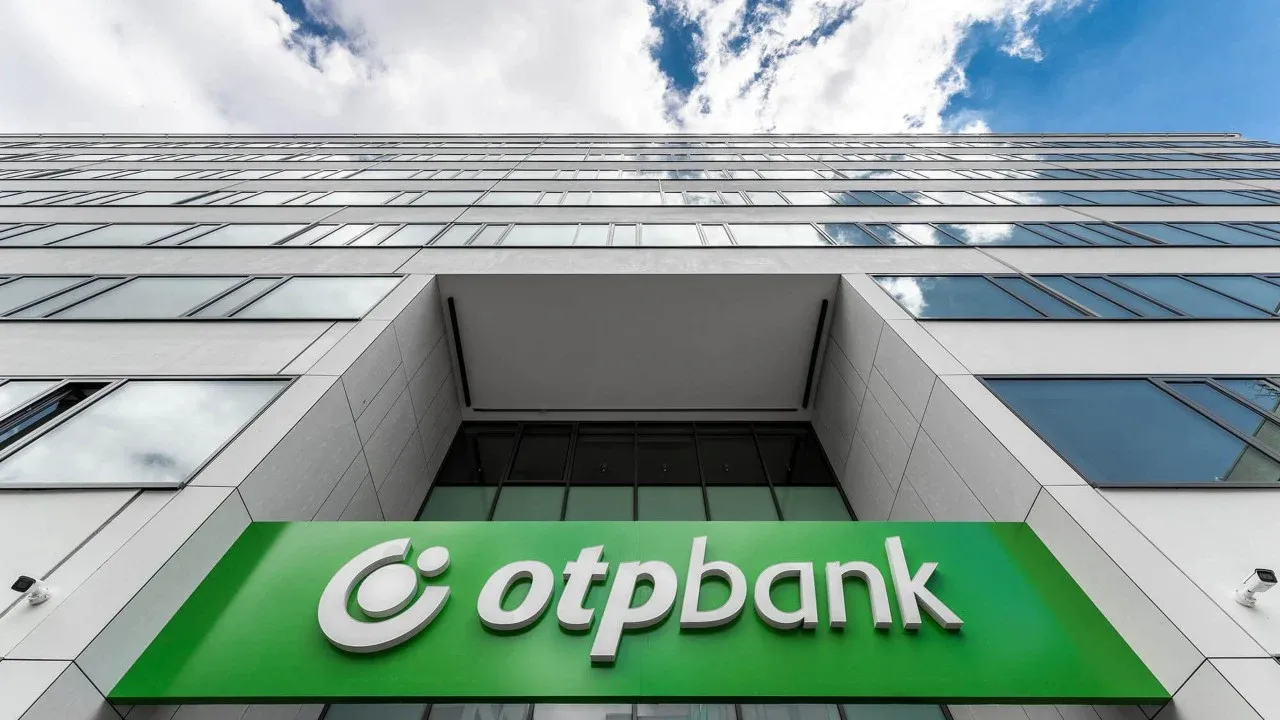
OTP Bank, Hungary’s biggest lender, is using Hong Kong as part of a broader shift in how European banks fund themselves. The move signals to decision-makers that geopolitical, cost, and energy pressures are reshaping preferred funding geographies.
The way European banks fund themselves is quietly shifting, and OTP Bank is one of the clearest proofs. SCMP frames the change around three pressure points: geopolitical fragmentation, rising financing costs, and increasingly unstable global energy supplies. Put simply, Europe’s lenders are looking beyond their usual capital markets, and Hong Kong is emerging as one alternative.
OTP Bank, a Budapest-based institution and Hungary’s biggest lender, is giving Hong Kong a “vote of confidence” by tapping the city in this broader funding rethink. The key idea is not just that Hong Kong is accessible, but that it is increasingly useful for banks that typically do not receive central and eastern European institutions’ direct attention. In other words, this is a rerouting of attention and liquidity. When a bank the size and visibility of OTP chooses that route, capital markets people notice because it suggests the shift is not hypothetical.
To understand why this matters, zoom out to how bank funding usually works in Europe. Banks rely on a mix of deposits, wholesale market access, and capital market issuance. That wholesale access can be sensitive to cross-border conditions, investor risk appetite, and the cost of money. When financing costs rise, the economics of issuing debt or attracting investors can get harder, particularly if the market in question starts pricing in political or macro uncertainty. When geopolitical fragmentation increases, banks also face more complexity and higher friction across borders. And when energy supplies become less stable, it can feed inflation and volatility, which tends to ripple through risk models and funding spreads.
That is the backdrop SCMP points to, and it explains why Hong Kong enters the picture as more than a curiosity. The article’s core claim is that “European banks” are increasingly looking beyond traditional capital markets. For central and eastern European institutions, that matters even more: Hong Kong is described as a place that these institutions “rarely access directly.” Rare access is exactly where the signal lives. If OTP is willing to engage directly, it implies the channel is operationally viable and commercially attractive enough to justify a step outside the comfort zone.
There is also a governance angle that boards and treasury teams tend to care about, even if the headline conversation stays focused on geography. Funding diversification is often about risk management as much as it is about yield. If traditional funding sources become more expensive or less reliable under stress, having additional pathways can prevent a bank from being forced into unfavorable terms at the worst possible time. In practice, that is how funding strategy becomes a board-level topic. The board is not just watching quarterly earnings, it is watching liquidity risk, funding stability, and the bank’s ability to keep funding consistent when markets twitch.
The scariest part of the three pressures SCMP cites is not that any single one is new. It is that they stack. Geopolitical fragmentation can raise uncertainty premiums. Rising financing costs can compress margins and raise the bar for profitable issuance. Unstable global energy supplies can intensify macro volatility, and macro volatility tends to hit credit risk and funding conditions at the same time. Against that stack, a “vote of confidence” toward Hong Kong is essentially OTP signaling that it sees value in a funding route that may help absorb some of that stress.
Second-order implications follow quickly for peers. If OTP gains traction with Hong Kong funding, other European banks may treat the city less like an outlier and more like a line item in their contingency planning. That does not mean every lender will move overnight. It does mean the menu is widening. For CFOs and treasury leaders, the question becomes less “Is Hong Kong relevant?” and more “How quickly can we build comparable access and relationships, and what documentation and investor base would we need to scale if conditions deteriorate?” For boards, the question becomes “Does this broaden our funding resilience, or does it create new dependencies we are not fully modeling?”
SCMP’s story is short on details in the excerpt, but it is clear on the thrust: OTP Bank is Budapest-based, Hungary’s biggest lender, and it is using Hong Kong as a funding option in a moment when European lenders face cost, geopolitics, and energy instability. In a world where funding conditions can change fast, OTP’s decision is a signal worth tracking because it suggests the direction of travel is already underway.
This story's Key Insights and Take-aways are locked.
Create a free account to unlock Executive Actions for one credit.
Register to UnlockAlways free for Executives Club members. Join the Club
More in Business

A flaw in PHP just forced governments to pull their own sites offline
European agencies from Belgium to Germany took websites dark to patch a critical weakness in the language behind almost 70% of the web, and the blast radius extends far beyond government portals.

BioWare shuts down, Mass Effect 5 dead after $55B EA buyout
The legendary RPG studio's closure lands months after a $55 billion investment group buyout of EA, raising tough questions for gaming's biggest acquirers.

Musk barred from the room as Tesla, SpaceX boards weigh $3.5 trillion merger
The CEO of both companies is a 'conflicted party' watching independent directors negotiate a tie-up that would create a $3.5 trillion giant he would own about a third of.