

Owen Wilson’s Reese flips Rick and Morty Season 9 Episode 4 from drunk menace to bedlam
A Reese-powered password workaround triggers an uprising, and Jerry becomes an unintentional gas-cloud service host.
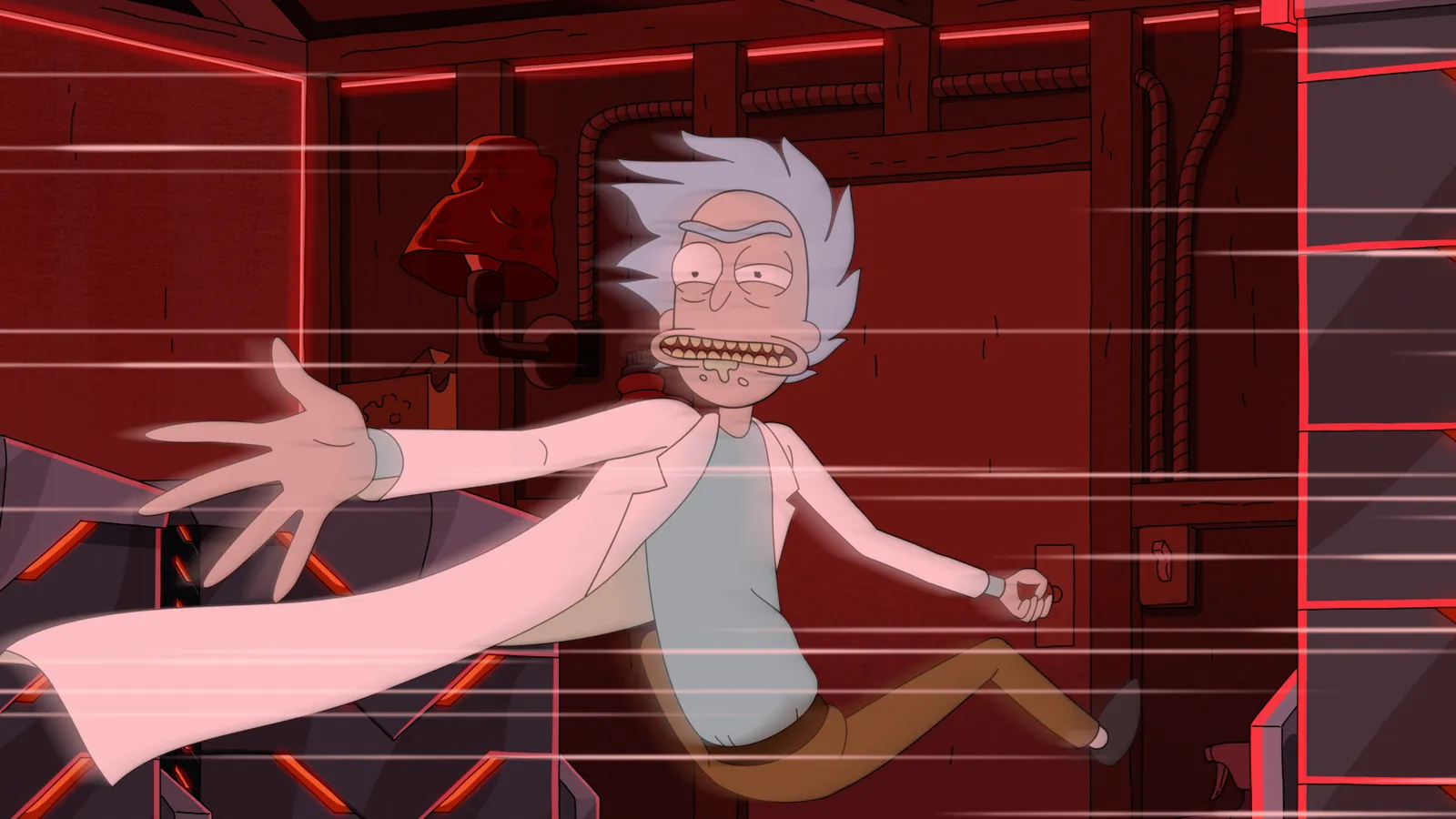
In Rick and Morty Season 9 Episode 4, titled "A Ricker Runs Through It," Owen Wilson voices Reese, whose presence shifts Rick from abusive drunk to lovable scamp. The episode escalates from a password protection workaround to an infinite vodka source and a hog uprising that erupts into chaos at the Smith house.
Warning: This review contains full spoilers for Rick and Morty Season 9, Episode 4. The headline moment is not just that Owen Wilson shows up as Reese. It is that Reese immediately changes the entire emotional operating system of the episode: Rick (Ian Cardoni) goes from malevolent, abusive drunk to a lovable scamp, and Morty (Harry Belden) comes out of his shell a bit.
That tonal whiplash matters because the episode leans hard into vocal performance as a primary engine. Cardoni’s extra-drunk Rick is hilarious in the whiny, petulant way you can practically hear through the frame. Belden’s Morty answers with his own prolonged temper tantrum energy. Then Wilson’s Reese walks in with folksy charm and a light southern drawl that feels tailor-made for him, and suddenly the story feels less like a spiral of spite and more like something that can move. Which is great, because the episode then does not waste that momentum.
The “why” behind Reese is where the fun turns into plot. Reese is revealed to be Rick’s convoluted workaround for his computer’s password protection system. On paper, that sounds like a silly premise. In practice, the episode keeps stacking consequences on top of that reveal, escalating steadily instead of stalling or melting into unrelated bits. The writers, Jax Ball and Albro Lundy, manage to keep the storytelling momentum going and push the concept to its fullest. That is especially notable because the previous episode, “Rick Fu Hustle,” struggled to fully commit to its martial arts parody and might have benefited from a more streamlined story.
From the Reese password workaround, the episode moves to a bigger, weirder machine: Rick has developed a source of infinite vodka. He achieves it by enslaving a world full of kindly hog workers. That is the kind of absurd cruelty that Rick and Morty treats like both punchline and propulsion fuel. And once you have infinite vodka, you also have incentive for escalation. The story spirals when Morty successfully exfiltrates Reese, only for this human password manager to become the catalyst that sparks the hog uprising. The result is “complete bedlam back at the Smith house,” which is as chaotic as it sounds.
If you want the executive-friendly takeaway from this episode, it is that “workarounds” are rarely just workarounds. In software, operations, and governance, the moment you bypass a control, you inherit second-order failure modes you might not see until you are already in motion. This episode makes that logic visceral. Reese is a control bypass. The hog uprising is the downstream system event. And the bedlam is what happens when multiple subsystems react simultaneously, including the household itself.
Then there is Jerry (Chris Parnell), who really steals the show in “A Ricker Runs Through It.” Jerry unwittingly becomes the host for a gas cloud-based service technician who is “a little too psyched to have a new meat sack to run around in.” The humor lands because it treats possession as both a nuisance and a power fantasy, and because Parnell’s loopy cloud voice is highly amusing in its own right. From a character dynamics perspective, this is also an important balancing mechanism. While the Rick and Morty storyline escalates into vodka and uprisings, the Jerry subplot gives the episode a different rhythm, one that makes the chaos feel playable rather than purely catastrophic.
There is also a critique tucked into the review’s context. It notes that Spencer Grammer Summer and Sarah Chalke’s Beth do not have much to do this season. That is not just fandom nitpicking. Ensemble shows live or die on distribution of agency. When one subset of characters gets less screen time or plot leverage, the narrative tends to concentrate into fewer “pressure points,” which can make the highs hit harder but also makes the world feel lopsided.
So what does this mean for decision-makers in adjacent industries who watch how stories work? The episode is basically a case study in incentives, controls, and escalation ladders. You can have a charming interface (Reese’s voice, Reese’s folksy vibe), but the underlying mechanism is still bypassing a security constraint. Once the constraint is bypassed, the ecosystem reacts, and the resulting cascade does not politely stop at the original problem. If you lead teams that ship systems, manage risk, or govern platforms, the strategic stake is the same: understand what happens when “just this once” becomes the default, and when one workaround becomes the spark for an uprising elsewhere in the house.
This story's Key Insights and Take-aways are locked.
Create a free account to unlock Executive Actions for one credit.
Register to UnlockAlways free for Executives Club members. Join the Club
More in Entertainment

Russell Brand's accuser 'bewildered and confused' as he denies 7 sex charges
The criminal case against the comedian is a live test of how media companies manage talent risk when serious allegations go public.

'It's a Magic Trick': Ballet Experts Say Rosalía's SNL Pose Is Impossible
Three ballet experts tell Rolling Stone Rosalía's gravity-defying SNL stillness shouldn't be possible - and why the debate is now part of the show.

Activision CMO: GTA 6 Will Boost Call of Duty, Not Bury It
Activision's top marketer says Rockstar's blockbuster will drive players back to consoles and into Modern Warfare 4, even as the company admits its recent strategy failed.