
Parker Solar Probe detects charged dust, reshaping the long hunt for a hotter corona
NASA’s near-Sun measurements suggest cosmic dust can carry electrostatic charge on plasma waves.
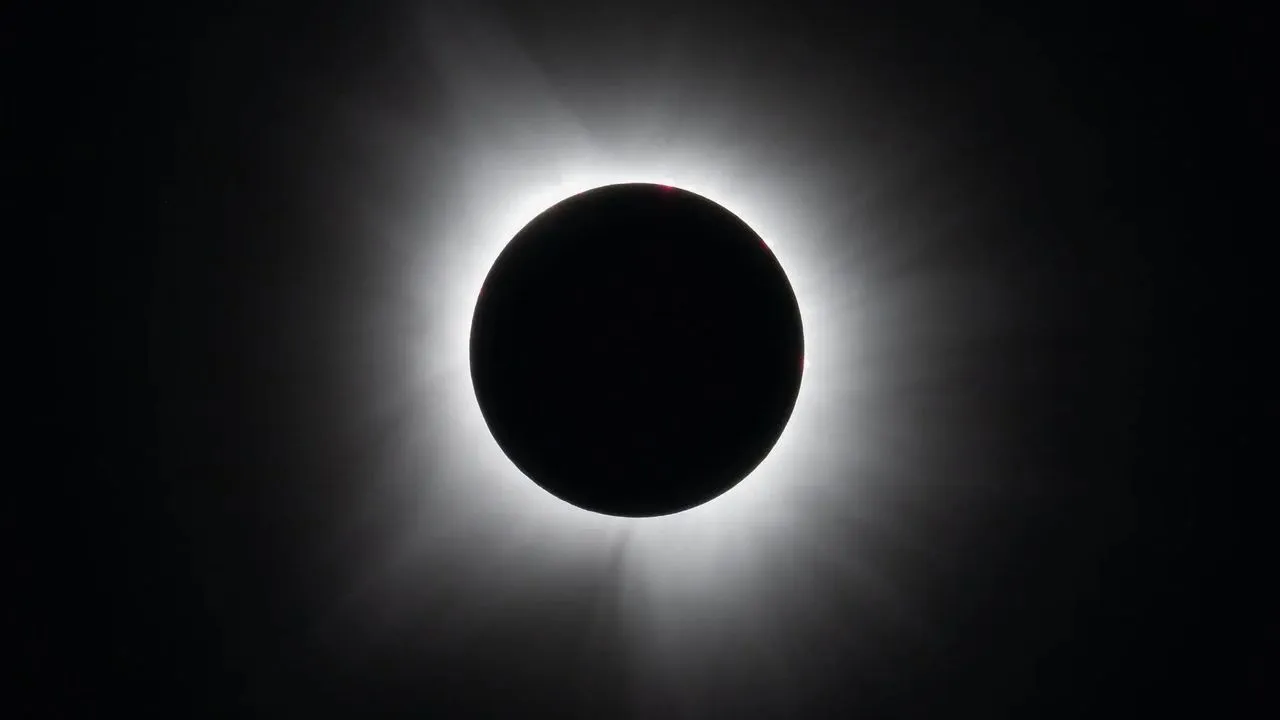
NASA's Parker Solar Probe, using its FIELDS experiment, detected unexpected voltage spikes linked to charged dust grains in the Sun's outer atmosphere. The discovery points to dust as a missing ingredient in how the corona gets heated to millions of degrees.
The sun’s corona is hotter than the sun’s visible surface, and for decades scientists have tried to explain how energy gets dumped into that outer atmosphere. Now NASA's Parker Solar Probe has found a new lead in that mystery: charged dust grains moving in the solar wind, riding plasma waves called Alfvén waves.
In a report published July 1 in The Astrophysical Journal, lead researcher Syed Ayaz of the University of Alabama in Huntsville says the probe’s antennas and magnetometers (the FIELDS experiment) picked up unexpected spikes in voltage. Those spikes, according to Ayaz and his team, are produced when clouds of charged particles are created as tiny dust grains slam into Parker at high velocity. In other words, dust is not just background noise on the way to the corona. It may be part of the engine that helps the Sun heat the region we normally only glimpse during a total solar eclipse.
Quick refresher on why this matters scientifically and practically. The corona is the Sun’s outer atmosphere, and it reaches temperatures in excess of a million degrees Fahrenheit. The photosphere (the sun’s visible surface) radiates at about 9,932 degrees Fahrenheit (5,500 degrees Celsius). Because the plasma in the corona is much more sparsely distributed, the photosphere still outshines it, which is why we typically only see the corona when the glare is blocked during a total solar eclipse. But the temperature gap has been the central puzzle: how does the corona get so hot?
Until now, researchers have focused mainly on how electrons, ions, magnetic fields, and plasma waves transport and dissipate energy in the solar atmosphere. That is the energy ledger most models track. Parker’s findings add a new “ingredient” to that picture: dust grains. The reason this was a big deal is that, in the high temperatures of the corona, dust was thought unlikely to survive long enough to matter. The probe is changing that assumption with measurements made extremely close to the Sun. Parker has flown closer to the sun than any other spacecraft, skirting the corona at a distance of 6.1 million kilometers (3.8 million miles).
Here’s where the FIELDS experiment comes in, and why it matters that Parker doesn’t carry a dedicated cosmic dust detector. Parker hosts antennas and magnetometers collectively referred to as the FIELDS experiment, designed to measure the electromagnetic field and radio emissions in the solar corona. The antennas kept picking up unexpected spikes in voltage, which Ayaz and his team interpret as the signatures of charged dust interacting with the electromagnetic environment near the Sun. The mechanism is straightforward in principle: dust grains have accrued an electrostatic charge, and that charge can interact with the electromagnetic field carried by the solar wind as it leaves the Sun. That interaction can influence waves of plasma reverberating through that electromagnetic field, specifically Alfvén waves.
The team also lays out two competing ways dust could matter, and the difference is not academic. If the dust mass dominates, then the mass of the dust can provide extra inertia to the plasma riding the solar wind, allowing energy in the plasma to travel farther into the corona. If dust-charge effects dominate, then the electrostatic charge on the grains can bolster interactions between charged particles in the plasma, the Alfvén waves, and the solar electromagnetic field. In that case, the Alfvén wave energy may be released more locally as particle heating. Ayaz summarizes the two alternatives directly: if dust mass dominates, wave energy may travel farther into the corona; if dust-charge effects dominate, energy may be released more locally as particle heating.
So dust is potentially a switch that changes where energy gets deposited in the corona. That is the core connection to the temperature rise: the balance between inertia effects and charge interaction effects can control how and when energy is released, focusing it into certain areas and pushing local temperatures higher. The study also flips the usual “dust versus survival” logic. Instead of dust being merely a transient passenger that gets annihilated by the environment, it may actively shape how electromagnetic energy becomes heat and solar-wind motion.
For decision-makers watching the space economy, there’s a second-order implication hiding in plain sight: near-Sun instruments are going to need to treat dust as a first-class variable, not an afterthought. Ayaz says future solar missions will have to start taking dust into account, with dedicated detectors designed to measure dust’s properties close to the Sun. That is a budget and design signal as much as it is a scientific one. If dust can change how energy travels and where it heats, then mission planners and instrument teams will want direct measurements, not just inferences from voltage spikes.
And the strategic question Ayaz calls out is bigger than one set of antenna readings: is dust simply passing through the near-Sun environment, or is it helping shape how electromagnetic energy becomes heat and solar-wind motion? The answer affects how future models of the solar atmosphere will be built, which ultimately influences how we predict and interpret solar behavior that reaches far beyond the Sun itself.
This story's Key Insights and Take-aways are locked.
Create a free account to unlock Executive Actions for one credit.
Register to UnlockAlways free for Executives Club members. Join the Club
More in Science

Alaska's 1,580-foot tsunami had warning signs. Scientists just found them.
Rapid glacier retreat, heavy rainfall, and thousands of tiny tremors preceded Alaska's 1,580-foot tsunami, a warning for every coastal community in a warming world.

The rare mutation that lets high-risk brains dodge Alzheimer's
Scientists found a natural defense against protein buildup, opening a new path to preventive treatments.

3,000 steps a day may halve Alzheimer's decline, study finds
New research links a modest daily walk to less tau buildup and nearly half the cognitive and functional decline, even for those with early signs.