

Path of Exile co-creator Chris Wilson: Diablo 2 hardcore players want “arbitrary” speed breakpoints
Wilson explains why ARPG optimization, spreadsheet thresholds, and one-shot animation jumps keep Diablo fans chasing graphs.
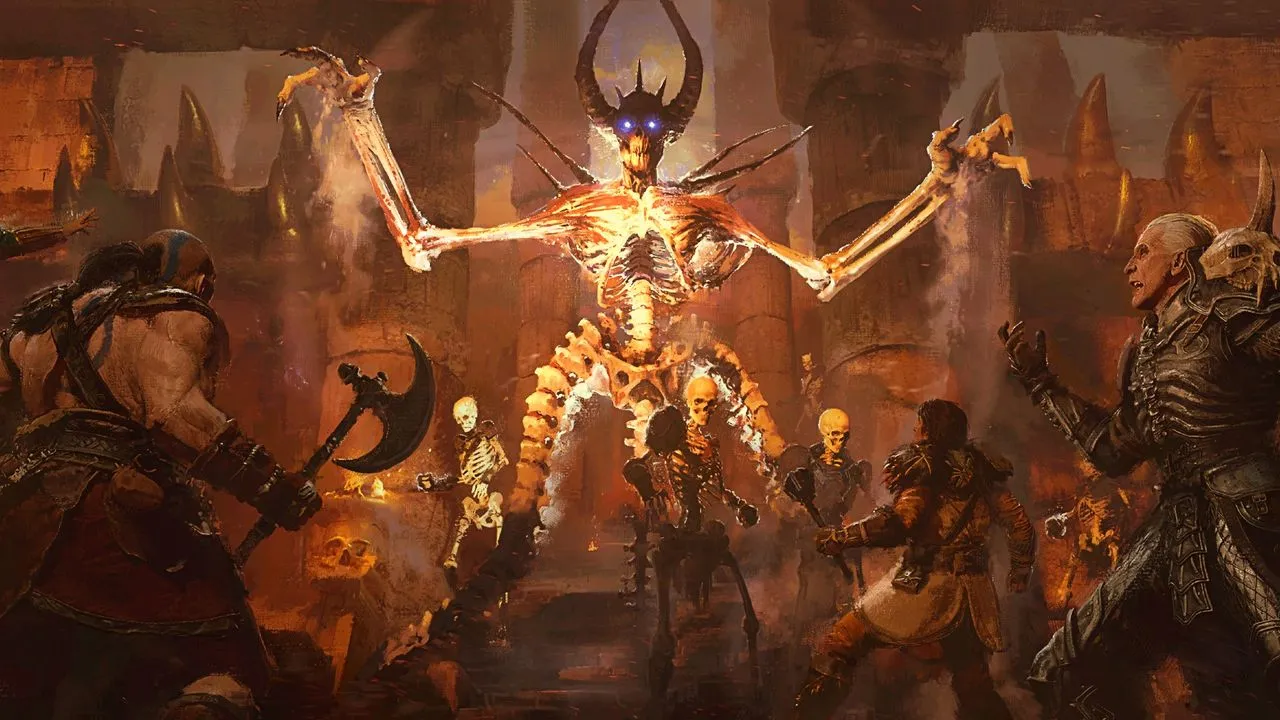
Chris Wilson, co-creator of Path of Exile, argues in a new YouTube video that modern ARPG progression can miss a key hardcore Diablo 2 driver: breakpoint optimization. For decision-makers, it’s a reminder that game design choices can intentionally privilege one audience by rewarding spreadsheet-like mastery.
Path of Exile co-creator Chris Wilson says hardcore Diablo 2 players want “arbitrary” speed breakpoints because they cannot resist ARPG optimization. In his new YouTube video, Wilson drills into the mechanics behind the obsession: breakpoints are benchmarks for when a particular action stat actually changes or improves, instead of improving smoothly every time you level up.
Wilson’s core example is attack speed, cast speed, and hit recovery. He points out that you do not automatically get quicker in spellcasting each time you move up a level. Instead, your ability goes up by increments after you reach a certain number of levels, creating “arbitrary sweet spots” that players want to reach because the jump in animation speed happens all at once. That is the reason hardcore players built their own systems around the game’s math. As Wilson puts it, Diablo 2 players “created tables of speed breakpoints and optimize their characters around these thresholds,” and “many of them had a lot of fun doing so,” because it became an important part of how the game felt.
If you are an operator or investor looking at live-service products, this is an unusually clean case study in incentives. Players are not just consuming content. They are extracting payoff from structure. When progression is continuous, the feedback loop can feel like a steady background hum. When progression is threshold-based, the loop turns into a hunt, with a clear moment of truth: the next threshold hit. Wilson’s framing suggests hardcore ARPGs are not satisfied with “more damage” in the abstract. They want a visible, mechanical shift that changes what their character does on screen.
This also explains why “modern, intuitive character progression” can be less fun to genre diehards. Wilson is not claiming all progression systems are bad. He is arguing that when games reduce or remove breakpoint-like discontinuities, they risk disappointing players who built their identity around optimization. The Diablo 2 audience, in his view, expects more of these sweet spots, and that expectation is so ingrained that other action-RPGs can miss the mark by not providing enough breakpoint structure. The result, per Wilson’s logic, is a design mismatch: players who want to min-max the graph do not get enough knobs to turn.
There is a market and product strategy angle hiding inside this argument. ARPGs compete for long-term engagement, and engagement is often a function of mastery. If you want players to stay, you have to give them systems with depth that rewards repeated tinkering. Wilson’s description of Diablo 2 players making tables implies something bigger than “optimization is fun.” It implies that the game’s pacing and balance were legible enough for the community to model, then execute. That turns the developer’s balancing into a shared language, almost like a reference manual that lives in spreadsheets and build guides.
Now consider second-order effects for studios. When players can model breakpoints, they can also coordinate. Even without inventing anything beyond Wilson’s account, his point implies that threshold knowledge becomes communal, and the meta can stabilize around numbers. That can be a blessing or a headache. It is a blessing because it creates content: build discussions, guides, and a persistent meta conversation. It can also be a headache because balance changes might ripple harder. If the game is tuned around discrete jumps, then small adjustments to animation speed, stat scaling, or hit recovery timing can feel larger to a player who has optimized around specific thresholds.
Wilson’s stance also helps explain the “genre contract” problem. His conclusion is blunt: “If you want old school players, you've got to play by old school rules. It's that simple.” In other words, the audience is not only buying the theme. They are buying the underlying rules of progression, even down to how speed changes map to levels. So when competitors move toward smoother, more modern-feeling progression, they are not just changing user experience. They are renegotiating the contract with hardcore fans.
Finally, the source includes another design note from the Diablo 2 side: 25 years later, Diablo 2 director still hasn't gotten over how much the stamina bar sucks. Wilson quotes this sentiment as “It's like a newbie tax almost.” While that quote is about stamina, it connects to the same theme: old-school design often carries rough edges that hardcore players accept and even value because the edge creates systems to master. For executives and boards, the strategic stakes are clear. If your product serves players who optimize, you may need to design for the spreadsheet brain, not just the action feel. And if you change progression math, you may be changing not only balance, but the entire reason your core audience keeps showing up.
This story's Key Insights and Take-aways are locked.
Create a free account to unlock Executive Actions for one credit.
Register to UnlockAlways free for Executives Club members. Join the Club
More in Entertainment
12TB Steam 'teraleak' goes beyond Valve: GTA 3, Mafia 2 prototypes exposed
A 12-terabyte dump of Steam data reveals prototypes and builds of third-party classics like GTA 3 and Mafia 2, plus unreleased Valve content, rewriting game history.

LinkedIn's romance problem: 1 in 4 workers say dating on it is fair game
A new survey shows a quarter of U.S. employees treat the professional network as fair game for romance, even as LinkedIn bans it and removes hundreds of thousands of offending posts.

Enhypen's first No. 1 album breaks K-pop's Billboard 200 streak
The K-pop group's 98,000-unit debut tops the chart while Dolly Parton's catalog reentry shows how death reshapes streaming.