
Patrick O'Luanaigh launches Atmospheric to build original IP across games and music
The nDreams founder exits in May 2025, then re-enters entertainment with a new studio focused on games plus music IP.
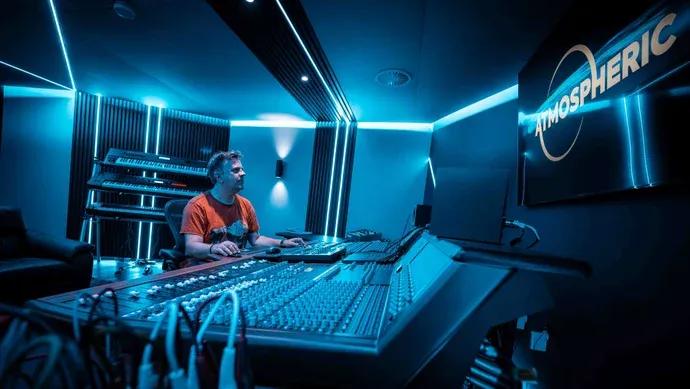
Patrick O'Luanaigh, founder of VR studio nDreams, has launched Atmospheric, described as an independent entertainment company creating original intellectual property across games and music. For decision-makers, the move signals how veteran VR leadership is repositioning toward cross-media IP building after stepping down from nDreams and following nDreams' acquisition by Aonic.
Patrick O'Luanaigh just launched a new studio called Atmospheric, and it is aiming at a very specific prize: original intellectual property across games and music. In GamesIndustry.biz, Atmospheric is described as “a new independent entertainment company creating original intellectual property across games and music.” That phrasing matters. It implies the studio is not treating music as a soundtrack add-on, but as a creative system that can generate assets, characters, worlds, and brand equity that can live across both formats.
This is also a real career pivot with a tight timeline. O'Luanaigh stepped down from nDreams in May 2025 after 19 years as CEO. He left nDreams later than many executives who would exit right after an acquisition, but still, the article places his departure eighteen months after the studio was acquired by Aonic. That timing gives the move a “next chapter” feel, but it is grounded in measurable corporate events: 19 years at the helm, then an acquisition outcome under a different ownership structure, then an exit.
To understand why Atmospheric might matter beyond founder headlines, look at what nDreams represented in the first place. nDreams is a VR studio, which tends to operate under a distinct set of incentives. VR games often require deeper interaction design, longer cycles for content that feels “native” rather than ported, and a constant push to find audiences for new hardware experiences. That kind of environment rewards teams who can build repeatable creative pipelines. O'Luanaigh led through that era for 19 years, which suggests he knows the hard part is not just shipping something, it is shipping something that holds attention in a medium where players can quickly bounce if the experience does not click.
Atmospheric, by contrast, is explicitly cross-media. “Across games and music” is not a typical one-line mission statement for a studio that starts in any one discipline. Games and music have different production rhythms, revenue models, and rights considerations. Games can monetize through sales, subscriptions, in-game purchases, live operations, and licensing to platforms. Music can monetize through streaming, distribution, synchronization, and other rights streams. A studio that can generate IP that is valuable in both categories may be trying to reduce reliance on a single funding cycle, a single platform shift, or a single type of audience behavior.
There is another second-order implication here for boards and investors: independence can be a strategy, not just an aesthetic. The source describes Atmospheric as an “independent entertainment company.” Independence often means freedom to choose partnerships, co-development terms, and distribution relationships without needing to route creative decisions through a larger corporate stack. It can also mean the studio can structure its IP ownership in a way that keeps future upside concentrated. After an acquisition, many founders feel the friction of how IP is owned, administered, and monetized under new corporate priorities. While the article does not spell out those internal details, it does give the factual markers: eighteen months after Aonic acquired nDreams, O'Luanaigh stepped down.
For additional context on why this cross-media framing is interesting, remember that the games industry is increasingly treated like entertainment IP, not just software. Worlds, music, characters, and social identity can travel. When that travel is built early, the IP is more likely to become durable, not just a single release. Atmospheric’s positioning suggests O'Luanaigh is leaning into that durability bet. If the studio can create original characters or universes with musical hooks, then music is not merely promotional. It becomes part of the brand logic.
O'Luanaigh's background also stacks credibility in multiple directions. Prior to founding nDreams, he held senior roles at SCi, Eidos and Codemasters. Those names anchor his experience across mainstream game development ecosystems and established publishers. That matters because cross-media studios do not succeed only on taste. They succeed on production discipline and an understanding of how IP survives contact with commercialization.
So what should decision-makers watching similar founders take away from this? Atmospheric is a post-nDreams move with a clear creative mission, but it is also a governance and capital signal. When a veteran CEO steps down after 19 years, then uses a window after acquisition timing, and then re-launches with a cross-media IP thesis, the message to peers is simple: the next leverage point may be ownership of original worlds that can scale across formats, not just incremental content for a single platform. Atmospheric will still have to prove it can turn IP intent into shippable products. But the direction is set, and it is set by someone with decades of institutional game-building experience.
This story's Key Insights and Take-aways are locked.
Create a free account to unlock Executive Actions for one credit.
Register to UnlockAlways free for Executives Club members. Join the Club
More in Business

A flaw in PHP just forced governments to pull their own sites offline
European agencies from Belgium to Germany took websites dark to patch a critical weakness in the language behind almost 70% of the web, and the blast radius extends far beyond government portals.
BioWare shuts down, Mass Effect 5 dead after $55B EA buyout
The legendary RPG studio's closure lands months after a $55 billion investment group buyout of EA, raising tough questions for gaming's biggest acquirers.

Musk barred from the room as Tesla, SpaceX boards weigh $3.5 trillion merger
The CEO of both companies is a 'conflicted party' watching independent directors negotiate a tie-up that would create a $3.5 trillion giant he would own about a third of.