
Paula Reid exits CNN before Paramount closes, raising questions about new oversight
Reid’s reported exit ahead of the Paramount-WBD deal puts pressure on CNN leadership and the merger timeline.

Paula Reid, CNN’s chief legal affairs correspondent, is set to exit CNN before Paramount finalizes its merger with Warner Bros. Discovery, according to multiple outlets including Variety and Status. The move spotlights how leadership and legal-risk thinking are expected to shift just as Paramount completes its $110 billion acquisition.
Paula Reid, CNN’s chief legal affairs correspondent, is set to leave the network before Paramount finalizes its merger with Warner Bros. Discovery, according to multiple media outlets. The reporting says Reid was given the option to renew her contract, but chose to exit instead, citing uncertainty about CNN’s future under expected new corporate leaders.
The timing matters because Paramount intends to close its $110 billion acquisition of WBD by July, and the corporate control question is already shaping who stays, who goes, and what “legal affairs” looks like in the next phase. Reports from Variety and Status describe Reid, who previously worked at CBS News, as feeling “some uncertainty” about how CNN might operate once the deal puts David Ellison’s company in control.
Under the usual mechanics of media mergers, control usually changes faster than day-to-day production. First comes the corporate reshuffle, then the editorial and operational adjustments, and only later do viewers feel the difference. In this case, the conflict is not described as public drama, but as leadership coordination risk. TheWrap reports that CNN CEO Mark Thompson reportedly told Paramount executives he would not share oversight of the network with another executive. That single line, if accurately reflected in the reporting, implies a leadership standoff is being handled in private, even if the public face of CNN is unchanged for now.
Reid’s exit raises the immediate question of continuity: who handles the network’s legal affairs storylines, legal framing, and compliance-adjacent coverage after the corporate dust settles. TheWrap also connects this to broader talent churn in the same ecosystem. It notes that CNN anchor Anderson Cooper quit “60 Minutes” after CBS News Editor-in-Chief Bari Weiss’ “controversial changes.” The source is careful, but it still flags a pattern that decision-makers at both networks are watching: when corporate leadership transitions collide with newsroom governance, high-profile journalists can become early exit signals.
That context is where David Ellison enters. It has been “repeatedly speculated” that Ellison may tap Weiss to oversee CNN in addition to CBS News. The reporting acknowledges pushback on that exact scenario. Earlier this month, an individual with knowledge of CBS’ thinking told TheWrap, “there is no intention” for Weiss to run the combined news operation amid Paramount’s search for a new business executive. But later, The New York Times reported that Ellison was still considering having Weiss oversee CNN in addition to CBS News. In other words, even where internal signals say “no,” external reporting keeps the ambiguity alive. For people like Reid, uncertainty is not abstract. It is about who will define legal and editorial guardrails once control shifts.
And those guardrails are not just cultural. They are regulatory and legal, which becomes especially important when the deal itself faces scrutiny beyond corporate approvals. The merger has received the DOJ’s seal of approval, with the DOJ stating it didn’t find any issues with the deal. But it still faces a potential legal challenge from State AGs, including California’s Rob Bonta. Bonta said, “The merger of Warner Bros and Paramount is not a done deal and remains under investigation by my office,” after the DOJ outcome. That matters because regulatory risk changes how companies staff leadership and legal functions. If a merger is delayed or contested, the timeline for governance changes stretches, and legal teams often get louder internally about risk, messaging, and reporting obligations.
So what does this mean for executives and boards at the networks and adjacent media companies? For one, it suggests talent stability is not only about compensation. It is also about governance clarity. Reid’s decision is reported as being influenced by uncertainty about future corporate leaders, which signals that leadership structures, not just business strategy, can trigger early departures. Second, the reported refusal by Thompson to share oversight with another executive points to a potential governance impasse that can echo across departments, including legal affairs. Third, the deal’s “not done deal” status with state-level investigations can keep executive decisions in a limbo state, where journalists and lawyers are watching the same headlines that boards are using to assess risk.
Even if Reid’s exit looks like a newsroom personnel change, it is also a real-time indicator of how a $110 billion corporate restructuring can filter into daily operations. As Paramount moves toward a July close, the question becomes less “who leaves?” and more “who decides the legal and editorial boundaries once corporate control arrives?”
This story's Key Insights and Take-aways are locked.
Create a free account to unlock Executive Actions for one credit.
Register to UnlockAlways free for Executives Club members. Join the Club
More in Business
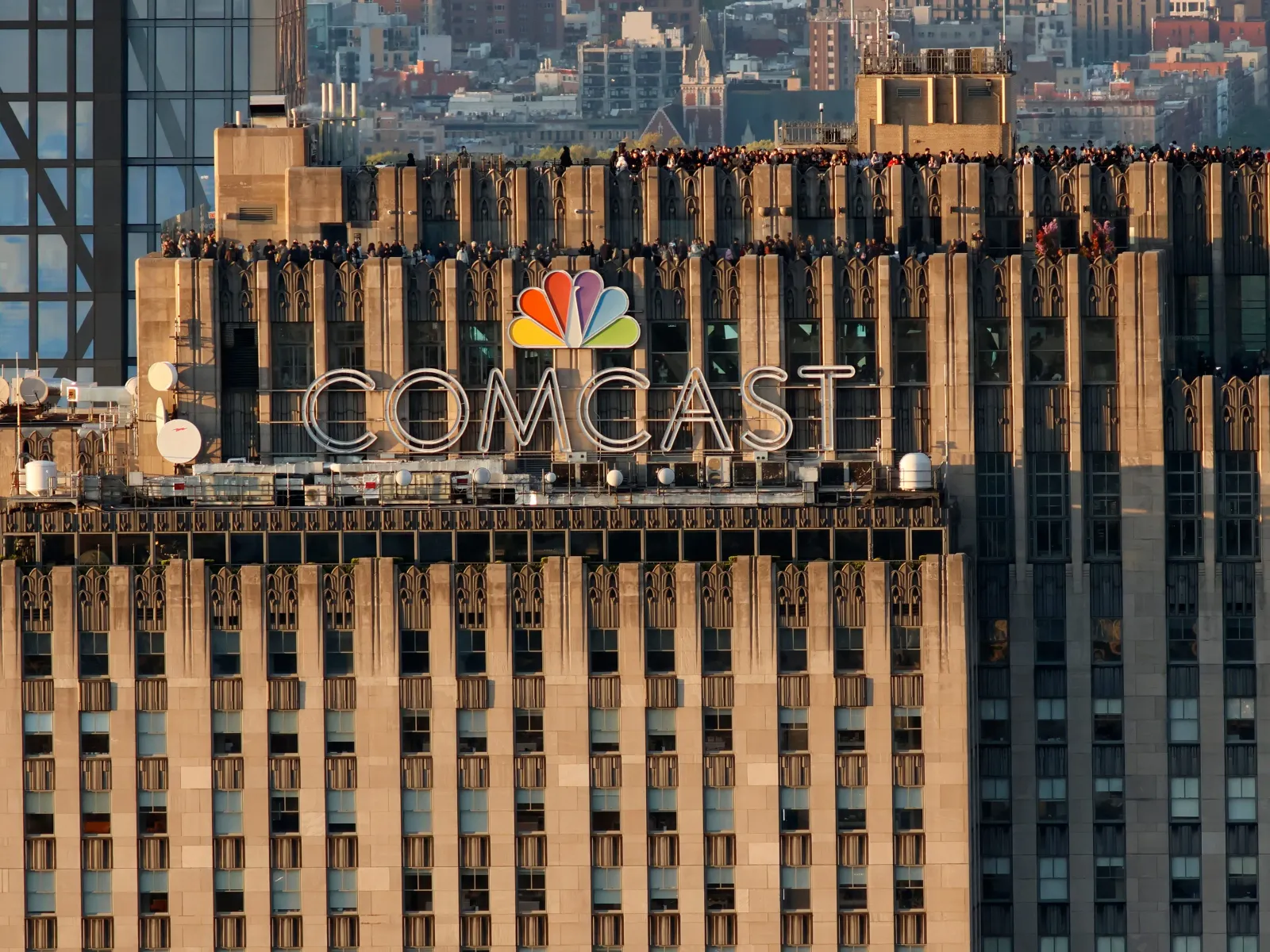
Comcast shares jump 25% as it plans to split NBCUniversal and Sky
The tax-free spin-off could reshape focus, funding, and competition across media and tech for years.

Bungie cuts most Destiny 2 staff as Sony says Marathon still matters
Herman Hulst confirms layoffs affecting most Destiny and some Marathon teams after Bungie admits Destiny fell short.

SK Hynix jumps 11% after seeking up to $29.4B in Nasdaq listing
The chip giant filed for a Nasdaq listing plan that could raise $29.4 billion, instantly reshaping investor expectations.