

Pentagon plans to shutter SDA after 2019, as operational satellites finally launch
The Space Development Agency is rolling out its first operational satellites just as lawmakers push its closure into NDAA drafts.
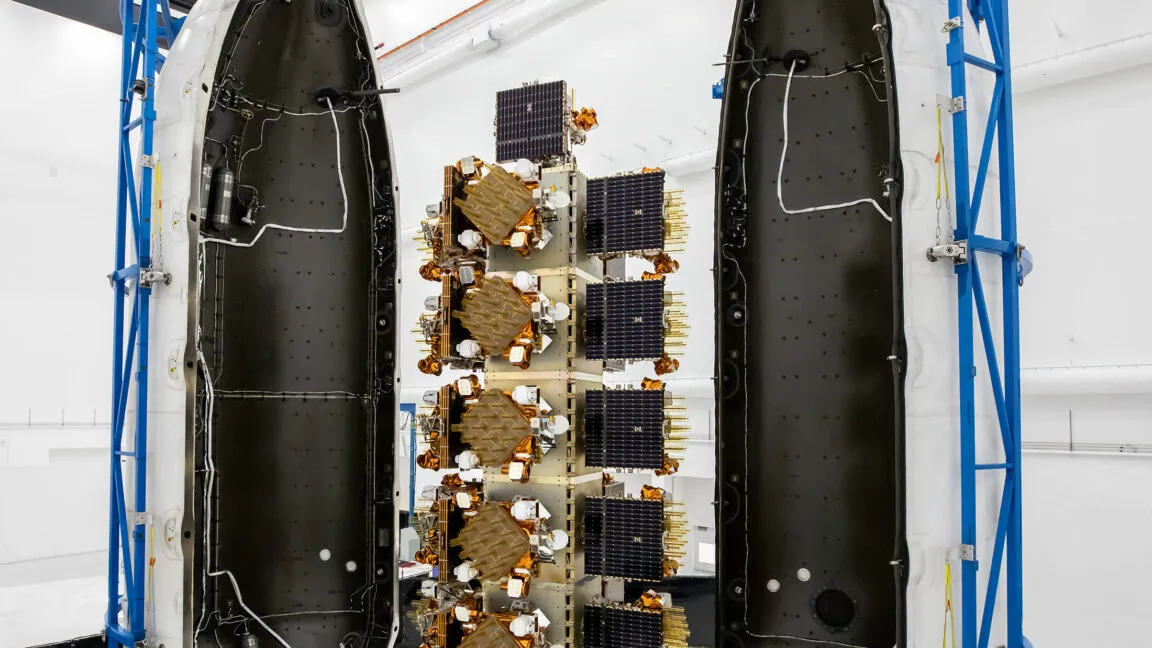
The Space Development Agency (SDA), created in 2019 to speed up US military space systems, is now launching its first batches of operational satellites. But the Pentagon is preparing to shutter the semi-autonomous agency and fold it into the Space Force's procurement pipeline under a newly reorganized acquisition leadership structure.
The Pentagon's Space Development Agency (SDA) was supposed to move faster than the Pentagon ever does. It was established in 2019 specifically to speed up deployment of US military space systems by sidestepping the Pentagon's traditional, sluggish bureaucracy. Seven years later, SDA is finally launching its first batches of operational satellites. And in the same timeframe, the Pentagon plans to shutter the semi-autonomous agency and fold it back into the Space Force's procurement pipeline.
That timing is the story. Lawmakers in both houses of Congress have backed the agency's closure in drafts of this year's National Defense Authorization Act, according to the Ars Technica report. So while SDA is getting to the part it was created for, it is also walking toward the door it was built to avoid. The strategic implication is blunt: the US is attempting to accelerate space delivery while simultaneously reducing the institutional mechanism that was meant to drive that acceleration.
To understand why this matters, you have to look at how the Pentagon buys. Large defense programs typically move through layers of process, approvals, and procurement pipelines. The SDA idea was to bypass that drag by creating a semi-autonomous organization. In other words, it was a structural workaround. Instead of trying to speed up the entire machine, the government built a side door for satellites, aiming to get systems deployed faster.
But acceleration is hard to sustain when the parent organization decides to re-centralize. The report says the Pentagon's plan is to fold SDA into the Space Force's procurement pipeline, and that Space Force procurement is newly reorganized under several program acquisition executives. That matters because acquisition leadership is where priorities get translated into deadlines, oversight, contracting behavior, and resourcing. When you reorganize acquisition executives, you are not just changing org charts. You are shifting who has the authority to set pace and accept risk, which is exactly what a faster satellite program needs.
The operational pressure around all of this is not hypothetical. The source includes a blunt line describing ongoing missile launches tied to the broader “Epic Fury” operation: “Missiles are being launched at the joint force every single day in [Operation] Epic Fury.” That kind of cadence is a reminder that this is happening under real-world time pressure. Space systems do not exist in a vacuum. They support communications, targeting, navigation, and resilience. If space procurement and deployment are out of sync with operational tempo, decision-makers feel it downstream.
Now add Congress. In Washington, NDAA drafts often act like a forcing function. The report states that lawmakers in both houses have backed SDA's closure in drafts of this year's National Defense Authorization Act. Even before final passage, that kind of bipartisan support changes the bargaining environment inside the Pentagon. It can affect how much risk leadership is willing to take, how long transitional teams expect to exist, and whether the organization that has to merge later will prioritize “temporary” programs differently than permanent ones.
Second-order effects for executives and board-level decision-makers show up in the transition costs. When an agency is created to speed up delivery but later gets absorbed into a larger pipeline, the question becomes whether the absorption also reintroduces the original bottlenecks SDA was designed to avoid. A new procurement pipeline can be faster, or it can be a familiar slow lane with new paperwork. Either way, the first batches of operational satellites are arriving at a moment when institutional incentives are shifting away from SDA’s semi-autonomous model and toward a centralized acquisition structure.
Strategically, this is a stress test for US defense space governance. The Pentagon is trying to streamline weapons buying through reorganization, but it is doing so while SDA is reaching operational maturity. For peers designing agile programs, the lesson is uncomfortable: building a faster delivery mechanism is not enough if the political and procurement structures that control pace can reverse course. The practical stakes are clear. The faster the satellite deployment cycle, the more leverage the US has in contested environments. If the mechanism that delivers that speed gets shuttered, even temporarily, schedule risk and integration risk creep back into the system. And with Congress already signaling closure in NDAA drafts, there may be little time left to prove that SDA’s model should persist.
This story's Key Insights and Take-aways are locked.
Create a free account to unlock Executive Actions for one credit.
Register to UnlockAlways free for Executives Club members. Join the Club
More in Technology

Google quietly links your phone number to every Android account on your SIM
Adding a SIM now ties your phone number to all Google accounts - and future accounts inherit it. Here's the security and privacy stakes.

Hijacker AI 'Skynet mode' runs 100,000 attack steps against exposed models
Symantec caught a criminal AI agent that borrows other models, steals data, and mines crypto; the only relief is no confirmed victims yet.

Nvidia's AI-financier shift faces its first big test as neoclouds stumble
A rout in neocloud stocks is forcing investors to weigh Nvidia's hidden exposure as both supplier and lender to the AI buildout.