
Pete Hegseth talks testosterone and leaks, but says little on the Iran war
Executives should read the silence as a signal: what gets attention, what does not, can shape risk, readiness, and markets.
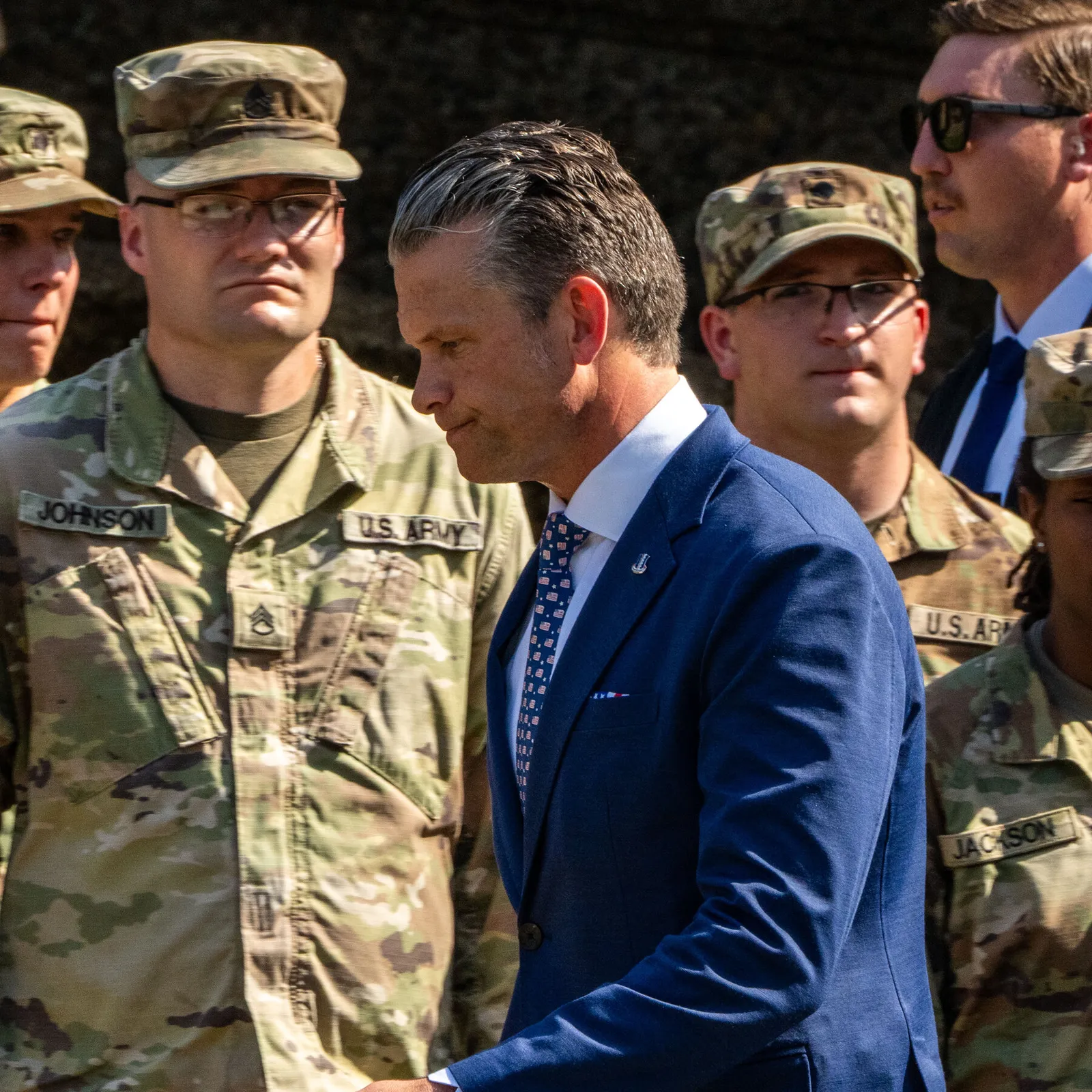
Defense Secretary Pete Hegseth has spoken about a range of issues in recent days, from testosterone to leak investigations, but has said little about the war involving Iran. For decision-makers, the consequence is straightforward: the agenda signals where the Pentagon is focusing, and where it is not, at a moment when clarity matters.
Defense Secretary Pete Hegseth has spoken about a range of issues in recent days, from testosterone to leak investigations, but he has said little about the war involving Iran. That contrast is the headline. It is also the problem for anyone who has to operate when the risk comes from abroad and the information is coming from home.
In recent days, Hegseth’s public comments have covered topics that are, at least on their face, far away from the Iran file. The report notes he has spoken about testosterone and also about leak investigations, while saying little about the war itself. If you are an executive trying to forecast operational risk, supply chain disruption, or the compliance posture of your defense and technology partners, “saying little” about the central threat can be more consequential than a detailed statement about a secondary controversy.
Here is why. In security policy, the public posture is not just communication for communication’s sake. It is guidance for the broader ecosystem. When leaders focus their remarks on internal matters and information control, it can imply either that operational strategy is being held close or that the messaging apparatus is busy on other fires. Either way, the lack of direct discussion about the war can create uncertainty across agencies and contractors, because uncertainty is expensive.
For boards and executives, uncertainty does not stay abstract. It turns into budgeting questions, staffing plans, scenario planning, and contract risk. If the Pentagon’s public narrative does not give partners a clear read on escalation, timelines, or priorities, companies often respond by tightening assumptions: more conservative delivery schedules, stronger contingency coverage, and more cautious procurement decisions. That can be rational. It can also be slower and more costly, which matters when budgets and market expectations are already under pressure.
There is also an internal-incentives angle. Leak investigations, in particular, tend to pull attention toward classification discipline, document handling, and internal accountability. Those efforts can be necessary and appropriate. But they also shift bandwidth. When a senior official emphasizes investigations and internal governance, it can reduce the time spent on strategic explanations to the public. The result is a public-facing gap: external partners want clarity on threat posture, rules of engagement, and operational priorities, while internal leadership wants to ensure information is controlled.
Testosterone is a good example of why the agenda matters. The report points out that Hegseth has spoken about testosterone in the same recent period that he has said little about the Iran war. Whether someone agrees or disagrees with the substance of that policy topic, the optics are the point: the audience interprets what the leader chooses to emphasize. In Washington, that interpretation travels quickly into corporate planning. If the messaging seems oriented toward personnel and internal policy issues rather than the central foreign policy crisis, companies read it as a signal about leadership priorities, even if the actual operational work continues behind closed doors.
Market context makes this even sharper. Defense and national security are tightly coupled to government contracts, grant and procurement timelines, export controls, and regulatory compliance regimes. When uncertainty rises, so do the governance costs: legal review cycles lengthen, compliance teams expand monitoring, and risk committees spend more time stress-testing assumptions. Even if the underlying operational posture does not change, the absence of public clarity can still change how capital is allocated across the supply chain.
Regulatory framing is part of the second-order effect too. Wars do not just move troops; they move rules. Sanctions, licensing, intelligence disclosures, procurement restrictions, and government contracting guidance all have ripple effects. When public officials say little about a war, the compliance community may lean harder on existing frameworks rather than anticipating updates. That can prevent missteps, but it can also slow adaptation when new guidance eventually lands.
So what should executives take from this? The source is simple: in recent days, Pete Hegseth has spoken about testosterone and leak investigations, but has said little about the Iran war. The strategic stake is that silence can create operational fog. And in the national security world, fog does not just obscure. It forces everyone else to fill it in, often with conservative assumptions.
Peers in similar roles, whether in defense-adjacent tech, infrastructure, or companies that depend on government guidance, should treat this as a signal to tighten their own visibility. Not because silence automatically means a specific operational plan, but because silence changes decision environments. And in environments where the threat is geopolitical, the cost of acting without a clear read can be higher than the cost of spending a little extra time building a scenario-based plan.
This story's Key Insights and Take-aways are locked.
Create a free account to unlock Executive Actions for one credit.
Register to UnlockAlways free for Executives Club members. Join the Club
More in Politics

LA County: DOJ's 20,000 'noncitizen' voter list is 'unreliable,' includes U.S.-born
Preliminary review by Los Angeles County election officials finds errors in the federal list, raising the stakes for voter roll integrity ahead of November.

Trump's $1.5B Pentagon chip investment lands in North Carolina
A $1.5 billion defense infusion for North Carolina chipmaking signals a new era of Pentagon-backed reshoring - here's what it means for the industry.

Nigeria confirms first Ebola case in Abuja, a woman just off a Uganda flight
Health Minister Muhammad Ali Pate says the patient flew in from Uganda, putting Africa's latest outbreak on Nigeria's doorstep.