
Philips Hue adds wired wall modules, letting non-smart lights join Matter-ready control
The first Hue wired wall switch modules install behind existing switches, but they are Europe-only for now.
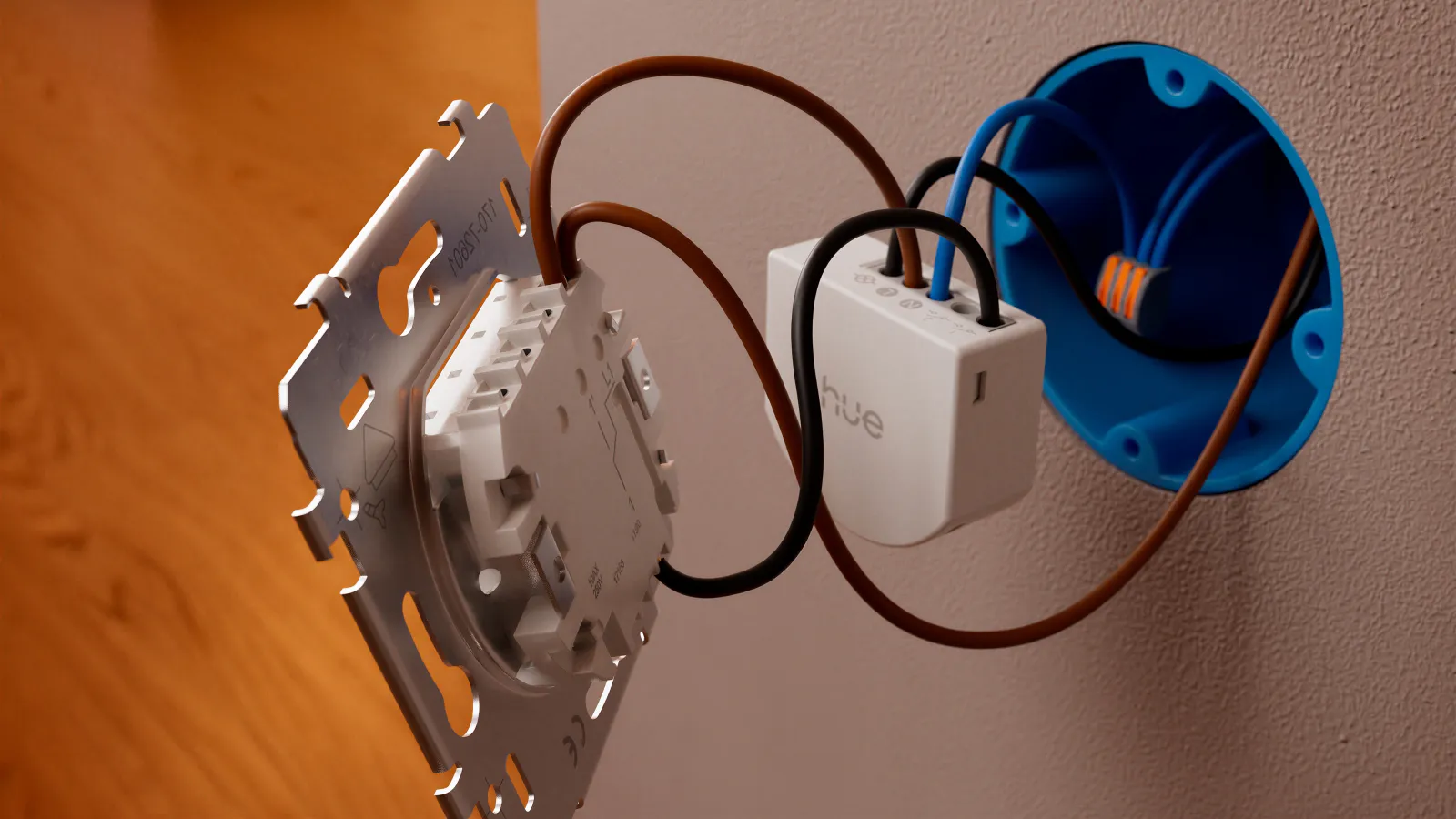
Philips Hue, from Signify, has launched its first Wired Wall Switch Modules that fit behind existing wall switches, extending the Hue ecosystem to non-smart lights. Signify says the modules have no US plans yet, while new lamps and upgrades expand Hue's Matter-over-Thread support and white-light range.
Philips Hue is finally letting non-smart lights participate in its ecosystem. Its first Wired Wall Switch Modules are designed to install behind existing wall switches, so you can keep your current switch setup while bringing connected control to lights that were never “smart” in the first place.
That sounds niche until you zoom out: Hue has built an ecosystem around replacing or adding smart lighting hardware. This move breaks that assumption by treating the switch as the smart layer instead of the bulb. The practical payoff is that installations can be less disruptive, and upgrades can be incremental rather than a full retrofit. You get a path to Hue control without having to swap every fixture immediately.
Hue also didn’t just ship a new accessory category. The company announced new Play table and floor lamps that are “more affordable versions” of its Signe series, which matters because smart lighting is often judged by total installed cost, not just the coolest demo bulb. If you are an executive tracking adoption, this is the kind of product line strategy that helps reduce friction for mainstream buyers who want the experience without the showroom price tag.
On the technical and platform side, Hue is upgrading its E14 candle bulbs. The new bulbs add a broader white light spectrum, and they add Matter-over-Thread compatibility. That pairing is a big deal in smart home terms because Matter is designed to reduce lock-in between ecosystems, while Thread is a connectivity approach that can help devices communicate reliably in home networks. The source also notes that Hue’s new lights are “now available globally,” meaning the ecosystem expansion is not limited in the same way as the wired modules are.
But the Wired Wall Switch Modules come with a catch. They are Europe-only. Signify CTO George Yianni told The Verge that there are currently no plans to launch them in the US. For decision-makers, this is where the story shifts from “cool product” to “deployment reality.” Region-specific availability can slow adoption, complicate planning for global rollouts, and force integrators and partners to work around gaps depending on where customers live.
From a regulatory and market-structure lens, this wired-behind-the-switch approach sits at the intersection of smart home interoperability and physical electrical installation. Smart lighting has historically faced a split between consumer-first products that are easy to buy and install, and more complex retrofits that require careful handling of switch wiring. By putting intelligence behind the wall switch, Signify is effectively targeting a middle ground: you avoid changing the fixture and focus on the control point.
Second-order implications are where boards and operators will lean in. First, this product design could accelerate adoption for customers who like the lighting experience but resist the idea of replacing existing bulbs or fixtures. Second, Europe-only availability can create uneven momentum across markets, and Hue partners might adapt their bundling and marketing based on regional product access. Third, continued investment in Matter-over-Thread compatibility signals that Hue is aligning its lineup with cross-platform expectations, which can reduce customer churn driven by ecosystem fatigue.
Strategically, Signify is using three levers at once: ecosystem expansion (wired modules for non-smart lights), product affordability (Play lamps positioned as more affordable versions of Signe), and platform relevance (E14 upgrades with broader white spectrum and Matter-over-Thread compatibility). For executives watching smart home, this is a clear signal that the next growth wave is not only about more devices, but about making upgrades easier, cheaper, and more interoperable without forcing customers into an all-or-nothing replacement.
If you are a founder, investor, or operator in adjacent categories, the lesson is straightforward: the winners in smart home increasingly treat the install experience, not just the app, as the battleground. And if you are a Hue competitor, the pressure is also clear. A wired control module behind existing switches changes the upgrade math for customers. The question is not whether people want smart lighting. It is whether they can adopt it without tearing up their home to do it.
This story's Key Insights and Take-aways are locked.
Create a free account to unlock Executive Actions for one credit.
Register to UnlockAlways free for Executives Club members. Join the Club
More in Business

A flaw in PHP just forced governments to pull their own sites offline
European agencies from Belgium to Germany took websites dark to patch a critical weakness in the language behind almost 70% of the web, and the blast radius extends far beyond government portals.

BioWare shuts down, Mass Effect 5 dead after $55B EA buyout
The legendary RPG studio's closure lands months after a $55 billion investment group buyout of EA, raising tough questions for gaming's biggest acquirers.

Musk weighs Tesla-SpaceX mega-merger as boards form review panels
Special committees at both companies will examine a tie-up that could fuse electric vehicles and space launch, forcing a fresh look at governance and valuation.