
Philips Hue made the smart home feel invisible. Here is why it worked
The executives brief on the design principles that let Philips Hue control light from anywhere without renovations.
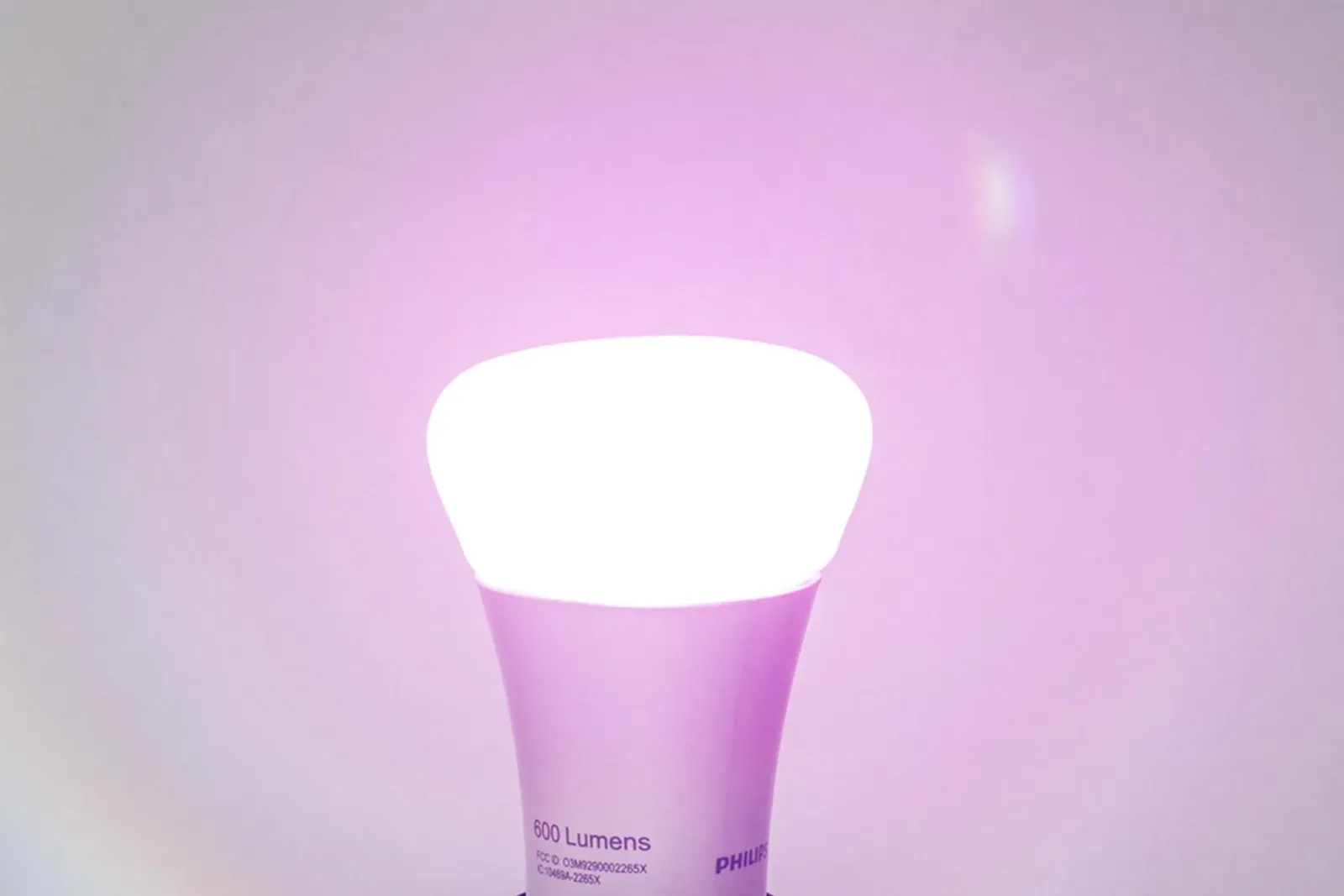
Philips Hue creator-product strategy is the focus of The Verge's Version History episode with David Pierce and Jennifer Pattison Tuohy. The episode argues Hue is the closest product yet to making smart-home goals actually work in daily life.
The smart home is supposed to be the easiest kind of “future.” You press a button, lights change. You leave the house, lights turn off. You host friends, the vibe adapts. In practice, it often feels like the opposite: clunky controls, brittle setups, and apps you have to micromanage like they are separate appliances.
That gap is exactly what The Verge sets out to close in its Version History episode about Philips Hue, joined by David Pierce and Jennifer Pattison Tuohy. The premise is simple and loaded: until now, maybe no product has come closer to nailing the smart home than Philips Hue. And the episode frames Hue as a near miss turned success by tackling the core promise of smart homes, control from everywhere, spaces that adapt, and smarts that stay mostly invisible.
Those goals are not just user-friendly. They are operationally brutal. “Control everything from everywhere” sounds like an interface problem, but it is also a reliability problem. A smart home spans networks, authentication, device firmware, mobile operating systems, and sometimes third-party platforms. If any layer flakes out, the customer experience collapses fast, especially for something as basic and expectation-heavy as lighting.
Philips Hue also has to solve the “no renovation” requirement. That means the product must work as an overlay on existing homes and habits. Lighting is one of the few smart-home categories where you can add intelligence without ripping out walls. But because it is visible, expectations are even higher. A smart-home system that is invisible when it works can become unforgivable when it fails. You cannot hide lag, confusion, or odd behavior when the light is literally in your face.
What makes Hue’s approach interesting from an executive perspective is that the smart home business is crowded with solutions that optimize for features instead of flow. Many products start with a cool interaction, a new sensor, or a compelling automation. Then they discover the real competitive battlefield is orchestration: how those features behave together, how consistently they respond, and how much setup the customer has to tolerate before the system earns trust.
That trust is the real asset. Once Hue earns it, the product becomes a foundation for the broader home experience. And that is where the “mostly invisible” idea matters. If users have to constantly open an app, troubleshoot routines, or adjust settings just to get basic results, the system becomes another management task. In other words, it stops feeling smart and starts feeling like a project.
There is also a strategic angle here for boards and investors. When the smart home is “frustrating,” as The Verge puts it, the problem is not only consumer impatience. It is the industry’s incentive structure. Companies can win short-term attention by shipping new capabilities. But long-term market leadership depends on reducing customer effort, minimizing failure points, and making ecosystems understandable. Hue is positioned as a rare product that aligns those incentives with what customers actually want day to day: control, adaptation, and simplicity.
Regulatory and platform pressures add another layer, even if the episode is focused on product lessons rather than policy specifics. Smart devices increasingly live at the intersection of telecom-like behavior (connectivity and remote access), consumer safety expectations (power and hardware reliability), and software compliance (how platforms handle apps and device control). In a world where platform changes and connectivity requirements can shift quickly, companies that build stable, user-centered systems tend to weather change better. Lighting is not immune to these forces, but it is a category where durable user value can justify ongoing investment.
For decision-makers in adjacent categories, Hue’s story is a reminder that “smart” is not a technology adjective. It is a customer experience standard. The smart home goal, as stated in The Verge’s framing, is that making your home smart shouldn’t require renovating, and the smarts should be mostly invisible. Executives who treat that as a product philosophy, not a marketing line, get closer to outcomes that scale. Peers building smart appliances, security, thermostats, and home assistants should treat Hue’s success as an existence proof: the best smart products remove friction instead of adding it.
The best part of the Version History discussion is that it does not just celebrate a glowing bulb. It centers the hard question: what did Hue get right, in a market where “obvious” should mean “easy,” but often does not. If you are betting on the smart home ecosystem, the stake is straightforward. Get it wrong, and customers churn before they ever trust the automation. Get it right, and the smart home stops being a novelty and becomes normal.
This story's Key Insights and Take-aways are locked.
Create a free account to unlock Executive Actions for one credit.
Register to UnlockAlways free for Executives Club members. Join the Club
More in Technology

Google quietly links your phone number to every Android account on your SIM
Adding a SIM now ties your phone number to all Google accounts - and future accounts inherit it. Here's the security and privacy stakes.

Hijacker AI 'Skynet mode' runs 100,000 attack steps against exposed models
Symantec caught a criminal AI agent that borrows other models, steals data, and mines crypto; the only relief is no confirmed victims yet.

Nvidia's AI-financier shift faces its first big test as neoclouds stumble
A rout in neocloud stocks is forcing investors to weigh Nvidia's hidden exposure as both supplier and lender to the AI buildout.