
Pierre Coffin says he was “done” with Minions, then kept voicing anyway
After nearly two decades in the “Despicable Me” universe, the director explains why the exhausting comedy grind kept pulling him back.

Pierre Coffin, director and voice actor behind “Despicable Me” and “Minions & Monsters,” describes nearly two decades of work in the franchise and the physical and creative fatigue of voicing the yellow creatures. For decision-makers, his remarks are a live case study in sustaining an IP that prints money while draining the people inside it.
Pierre Coffin thought he was done with the Minions. That was the plan after nearly two decades inside the “Despicable Me” universe, which Variety describes as the highest-grossing animated franchise of all time, with more than $5.5 billion worldwide across six films. Coffin had co-directed four of those movies and voices the Minions, so the “maybe I’m free now” feeling is not exactly a hobby. But the story behind “Minions & Monsters” is about what happens when you are both essential to the brand and exhausted by the job.
In this Variety interview, Coffin walks through two realities at once: the Minions are an enormous commercial engine, and the work of voicing them, plus crafting the franchise’s comedy, is still exhausting. He’s also clear that there is something specific about the humor he’s trying to deliver, calling it “more irreverent than some of the competition.” That matters, because it frames the franchise decision not as repeating the same thing forever, but as protecting a comedic identity while the creator’s energy gets tested.
Put simply, “Despicable Me” did not get to the top by being merely competent. Variety positions the franchise as the highest-grossing animated franchise of all time, spanning six films and more than $5.5 billion worldwide. That level of performance typically makes executives treat the IP like infrastructure. When something prints money at that scale, the default business instinct is to reduce creative risk: keep the formula, keep the characters, keep the audience trust. But the creator side is messier. Coffin’s point about being worn out is a reminder that IP is not just assets and distribution; it is also a set of human processes that can burn out.
This is where incentives and internal dynamics show up. A board and studio leadership team often measure success in pipeline reliability: can we keep releasing content that performs, and can we keep cost predictable? In animation, cost and schedule pressures are real, and voice performance is not interchangeable. The Minions are not just “characters,” they are a performance style. When the same person who voices them also helps direct, you are effectively marrying creative ownership to production continuity. That marriage is a strength when it is energized. It becomes a management question when it is not. Coffin’s description of the exhausting work is a direct window into why “same franchise, same crew” can be both a competitive advantage and a long-term operational hazard.
There’s also a subtler risk that executives in media and tech increasingly face, and it is the one that rarely makes the headlines: audience expectations become operational constraints. When an IP is known for a certain irreverent tone, you cannot just pivot humor style without risking backlash. Coffin’s comment that the comedy in “Minions & Monsters” is “more irreverent than some of the competition” is essentially a quality bar. That bar has knock-on effects: casting, direction, writing room output, sound design, and even iteration speed. If irreverence is the differentiator, then the people tasked with delivering it are under pressure to keep generating novelty without breaking continuity.
From a regulatory and risk-management perspective, the industry context matters too, even when the interview is primarily about comedy and voice work. The broader entertainment ecosystem sits under heightened scrutiny for child-directed content, marketing practices, and labor practices in production, depending on jurisdiction. While the source here is not making new regulatory claims, Coffin’s “nearly two decades” framing is the kind of timeline that puts sustainability on the agenda. Studios and creators are being asked more often now to document working conditions, manage fatigue and burnout, and ensure that production pipelines do not degrade into churn. In other words: the operational “exhausting work” Coffin describes can become a board-level issue when it translates into retention risk, creative drift, or schedule slips.
For peers building franchises, there is a strategic stake in this story. The business question is not only “How do we keep the lights on with a top-grossing animated brand?” It is also “How do we keep the original creative engine from seizing?” Coffin’s experience shows what happens when someone who is both a director and a voice actor reaches the point of being ready to step away, then has to decide whether to stay involved. That decision affects casting continuity, comedic calibration, and the franchise’s ability to stay fresh without losing the thing that made it dominant.
The biggest takeaway for decision-makers is that sustaining massive audience pull is not just about distribution and marketing. It is about maintaining a creative process that can survive contact with reality. Coffin’s “I thought I was done” line is the human version of a corporate truth: the longer you run a winning machine, the harder it is to keep the people inside it energized. “Minions & Monsters” is not just a new release. It is a test of whether the franchise can keep delivering irreverent comedy while the people shaping that comedy negotiate their own limits.
This story's Key Insights and Take-aways are locked.
Create a free account to unlock Executive Actions for one credit.
Register to UnlockAlways free for Executives Club members. Join the Club
More in Entertainment

Marjane Satrapi dies at 56, Saudi and global arts move fast
The arts world’s biggest loss hits the same week Saudi culture accelerates talent-building with Royal College of Art support.

Yeon Sang-ho traps survivors in a skyscraper in Colony, the Train to Busan successor
Colony finally extends Yeon Sang-ho's undead universe with a hive-mind threat that hunts survivors inside one building.
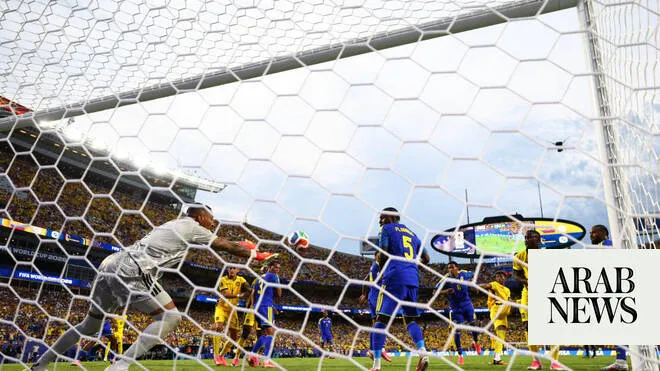
Eloy Room makes 15 saves as Curacao shocks Ecuador to earn first World Cup point
A 0-0 draw gives tiny Curacao its breakthrough, while Ecuador enters the finale under real elimination pressure in Group E.