

Platner implodes and Democrats question the consultants selling “under-vetted” outsiders
A Maine scandal ending Platner’s Senate bid is now a trust crisis for Fight Agency and its recruits.

Graham Platner’s Maine campaign collapsed after a sexual assault allegation that he denies, and POLITICO reports that his advisers pressed an under-vetted “outsider” pitch despite internal warnings. The fallout is spilling beyond one race, turning Democratic operatives’ biggest question into one about who will be trusted with high-stakes campaigns next.
Graham Platner’s Senate run in Maine just crashed, and the shockwave is aimed not only at Platner, but at the young consultants who helped manufacture his comeback story. POLITICO reports that Daniel Moraff, 34, and other out-of-state advisers pushed hard to recruit Platner as an anti-establishment outsider, even after the campaign’s own staff raised concerns. The implosion culminated last week with Platner dropping out of the Maine race after a sexual assault allegation surfaced. Platner denies the claim, saying earlier this month, “Any accusation of non-consensual behavior is categorically untrue.”
This matters because Democrats have been relying on a repeatable playbook: find a charismatic, working-class-aligned candidate in battleground territory, package them as a genuine outsider, and turn biography and messaging into victory. Moraff and the broader team around him treated that as mission-critical. In an email last August to fellow Democratic operatives obtained by POLITICO, Moraff described Platner as “a cross between a rugged JFK and Bernie Sanders,” and wrote that he was “one of the most talented politicians of our time. Maybe any time.” The subject line: “I think this guy is going to be president.” That message did not live in a vacuum. Later, another high-profile consultant, Morris Katz, 27, who works with Fight Agency, was reportedly boasting about Platner at a Manhattan dinner at fashion designer Tory Burch’s apartment, describing a model to “win over working-class voters.”
So what actually blew up? Not just the candidate. POLITICO describes a pattern of “early missteps” that cast doubt on the consultants’ judgment and future inside Democratic politics. The reporting says Moraff showed up on Platner’s doorstep last summer with a message to convince him to run for the U.S. Senate, then spent weeks pushing after being told, “Get the fuck off my property,” before Platner relented. Once the campaign got going, Moraff and other consultants “wasted no time” selling Platner as something bigger than simply a Democrat who could topple Sen. Susan Collins. But as Platner barnstormed Maine as that rugged antidote to Washington, internal doubts and inadequate vetting became part of the story.
The accusation that turned up the heat is also not abstract. POLITICO notes that the collapse came after POLITICO exclusively reported allegations that Platner forced a woman into sex. That is the kind of trigger that forces political organizations to scramble for two reasons. First, it threatens the candidate instantly, because voters and opponents treat allegations as immediate risks, not future legal problems. Second, it threatens the strategy because it tests whether the “outsider” assembly line can survive real-world scrutiny.
In that sense, the Platner fallout is becoming a trust audit for Democratic consulting firms that gained momentum by building outsider-forward campaigns. Fight Agency, a buzzy progressive firm founded by veteran strategist Rebecca Katz, is repeatedly named in the reporting, including because it has been “riding a remarkable hot streak” after propelling Zohran Mamdani to City Hall and sweeping several New York primaries last month. That run made Fight Agency strategists “among the most sought-after and scrutinized operatives in Democratic politics.” In a joint statement to POLITICO, Rebecca Katz and Morris Katz said: “In the year and a half since FIGHT launched, we have taken on the DC establishment and the political machine time after time, and won,” adding, “We make ads, advise candidates on strategy, and win races - we are proud of the work we do.” They also stated, “While there’s no relation, we are family.” Moraff declined to comment.
Now, the question is whether those wins have created blind spots. Interviews with more than two dozen Democratic operatives, former campaign officials, and people who worked with Fight Agency and Moraff on other campaigns, plus internal text messages, emails, and documents reviewed by POLITICO, are described as painting “a damning portrait” of how Platner’s advisers sold an under-vetted candidate as a future-of-the-party figure despite warnings from the campaign’s own staff. And the fallout is already spilling into the competitive marketplace of influence. POLITICO reports a “vicious round of finger-pointing” across the Democratic consulting class, with rival firms already circulating opposition-research documents focused exclusively on Fight Agency and its most prominent faces, Rebecca Katz and Morris Katz.
This is where the stakes get bigger than Maine. The Democrats’ Senate math is brutal, and Platner’s implosion forces a new candidate to go up against Collins in a contest critical for flipping control of the Senate in November. A party can sometimes absorb a bad candidate. It struggles more with a broken process. POLITICO frames the central strategic fear in blunt terms: other candidates going forward are likely asking, “Do we really want to hire these guys?” said a former Platner adviser granted anonymity. Another second-order effect is that Democrats have to decide who gets blamed versus who gets protected, and whether progressive outsider recruitment is fundamentally flawed or just executed recklessly.
Even powerful party figures are weighing in on the process, not only the person. Rahm Emanuel, described by POLITICO as a vocal critic of the progressive wing of the Democratic Party, called the consultants’ behavior “professional malpractice at the expense of the party’s interests.” He said, “I’m about winning - flipping red to blue at the presidential, Senate, gubernatorial, congressional, and state and local levels - and what they have done is about advancing their financial interests at the expense of the party.” POLITICO also notes that some of the consulting theory at play involves recruiting unconventional candidates, packaging them as authentic populist outsiders, and betting that biography and message can beat inexperience.
If you want a preview of how far this trust crisis might spread, POLITICO points to a second case: Nathan Sage. Last May, Moraff was hyping another unknown Senate candidate he recruited in “nearly identical terms.” Sage, a Marine with a blue-collar biography, raised in a Mason City trailer park, was described by Moraff in an email obtained by POLITICO as a man “built in a lab to beat Joni Ernst,” and Moraff gushed that he hadn’t seen any Democrat talk like this “in… honestly I don't even know how long,” calling the effort “really important.” The implication is not that Sage is Platner 2.0, but that the same recruitment and packaging incentives are under scrutiny.
For boards, investors, and senior operators watching political talent markets, the takeaway is simple: the upside of a fast, outsider-led pipeline is speed and narrative power. The downside is what happens when vetting, governance, and accountability fail to keep pace with promotion. When a candidate implodes, the consulting layer gets exposed as the system behind the system. And in a world where reputation is a currency, the consultants’ biggest risk is not one scandal. It is becoming the kind of vendor nobody trusts until they prove they can manage risk before it becomes crisis.
This story's Key Insights and Take-aways are locked.
Create a free account to unlock Executive Actions for one credit.
Register to UnlockAlways free for Executives Club members. Join the Club
More in Politics
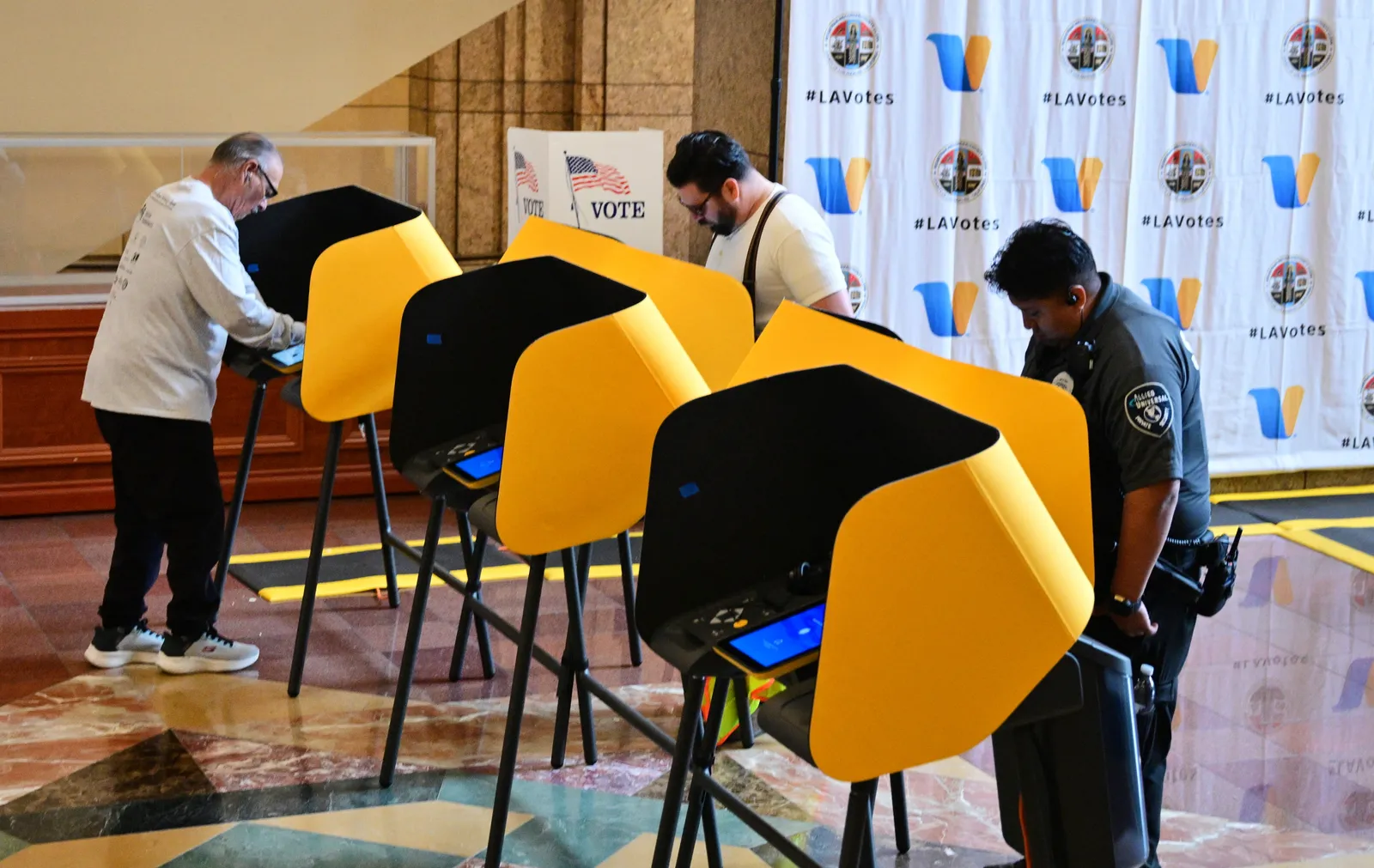
LA County: DOJ's 20,000 'noncitizen' voter list is 'unreliable,' includes U.S.-born
Preliminary review by Los Angeles County election officials finds errors in the federal list, raising the stakes for voter roll integrity ahead of November.

Trump's $1.5B Pentagon chip investment lands in North Carolina
A $1.5 billion defense infusion for North Carolina chipmaking signals a new era of Pentagon-backed reshoring - here's what it means for the industry.

Nigeria confirms first Ebola case in Abuja, a woman just off a Uganda flight
Health Minister Muhammad Ali Pate says the patient flew in from Uganda, putting Africa's latest outbreak on Nigeria's doorstep.