

Pocket raises $11M to push $129 AI note-taking puck into higher-demand workflows
The $11M round backs a credit-card-style device that records, transcribes, and turns notes into to-dos.
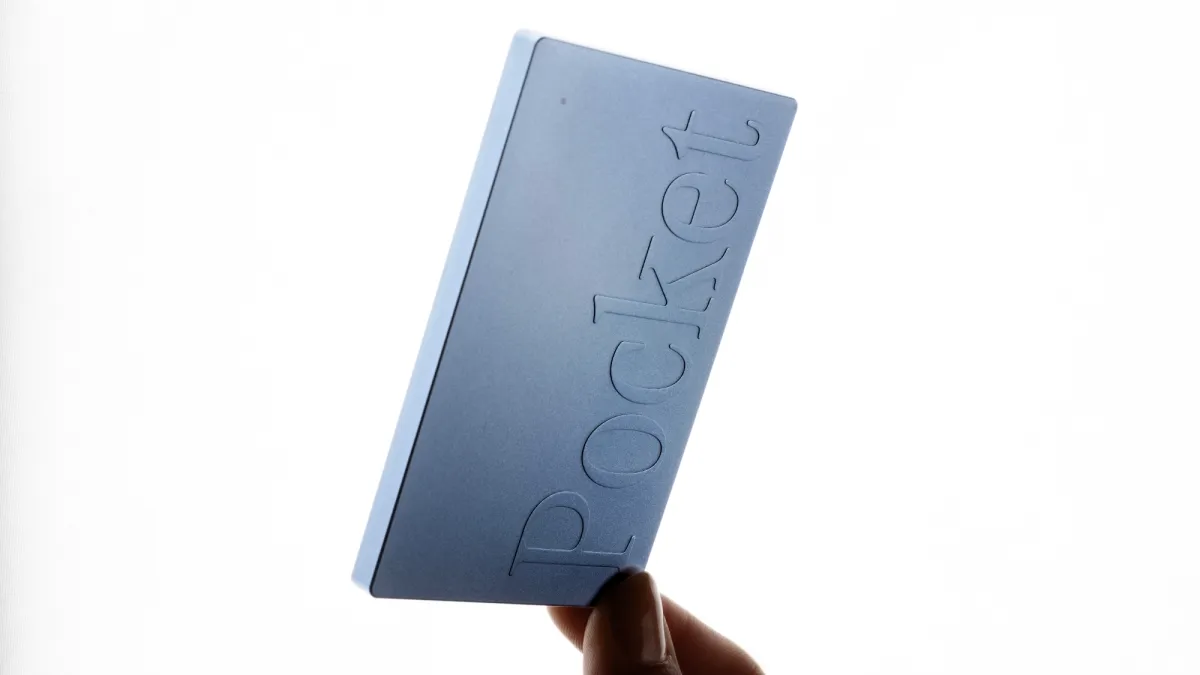
Pocket, the company behind a $129 credit card-shaped phone puck for recording and AI transcription, raised $11M. For decision-makers, the raise signals investors are funding hardware-first note-taking as AI demand shifts from chat to capture.
Pocket just raised $11M in a bet that the market for AI note-taking is heating up, and it is doing it around a very specific product shape: a credit card-sized puck that sticks to the back of your phone. The device sells for $129 and is positioned as a simple workflow upgrade. Instead of typing or manually recording, Pocket promises unlimited recordings, transcription, and to-do items. The thesis is straightforward, but the stakes are real: when AI moves from “answering questions” to “capturing moments,” the interface becomes the product.
Pocket’s pitch is built on an obvious friction point. People do capture audio, but capture is messy. It is missed because you did not start recording. It is incomplete because your hands were busy. And even if you do capture, transcription and follow-up are often where energy goes to die. Pocket tries to close that loop with a small hardware accessory that lives on your phone and collects whatever you need recorded. Then it leans on AI to transcribe, organize, and generate to-do items. The new $11M comes from investors betting that rising demand for this kind of “capture-to-action” workflow will translate into enough recurring usage to support a hardware business.
The interesting part for executives is not the concept of transcription. That is everywhere. The interesting part is why investors would fund a note-taking device at a price point of $129, rather than only funding software. Hardware becomes the wedge when it reduces user effort before the AI even kicks in. If Pocket can reliably gather input at the moment it matters, it turns AI from something you open into something that happens in the background of your day. In other words, the investment is really about distribution and behavior change, not just model performance.
This is also a market timing story. AI note-taking demand tends to rise when people need to capture more structured information across work and life: meetings, calls, lectures, interviews, personal brainstorming. Chatbots can help after the fact, but they do not automatically solve the “I forgot to document it” problem. Pocket is effectively selling a default. Your phone becomes a portal, the puck becomes a microphone companion, and the product promise is that you end up with transcription and actionable to-dos without the usual extra steps.
There is, however, a regulatory and trust angle that hardware-first teams cannot ignore. Recordings and transcription touch sensitive data, even if the pitch is everyday use. Depending on jurisdiction and use case, companies that process audio and generate text can face scrutiny around consent, data handling, and privacy expectations. Even when a business is not making legal headlines, it still needs to think operationally about user trust: what gets stored, for how long, what is deleted, and how users understand what the device is doing. For board members and CFOs, that means the financial story is inseparable from compliance readiness. A round like this can accelerate growth, but it also increases the surface area for oversight, audits, and risk management.
Second-order implications matter here. If Pocket is right, it is not just winning users. It could also shift how consumers and teams evaluate “AI productivity tools.” Instead of asking, “Which app is smartest?” they may ask, “Which workflow is frictionless enough that I actually use it daily?” That reframes competitive pressure for adjacent categories like meeting transcription apps, voice assistants, and general note-taking software. If a puck makes it easy to start recording and instantly get transcription plus to-dos, competitors may need to match that immediacy or build their own “input capture” layer.
For other founders and operators, the strategic question is whether this is a one-off device moment or the start of a broader hardware wave. Pocket is betting that rising demand for AI note-taking is strong enough to sustain a hardware product, not just a software subscription. For investors, the $11M raise is a signal that capital is flowing toward products that translate AI capability into real-world behavior change. For decision-makers sitting on budgets in adjacent tools, the takeaway is simple: if the interface to capture is changing, the entire value chain around transcription and task follow-through changes with it.
This story's Key Insights and Take-aways are locked.
Create a free account to unlock Executive Actions for one credit.
Register to UnlockAlways free for Executives Club members. Join the Club
More in Business

A flaw in PHP just forced governments to pull their own sites offline
European agencies from Belgium to Germany took websites dark to patch a critical weakness in the language behind almost 70% of the web, and the blast radius extends far beyond government portals.

BioWare shuts down, Mass Effect 5 dead after $55B EA buyout
The legendary RPG studio's closure lands months after a $55 billion investment group buyout of EA, raising tough questions for gaming's biggest acquirers.

Musk barred from the room as Tesla, SpaceX boards weigh $3.5 trillion merger
The CEO of both companies is a 'conflicted party' watching independent directors negotiate a tie-up that would create a $3.5 trillion giant he would own about a third of.