
PocketMage raises clamshell PDA nostalgia with e-paper and OLED, starting at $185
Talisman Design’s Crowd Supply campaign brings keyboard-first “old-school” computing back in pocketable form.
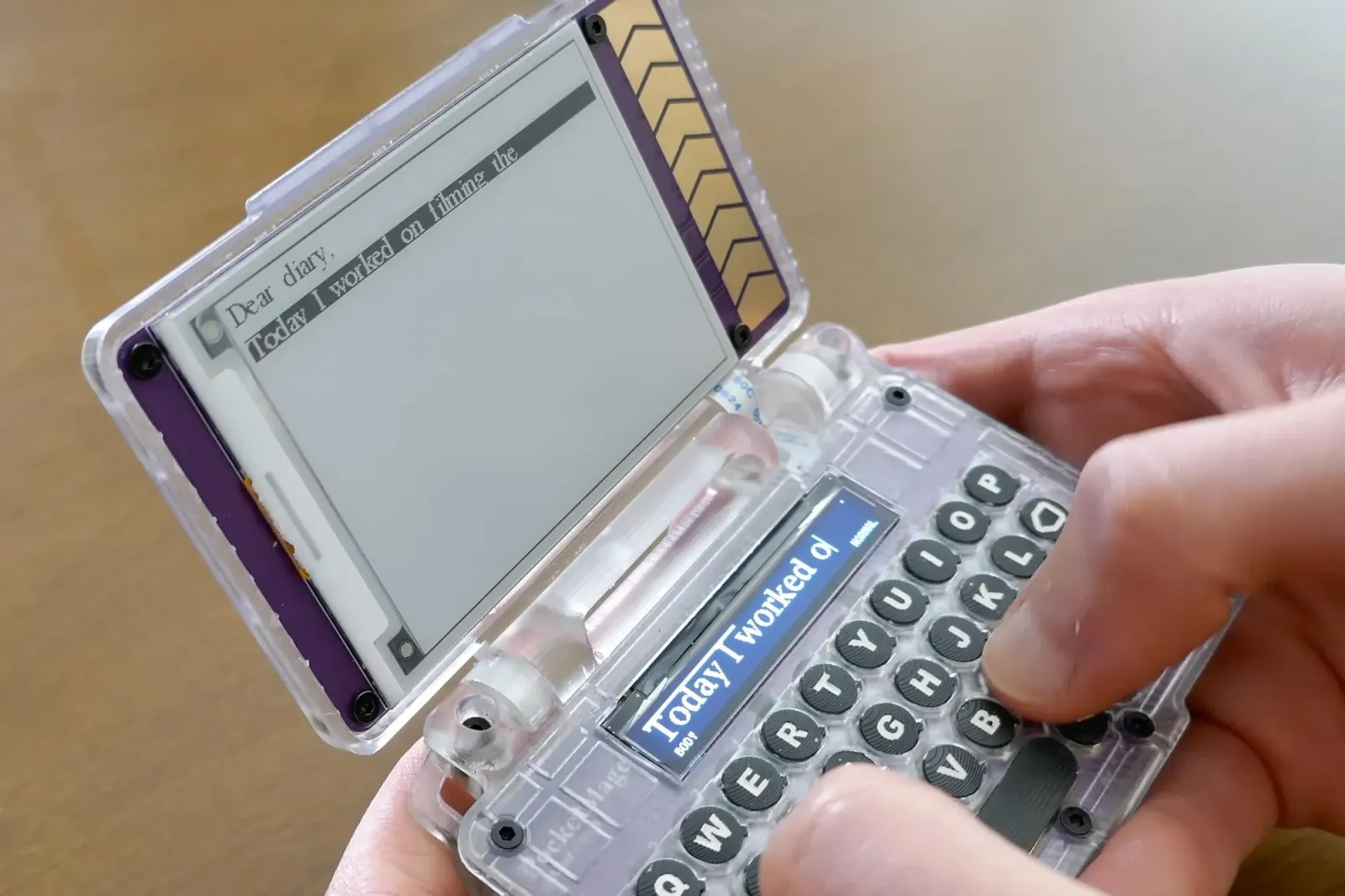
Talisman Design is crowdfunding the PocketMage, a clamshell PDA with a tactile keyboard plus both e-paper and OLED displays, via Crowd Supply. For decision-makers, it is a case study in whether hardware nostalgia can translate into real demand and working-device legitimacy.
Personal digital assistants like the iconic Palm Pilot were the kind of device people expected to fade away once smartphones took over. Talisman Design is betting that assumption was wrong, and its answer is the PocketMage, a clamshell PDA that combines a tactile keyboard with both e-paper and OLED displays in a pocketable form.
The PocketMage launch is live through a crowdfunding campaign on Crowd Supply, with two different preorder options. The pricing matters because it frames who this is for: a $235 version comes fully assembled, while a cheaper $185 version requires you to b... (as reported, the lower tier is assembled by the backer). You also get to choose accent colors, with parchment color options in gray or royal purple.
Zoom out and this is not just “nostalgia merch.” The Verge’s comparison is telling: Canon resurrected a nearly decade-old digital camera to appeal to point-and-shoot fans, and PocketMage is playing the same game in PDA form. The underlying thesis is that there is a specific user experience people miss, and they will trade convenience for feel. In smartphones, your input is mostly glass and software. In a PDA, the physical keyboard is the point. Tactile input and glanceable screens are the “why,” and the dual display setup signals that the product is trying to solve a real tension: e-paper is typically associated with low-glare, readable-at-a-distance experiences, while OLED is associated with richer, higher-contrast visuals when you need them.
From an operator or investor perspective, the smartest angle here is demand validation. Crowdfunding is not a guarantee of manufacturing success, but it is a very direct signal: people pay before the product exists. The PocketMage campaign giving two tiers at $235 and $185 creates a wedge between buyers who want a ready-to-use device and buyers who are willing to do some assembly work to pay less. That split is a common product-market strategy in hardware, because it expands the addressable audience without forcing everyone into the same willingness-to-build.
There is also an experience design implication. A clamshell form factor is more than aesthetic. It can change how people carry, how accidental input happens, and how quickly the device can be “opened and used.” Pair that with e-paper and OLED, and you have a platform that is trying to do multiple jobs in a single pocketable object: readable information in a way that feels less like a phone screen glare problem, plus a display option that can support more dynamic content. Even without knowing the full software stack, the hardware choices tell you what the team believes users will prioritize day-to-day.
For decision-makers watching from the sidelines, the second-order question is about what “extinct” really means in consumer tech. PDAs did not disappear because the user need vanished. They got swallowed by smartphones, which offered everything in one device. Hardware teams that resurrect older categories are effectively challenging that consolidation trend, claiming that there is still room for specialized tools that do one thing better or differently. If PocketMage gets traction, it strengthens the argument that there is an ongoing market for devices that trade bulk for focus, and that “minimalist computing” can attract real buyers even in 2026.
It also matters for teams building e-paper and alternative display experiences. PocketMage is not presenting e-paper as a standalone gadget. It is combining e-paper with OLED, which is a practical way to hedge the limitations people associate with each technology. In other words, the campaign is implicitly trying to cover different viewing and usage modes rather than forcing users to accept one screen type for everything. If buyers respond to that hybrid approach, it could influence how other consumer device makers think about display strategy, especially in categories where battery life, readability, and eye comfort are core selling points.
At the boardroom level, the strategic stakes are straightforward: crowdfunding outcomes can be a forcing function for credibility. If the product attracts enough interest at $235 fully assembled and $185 with backer assembly, it suggests there is commercial viability behind the “keyboard + dual display” concept. If it does not, it also clarifies the limits of hardware nostalgia. Either way, PocketMage is a live test of whether consumers will pay for a pocketable PDA with tactile input, and whether the e-paper and OLED combo can be more than a curiosity.
This story's Key Insights and Take-aways are locked.
Create a free account to unlock Executive Actions for one credit.
Register to UnlockAlways free for Executives Club members. Join the Club
More in Technology

Google quietly links your phone number to every Android account on your SIM
Adding a SIM now ties your phone number to all Google accounts - and future accounts inherit it. Here's the security and privacy stakes.

Hijacker AI 'Skynet mode' runs 100,000 attack steps against exposed models
Symantec caught a criminal AI agent that borrows other models, steals data, and mines crypto; the only relief is no confirmed victims yet.

Nvidia's AI-financier shift faces its first big test as neoclouds stumble
A rout in neocloud stocks is forcing investors to weigh Nvidia's hidden exposure as both supplier and lender to the AI buildout.