
Pocketpair’s John 'Bucky' Buckley teases secret Palworld projects after More Than Just Pals
1.0 just hit, More Than Just Pals is coming, and Pocketpair hints at more expansion and surprise spin-offs.
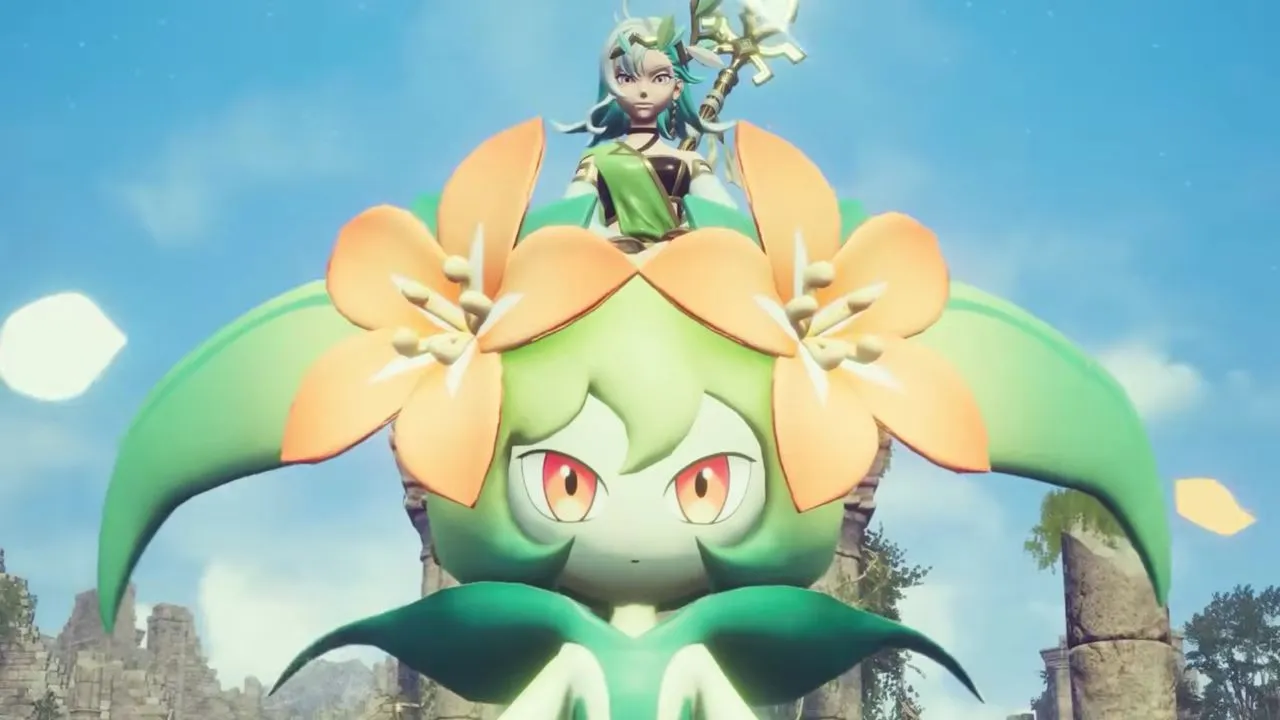
John 'Bucky' Buckley, head of publishing and communications at Pocketpair, says the studio is experimenting with spin-offs to keep expanding the Palworld universe after the game’s 1.0 launch. For decision-makers, it signals a broader IP strategy that could reshape how studios plan post-launch monetization and platform risk.
Palworld just shipped its 1.0 update, and Pocketpair is already signaling that the universe is not stopping at “monster hunting.” John 'Bucky' Buckley, head of publishing and communications at Pocketpair, told Game8 that the team is “thinking carefully about what we might do next,” and that it has “a few other little secret things in development.”
That matters because Palworld’s own numbers back up the confidence. Pocketpair previously said the update 1.0 brought over 885,000 concurrent players, and Buckley is framing this as proof the IP can keep growing. In other words, this is not a quick victory lap and then silence. It is an attempt to turn a breakout survival game into a long-running franchise, with multiple experiments in parallel.
The most concrete of those experiments is More Than Just Pals, a romantic social adventure. Pocketpair describes it as a game where you play a new transfer student at Private Palpagos Academy, which looks designed to lean into persona-style social life rather than base building and raids. And yes, the article points out there’s apparently an option to eat your fellow students, which is exactly the kind of tonal weirdness that got Palworld attention in the first place.
There’s also a clear business logic behind this spin-off direction. Survival games often have a “platform problem” after launch: you can keep expanding content inside the main loop, but you can also risk flattening novelty as players churn. Spin-offs let you reuse the brand and community recognition while changing the gameplay surface area. Buckley specifically says Pocketpair has “got some spin-offs we’re experimenting with,” and the goal is to figure out how to “keep expanding the Palworld universe.”
The article does not claim a full roadmap for everything beyond More Than Just Pals. It says there are no hints about what the other side games could be, even as Pocketpair’s messaging stays consistent: “The IP is gonna keep growing.” That combination, more concrete on one spin-off and more mysterious on others, is a classic franchise move. You give the market one product you can point at, then keep optionality for the rest.
The obvious question executives should ask is what kind of “expansion” the studio means in practice, because the article frames More Than Just Pals as romantic social adventure, while also floating a Pokémon Stadium-esque release as an “easy win” concept. The piece itself is clear this is not a promise from Pocketpair. Still, it highlights how companies can translate creature-collection popularity into other formats, like tournaments, mini-games, or party-style experiences. If Pocketpair finds a match between Palworld’s creature universe and adjacent genres, it could reduce reliance on survival-specific mechanics while keeping fans in the ecosystem.
Zoom out one more layer and you get the second-order implication: Palworld is operating in a world where “new IP” does not just mean new fun, it means new scrutiny. When games get big fast, they invite regulatory and platform-level attention through content policies, ratings, and enforcement debates, especially around mature themes or contentious mechanics. Even though the article does not introduce new regulatory action, executives should treat this moment as the franchise starts to attract not only players but also stakeholders upstream and downstream. Spin-offs can either broaden audience appeal or broaden the set of policy questions, depending on how carefully each experiment is scoped.
Finally, Buckley stays coy about where it goes long term. He acts as though the future could be bigger, but he does not commit to what Palworld “may look like in five years.” That deliberate non-commitment is strategic: it keeps the studio flexible while it tests multiple formats. For other founders, operators, and investors, this is a signal worth noting. If a breakout game can hit 1.0, keep concurrency extremely high, and still pivot into spin-offs and “secret things in development,” then post-launch is no longer just “more updates.” It is portfolio building, like a franchise studio, not just a live-service team.
This story's Key Insights and Take-aways are locked.
Create a free account to unlock Executive Actions for one credit.
Register to UnlockAlways free for Executives Club members. Join the Club
More in Entertainment

12TB Steam 'teraleak' goes beyond Valve: GTA 3, Mafia 2 prototypes exposed
A 12-terabyte dump of Steam data reveals prototypes and builds of third-party classics like GTA 3 and Mafia 2, plus unreleased Valve content, rewriting game history.

LinkedIn's romance problem: 1 in 4 workers say dating on it is fair game
A new survey shows a quarter of U.S. employees treat the professional network as fair game for romance, even as LinkedIn bans it and removes hundreds of thousands of offending posts.

Enhypen's first No. 1 album breaks K-pop's Billboard 200 streak
The K-pop group's 98,000-unit debut tops the chart while Dolly Parton's catalog reentry shows how death reshapes streaming.