

Pokémon Go’s $5,000 eBay Mewtwo haul from Times Square event breaks the rules
Hand-picked invitees at the 10th anniversary fight for Mewtwo now appear to be monetizing it, potentially violating TOS.
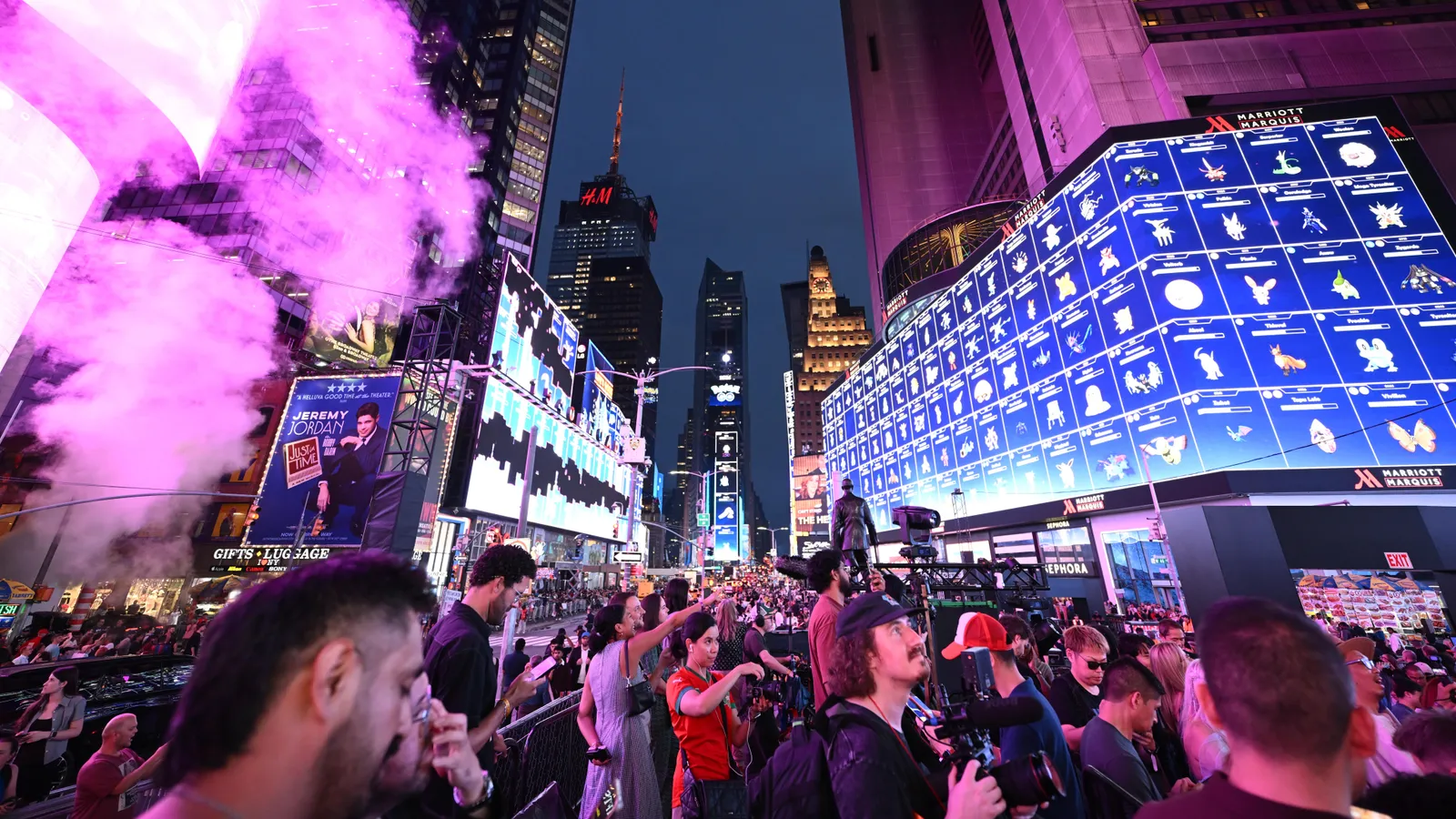
Pokémon Go’s 10th anniversary invitation-only Times Square event in New York awarded around 2,000 vetted fans and other guests a unique Mewtwo with perfect “hundo” stats and a special cosmetic background. IGN reports some attendees are selling those Pokémon on eBay for thousands of dollars, and the listings reference “flying” to complete trades, raising rule and policy concerns for Scopely Explore.
Pokémon Go’s 10th anniversary Times Square event handed a small group around 2,000 invitees a unique Mewtwo with perfect “hundo” stats. Now, IGN reports that some of those players are selling that exact Mewtwo on eBay for up to $5,000, with at least one in-progress listing reportedly being bid on up to $10,000.
The immediate issue is not just price. The reports tie the sales to behavior the community associates with breaking the game’s rules: completed listings and ongoing ones also mention “flying” to complete the in-game trade process. In the Pokémon Go player lexicon referenced by IGN, “flying” is commonly used to describe spoofing in-game location, which is a banned activity. As a result, the Games Rules and Terms of Service (TOS) are suddenly not academic for executives overseeing live-service trust, because the community can point to specific outcomes, specific assets, and specific markets where those assets are being liquidated.
Here’s what made the New York event such a powder keg. Last week, Pokémon Go celebrated its first decade of operation by holding an invitation-only event in New York. Around 2,000 hardcore fans, along with media and influencers, took part in a unique Times Square battle to capture Mewtwo. According to IGN, attendees also received special treatment that sparked complaints within the Pokémon Go community, including a unique Mewtwo featuring a special Times Square cosmetic background and perfect “hundo” stats.
IGN highlights why that “hundo” detail hit differently: the game has never gifted a guaranteed perfect Pokémon before. The timing also mattered. Mewtwo raids were scheduled for the weekend aimed at the rest of the player base, and many regular players would need to spend time and raid passes grinding for even a chance at such a prize. The contrast is the whole story for decision-makers: when a live game is built on probabilistic pursuit, changing who gets certainty can rewire player sentiment quickly, and a premium event can become a perceived fairness breach overnight.
A large share of the New York attendees were Community Ambassadors (CAs). IGN describes CAs as vetted but unpaid superfans who work closely with the game’s developer, Scopely Explore (previously Niantic), to galvanize local players. As a reward for their time, many were invited to the New York event and allowed to bring a couple of other players from their community. The event also included media, influencers, and streamers who help promote the game online.
That matters because the incentive stack is different. Community Ambassadors are closer to the developer than typical players, and they are also closer to scrutiny when it comes to TOS. IGN includes a post on X/Twitter from a Pokémon Go fan using the handle SchaferQuest777, arguing that the behavior shown in the eBay listings breaks the rules. The fan specifically wrote that selling this likely violates the TOS and suggested it should not be too hard to identify which players no longer have the unique Mewtwo, and whether they made suspiciously long “flying” journeys to complete trades.
For operators like Scopely Explore, this is a live-service governance problem with a real marketplace attached. In games where rare digital items can be traded, “secondary markets” are not a hypothetical risk. Here, the secondary market is explicit and measurable: completed listings show the creature being sold for up to $5,000, while a separate in-progress listing is reportedly being bid on up to $10,000. When that kind of money appears, it turns policy enforcement from a background function into an urgent reputational and community-trust issue. Even if enforcement happens later, the narrative is already formed: invite-only certainty got monetized.
Then comes the compliance complication for the company. IGN says it contacted Scopely Explore for comment, and whether any action will be taken against those players remains to be seen. Executives should notice the operational angle hidden inside the community’s claims: with only around 2,000 attendees, identifying accounts that held the unique Mewtwo, then verifying what changed after the event, is likely more tractable than policing a broad population. That is precisely why the community is calling for “a hard look” and for determining who the accounts are. Smaller cohorts make investigations faster, but they also make it easier for players to perceive selective enforcement if the response is slow.
The second-order stakes extend beyond Pokémon Go’s anniversary moment. CAs, media, influencers, and streamers all play a role in shaping what the average player believes is “allowed,” because attention amplifies whatever happens at the top. If the enforcement posture looks inconsistent, the program itself can erode. If enforcement is swift and clear, it becomes a trust signal. Either way, the board-level implication is that community trust is now intertwined with your event design, your asset distribution rules, and your ability to enforce them in a world where players can screenshot, post, and sell in the same breath.
In short: a unique Mewtwo with perfect “hundo” stats was awarded to an invite-only Times Square battle for Pokémon Go’s 10th anniversary. Some attendees now appear to be turning that guaranteed-prize artifact into cash on eBay for thousands of dollars, and the listings point to “flying” trade mechanics commonly linked to spoofing. The unanswered question for Scopely Explore is not whether the market exists, it’s whether policy enforcement catches up in time to protect fairness, program credibility, and the integrity of future high-stakes events.
This story's Key Insights and Take-aways are locked.
Create a free account to unlock Executive Actions for one credit.
Register to UnlockAlways free for Executives Club members. Join the Club
More in Business

Uber buys Delivery Hero for nearly $15B, vaulting to top food delivery outside China
The deal doubles Uber's dual-services footprint and pushes a ride-and-eats bundling play into 50 more markets.

Epic and Google drop settlement bid, forcing rival Android app stores by July 22
Google told the court it is ready to carry third-party app stores starting Wednesday, July 22.
SK Hynix opens at $170, raises $26.5B, and tops foreign IPO records
In Friday's Wall Street debut, SK Hynix turns AI RAM demand into a $26.5B fundraising moment that rewrites comps.