
Pope Leo XIV meets Bad Bunny privately at Santiago Bernabéu in Madrid
The Vatican confirmed the Monday meeting as Leo XIV discussed how young people choose between pop stardom and faith.
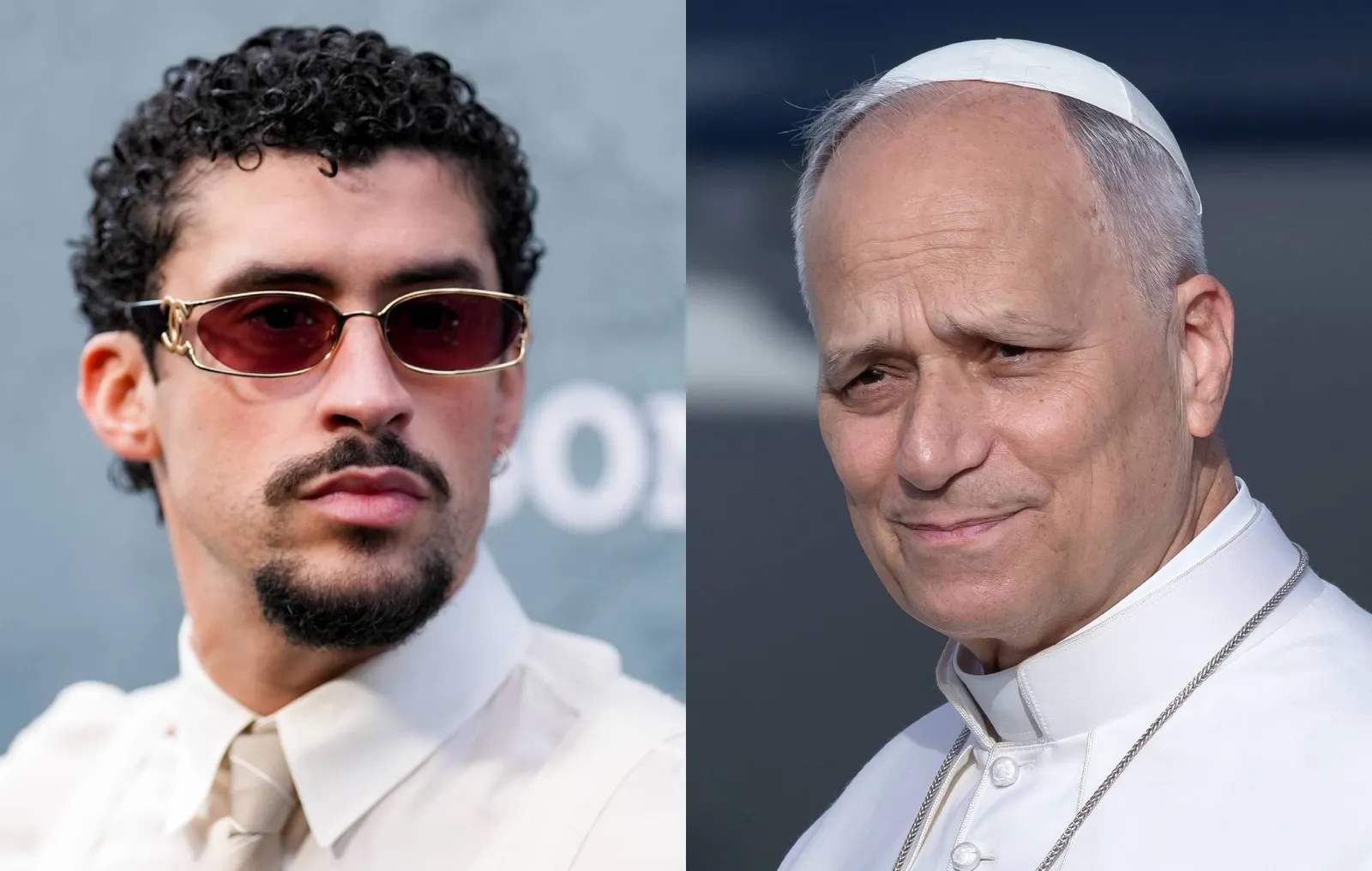
Pope Leo XIV held a private meeting with Bad Bunny in Madrid on Monday, June 8, confirmed by a Vatican statement. For decision-makers, the episode shows how major cultural events and institutions can intersect, even when the logistics are tight and public attention is loud.
Pope Leo XIV met Bad Bunny privately in Madrid on Monday, June 8, and the Vatican confirmed it in a statement. The meeting was part of a run of private encounters Leo held while he was at the Santiago Bernabéu during his stay in Spain. In other words: this was not a random photo-op scroll by the internet. It was coordinated enough to be formally acknowledged, with photos taken that have not been made public.
Why does this matter beyond celebrity headlines? Because it lands exactly where the Pope placed his own emphasis last Saturday, June 6, aboard the papal plane. Reporters asked about Bad Bunny’s appeal among young people, and Leo framed the choice bluntly: if young people are confronted with whether they want to see Bad Bunny or the Pope, “I think many will see Bad Bunny.” He added that some will still choose to see the Pope, and said “that says something.” The private meeting essentially turns that on-the-record media framing into a real-world encounter between the institution and the artist.
Here is what we know about the Madrid timeline. Bad Bunny has been in the city since late May for a 10-concert residency at the Riyadh Air Metropolitan, which comes as part of his “Debí Tirar Más Fotos” World Tour. He is scheduled to perform the remaining dates tonight (June 10), tomorrow (11), and then on the 14 and 15. Local broadcaster RTVE reported that Bad Bunny’s representatives contacted the Spanish Episcopal Conference weeks earlier to explore whether he could meet the pontiff, including the possibility of the Pope participating in a mass gathering outside Madrid City Hall. Leo did not end up attending that mass gathering.
Despite the public logistics not lining up for City Hall, the meeting still happened. Bad Bunny attended alongside several family members, and photos were taken, though none have been made public. The venue link matters too. The Vatican said the private encounter occurred as part of a series of private encounters the Pope held at the Santiago Bernabéu during his stay, following his gathering with the diocesan community. For executives who think in terms of stakeholder management, the pattern is clear: big institutions plan around capacity, symbolism, and controlled access. The Pope’s team used the Bernabéu setting for private moments rather than leaving it to whatever would be easiest in the public square.
The Pope’s remarks also explain why this kind of meeting is not just a PR novelty. Leo talked about young people’s search for meaning and a “spiritual dimension” in their lives, saying they “realise there’s an emptiness, and a lack of a sense of meaning.” That is the context for why the Bad Bunny question became a stand-in for a bigger social issue: what pulls the attention of the next generation, and what fills the gap when traditional authority feels distant. Even without endorsing anything explicitly, the Vatican’s confirmation and the Pope’s comments together create a message: the Pope is aware of the cultural gravity of mainstream pop, and he is willing to engage it directly.
There is also a broader industry implication hidden in the details. Bad Bunny’s residency is not merely entertainment. It is a multi-day, high-visibility event where attention is both currency and risk. When representatives contact the Spanish Episcopal Conference weeks earlier, that is stakeholder outreach with a calendar attached. It suggests a kind of soft governance around who gets face time, under what conditions, and with which public optics. And for any organization, religious or otherwise, that matters when you are dealing with a global figure whose audience expects authenticity and whose handlers think about timing, venue security, and narrative control.
Bad Bunny’s public schedule is staying busy in parallel with this papal moment. NME also notes he is set to play a talking pizza slice in the latest installment in the Toy Story franchise. He has been acting more regularly in recent years, appearing in Bullet Train, Happy Gilmore 2, and Caught Stealing. And his much-discussed Super Bowl halftime show this year became the most-watched of all time. Put that next to a private Vatican meeting and you get a simple takeaway: he is operating simultaneously in music, film, and mass-media moments that are hard to separate. Cultural institutions, historically cautious about proximity to pop spectacle, are showing they can coexist with it through managed, private channels.
For boards, CEOs, and operators at major brands or platforms, the strategic stakes are less about whether a Pope meets a rapper, and more about what that meeting signals: elite institutions are monitoring cultural leadership, not just political leadership. The second-order effect is reputational. If you are building partnerships, hosting high-profile events, or navigating global audiences, the “who shows up” question is becoming as important as the product itself. In a world where young audiences weigh everything from concerts to meaning in the same mental spreadsheet, the winners will be the ones who can engage the spotlight without getting blinded by it.
This story's Key Insights and Take-aways are locked.
Create a free account to unlock Executive Actions for one credit.
Register to UnlockAlways free for Executives Club members. Join the Club
More in Entertainment

Russell Brand's accuser 'bewildered and confused' as he denies 7 sex charges
The criminal case against the comedian is a live test of how media companies manage talent risk when serious allegations go public.

'It's a Magic Trick': Ballet Experts Say Rosalía's SNL Pose Is Impossible
Three ballet experts tell Rolling Stone Rosalía's gravity-defying SNL stillness shouldn't be possible - and why the debate is now part of the show.

Activision CMO: GTA 6 Will Boost Call of Duty, Not Bury It
Activision's top marketer says Rockstar's blockbuster will drive players back to consoles and into Modern Warfare 4, even as the company admits its recent strategy failed.